Sit-Up With Arms On Chest
Sit-Up With Arms On Chest is a bodyweight floor exercise for the abdominal wall, performed with the arms crossed over the chest instead of reaching overhead or using momentum. The bent-knee setup shortens the lever and makes the rep more controllable than a straight-leg sit-up, while still asking the trunk to flex through a useful range. It is a simple way to train spinal flexion strength, trunk endurance, and clean core control without equipment.
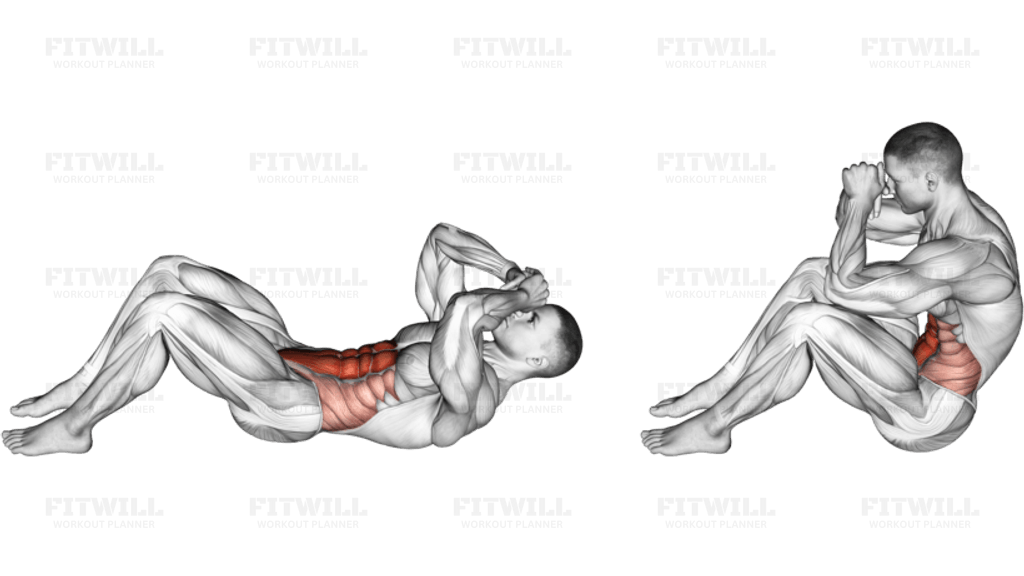
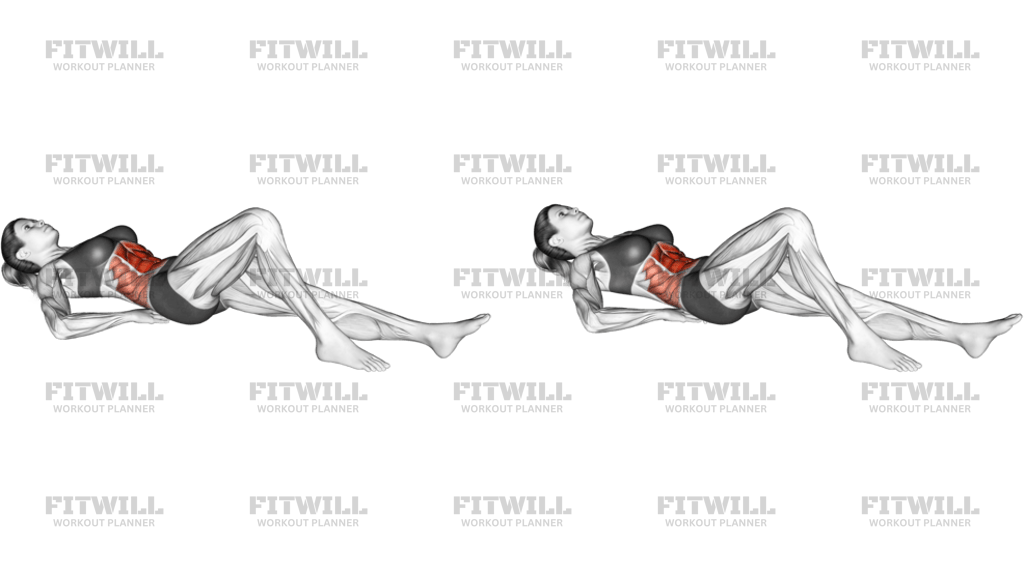
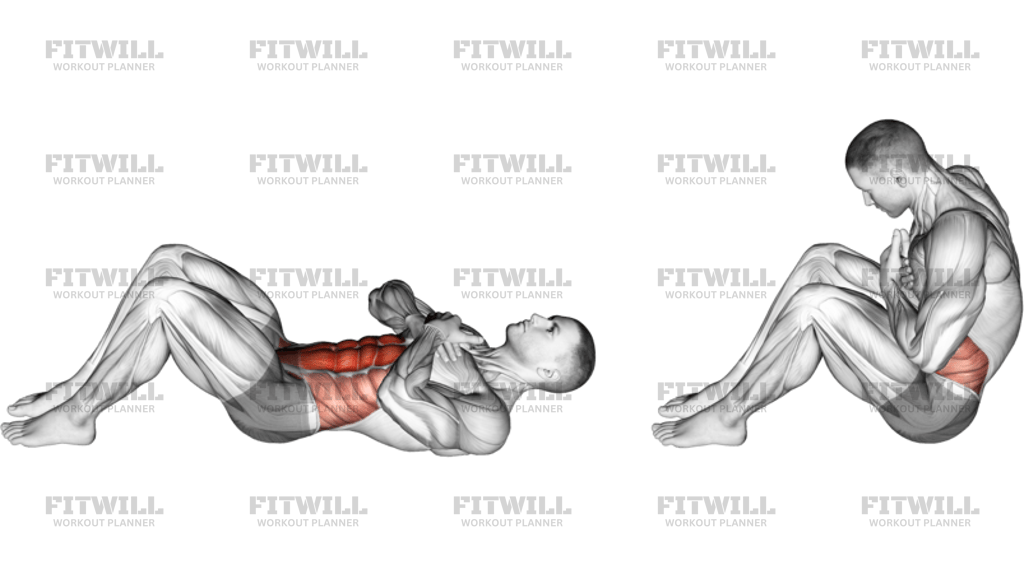
The image shows a classic mat setup: knees bent, feet flat, torso on the floor, and the hands resting across the chest. That arm position matters because it removes swing and makes the abs do more of the work. From the floor, brace first, then curl the ribcage toward the pelvis, lifting the shoulders and upper back until you reach a tall seated position. On the way down, lower one vertebra at a time until the shoulders touch the floor again.
This variation is useful in core circuits, home workouts, warmups, and abdominal accessory work because it is easy to scale by changing tempo, rep count, or range of motion. Beginners can use it as a learning drill for controlled trunk flexion, while more advanced lifters can slow the eccentric, add pauses, or work higher reps for local endurance.
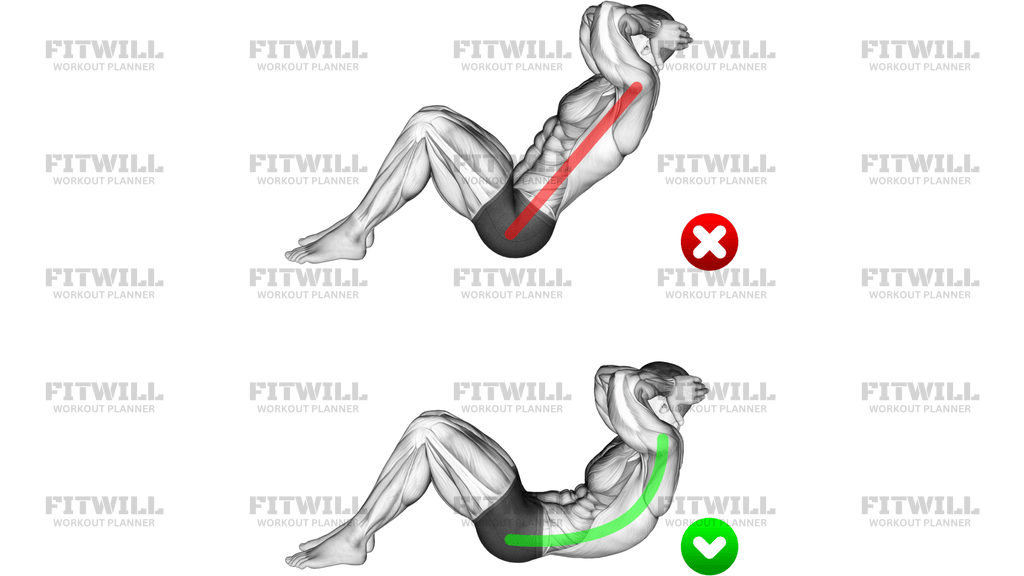
The main quality marker is control. If the neck is yanked forward, the feet pop up, or the body throws itself off the floor, the set is too aggressive. Keep the chin lightly tucked, exhale as you sit up, and stop the repetition before the lower back starts arching or the hips take over. Done well, the movement teaches the abs to shorten and control the torso without needing equipment or a bench.
[ Workout Log & Planner ]
Put your next workout in Fitwill
Keep your plan and training log ready when you are.


Instructions
- Lie on your back on a mat with your knees bent, feet flat and about hip-width apart, and your arms crossed lightly over your chest.
- Keep your heels planted, draw your ribcage down, and set your chin slightly tucked so your neck stays long.
- Exhale and brace your abs before you start the rep, then keep your lower back gently connected to the floor.
- Curl your head and shoulders off the floor first, then lift your upper back by pulling your ribs toward your pelvis.
- Continue curling until you sit tall over your hips without bouncing, swinging, or letting your knees collapse inward.
- Pause briefly at the top while keeping your arms crossed and your chest from flaring open.
- Lower yourself under control by rolling down one section of the spine at a time until your shoulders touch the floor again.
- Reset your breath at the bottom and repeat for the planned number of repetitions.
Tips & Tricks
- Cross your forearms lightly over your chest; do not pull on the back of your neck or use your elbows to yank yourself up.
- Keep both feet flat and heavy on the floor so the sit-up stays focused on the trunk instead of turning into a leg drive.
- Think about curling your ribcage toward your pelvis rather than throwing your shoulders forward.
- Exhale through the hard part of the rep to help the abs shorten and keep the movement smooth.
- Lower for at least as long as you lift if you want the abs to do more of the work.
- If your hip flexors cramp or your feet pop up, shorten the range and slow the pace.
- Keep your chin slightly tucked so the neck stays neutral instead of leading the movement.
- Stop the set when you can no longer control the descent or when your lower back starts to arch off the floor.
Frequently Asked Questions
What muscle does Sit-Up With Arms On Chest target most?
The rectus abdominis is the main target, with the obliques and hip flexors helping during the curl.
Can beginners perform this exercise?
Yes. The arms-across-chest position makes it easier to control than a full sit-up with the hands behind the head.
Do my feet need to stay anchored during the rep?
No. Keep them flat on the floor and let the legs stay quiet so the torso does the work.
How high should I come up on the sit-up?
Come up until your torso is stacked over your hips and you can sit tall without bouncing or throwing your body forward.
Why cross the arms over the chest instead of reaching overhead?
Crossing the arms removes swing and makes it harder to cheat with momentum, which puts more emphasis on the abs.
What should I do if my neck feels strained?
Keep your chin slightly tucked, eyes up, and stop trying to lead with the head. The movement should start from the abs, not the neck.
How can I make this exercise harder without changing the setup?
Slow the lowering phase, add a pause at the top, or work for more controlled repetitions instead of rushing the set.
What is the most common mistake with this sit-up?
Using momentum to fling the torso up, which usually shows up as the feet lifting, the neck straining, or the lower back arching.