Shoulder Tap
Shoulder Tap is a bodyweight anti-rotation plank variation performed from a high plank while alternating one hand to the opposite shoulder. It challenges the obliques, deep abdominal wall, and shoulder stabilizers to keep the torso steady while the arm leaves the floor. The movement looks simple, but the quality comes from resisting hip sway, shoulder collapse, and rushed reps.
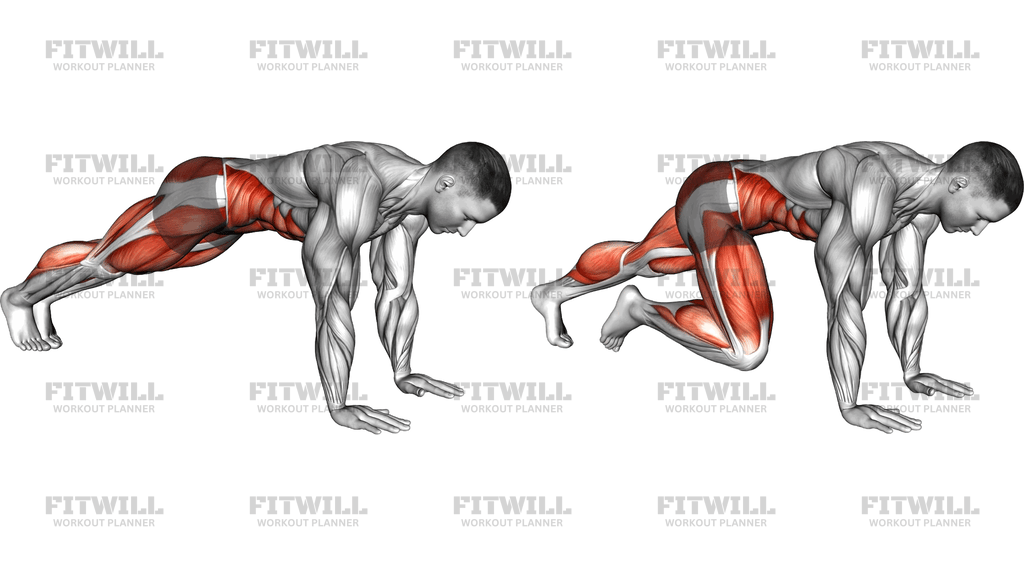
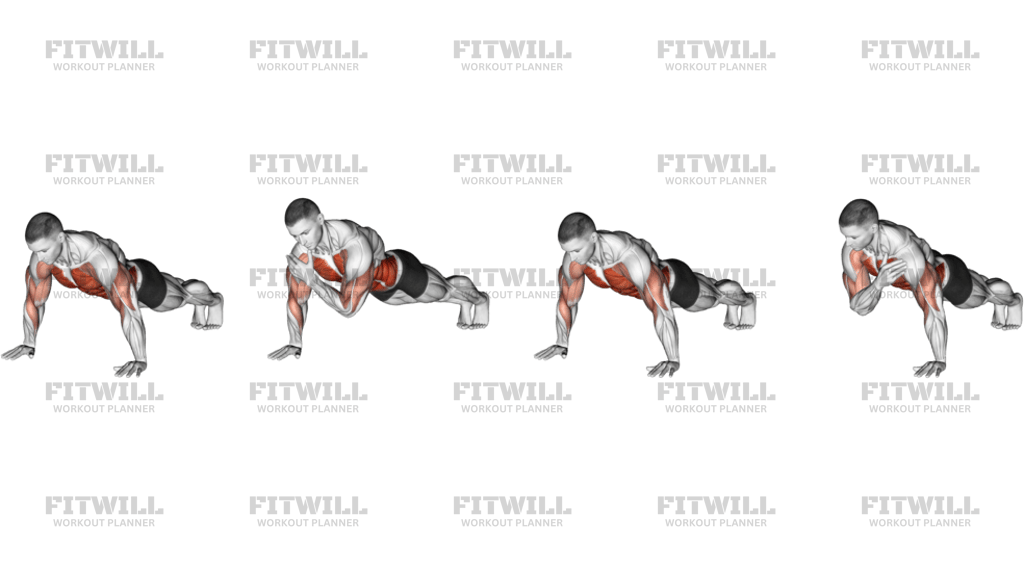
The image shows the exercise in a straight-arm plank with the hands planted under the shoulders, feet set wide enough to keep balance, and the body held in one long line from head to heels. That setup matters because the plank position creates the training effect: the supporting side has to stabilize through the wrist, shoulder, trunk, and glute on every tap. When the base is too narrow or the hips drift, the exercise turns into a balance drill instead of a clean core and shoulder exercise.
Use shoulder taps when you want a core movement that carries over to planks, crawling patterns, overhead work, and any sport or lift that needs the trunk to resist rotation. The best reps are deliberate: press the floor away, keep the ribs down, and tap the opposite shoulder without shifting the pelvis or twisting the chest. A small tap with the hand is enough; the goal is not to reach far, but to stay square while one arm briefly unloads.
This is also a useful regression or progression tool depending on how you set it up. A wider foot stance or a slightly elevated hand position makes the exercise easier, while slower tempo, narrower feet, or longer pauses increase the challenge. Keep the neck long, the gaze down between the hands, and the breathing steady so the trunk stays organized instead of fighting for position.
If the movement starts to feel sloppy, the set is usually too long or the stance is too hard for your current control. Stop before the hips start bouncing from side to side. For quality core work, the number of clean alternating taps matters more than chasing speed. Shoulder Tap should leave you feeling braced, centered, and stable rather than compressed through the lower back or overworked in the wrists.
[ Workout Log & Planner ]
Put your next workout in Fitwill
Keep your plan and training log ready when you are.


Instructions
- Place your hands on the floor under your shoulders and step your feet back into a high plank.
- Set your feet a little wider than hip-width so you have room to resist side-to-side rocking.
- Stack your shoulders over your wrists, squeeze your glutes, and keep your body in one straight line.
- Press the floor away with both hands and keep your ribs from flaring up.
- Shift your weight slightly into one arm without letting your hips rotate.
- Lift the free hand and tap the opposite shoulder with a short, controlled reach.
- Set that hand back under the shoulder and re-establish the plank before switching sides.
- Alternate sides for the planned number of taps while breathing steadily and keeping the torso square.
Tips & Tricks
- A wider foot stance usually makes the plank steadier; narrow the stance only when you can keep the hips level.
- Keep the tap small. Reaching across the body harder than necessary usually twists the chest and shifts the pelvis.
- Think about pushing the floor away through the supporting hand to keep the shoulder from sinking toward the ear.
- Squeeze the glutes before every tap so the lower back does not take over the job of keeping the torso straight.
- If your wrists feel overloaded, turn the hands slightly out or move to an incline on a bench or box.
- Breathe out as the tapping hand leaves the floor, then inhale as it returns to the plank.
- Move slowly enough that you could pause for a second on one arm without losing balance.
- Stop the set when the hips start swaying or the shoulders twist instead of staying square to the floor.
Frequently Asked Questions
What muscles do shoulder taps work most?
They mainly train the obliques and deep abs to resist rotation, with strong work from the shoulders, serratus, and glutes to hold the plank.
Can beginners perform this exercise?
Yes. Start with a wide stance or an incline on a bench if a full floor plank makes your hips wobble.
Where should my hands and feet be in the plank?
Place the hands under the shoulders and step the feet slightly wider than the hips. That gives you enough base to tap one shoulder without rolling side to side.
What is the biggest form mistake on shoulder taps?
Letting the hips rock or pike is the most common issue. The torso should stay square while only one arm moves.
Should I tap fast or slow?
Slow is better. A controlled tempo makes the anti-rotation demand obvious and keeps the plank position from turning into a shuffle.
Why do my shoulders burn before my abs?
If the shoulder is dropping or the hands are too close together, the upper body may be doing too much stabilizing. Reset the plank, widen the stance, and keep the chest quiet.
Can I make shoulder taps easier?
Yes. Use an incline, place the hands on a bench or box, or shorten the hold between taps until you can stay level.
How many reps should I do?
Use alternating taps for clean sets rather than chasing speed. Stop when you can no longer keep the ribs, hips, and shoulders aligned.