Single Leg Step-Up
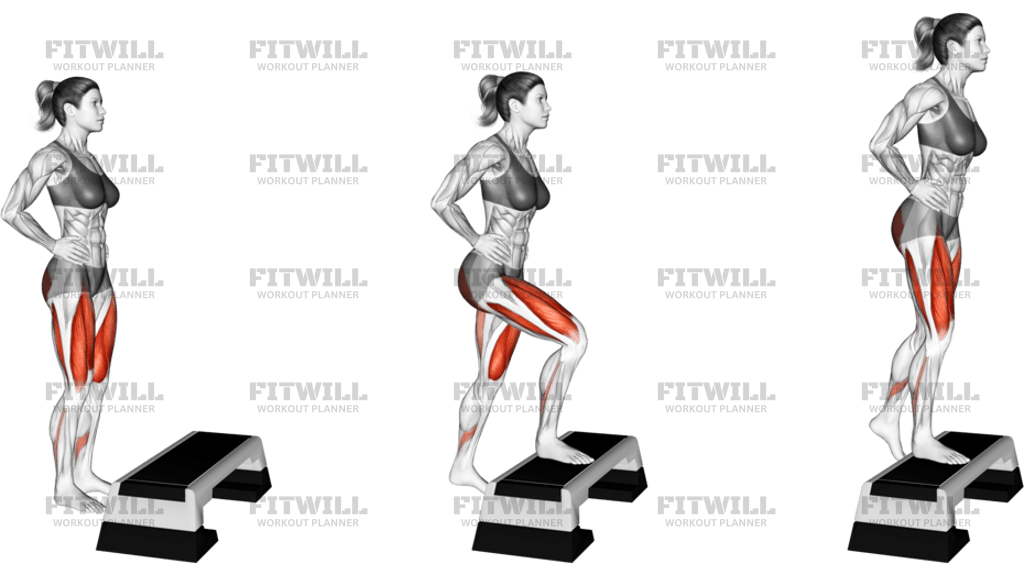
Single Leg Step-Up is a bodyweight lower-body exercise that teaches you to load one leg at a time while keeping the pelvis and torso steady. It is useful when you want stronger glutes and hips without the compressive feel of a heavy squat, and it also carries over well to stairs, hiking, and other single-leg tasks. The height of the step matters because it changes how much hip and knee control you need from the working leg.
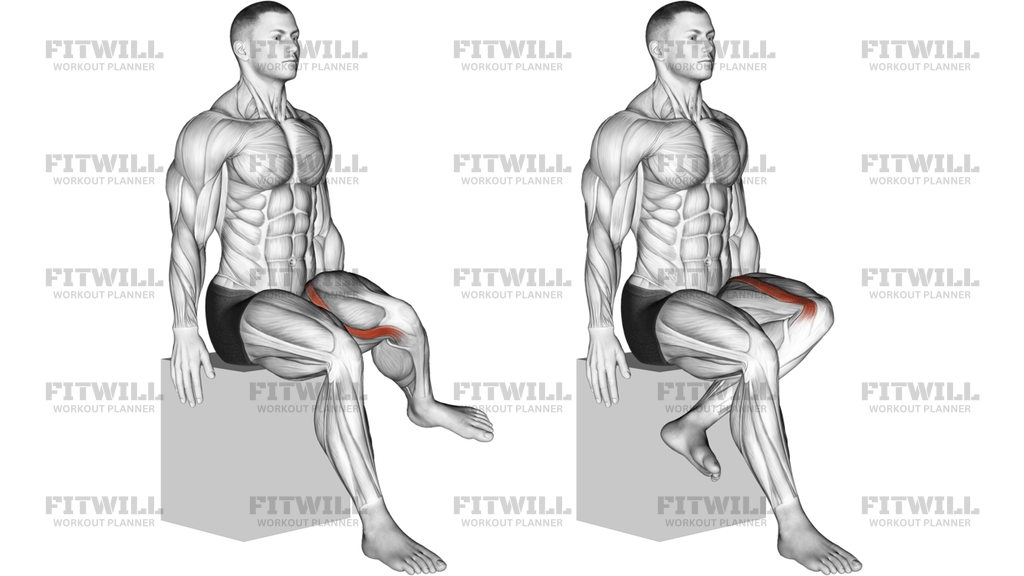
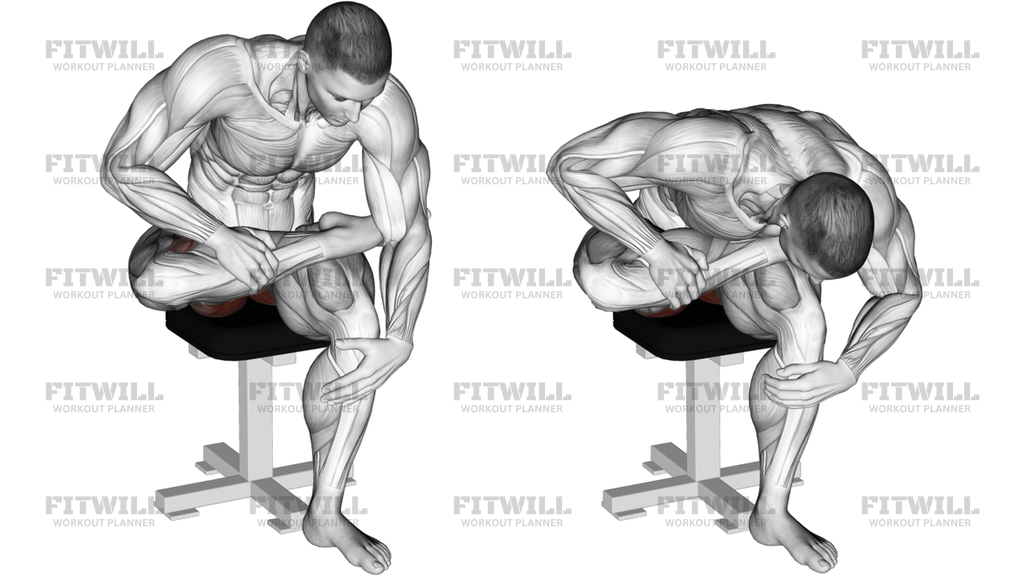
In this version, one foot stays planted on a low step or aerobic box while the other foot stays on the floor and follows the body through the rep. The working foot should land fully on the platform so the heel and forefoot share the load, not just the toes. Gluteus maximus does the main job, while the quads, hamstrings, calves, and core help keep the knee tracking and the torso from drifting sideways.
A clean rep starts with the foot flat on the step, the hips square, and the chest tall. From there, drive through the heel and midfoot of the working leg to stand up without pushing off the floor leg. Finish the rep by fully extending the hip on top of the step, then lower under control until the trailing foot returns to the floor and the next rep can begin from a stable reset.
Single Leg Step-Up works well in warm-ups, unilateral strength blocks, and accessory work when you want controlled leg training with less spinal loading than a squat or lunge. It is also a useful way to expose left-right differences in hip strength and balance. Keep the step height honest: if you have to hop, twist, or lean hard to finish the rep, the box is too high or the tempo is too fast for productive work.
[ Workout Log & Planner ]
Put your next workout in Fitwill
Keep your plan and training log ready when you are.


Instructions
- Place a low step or aerobic box in front of you and stand close enough that your whole working foot can land flat on top.
- Set one foot fully on the platform and keep the other foot on the floor with both hip bones facing forward.
- Hold your arms at your sides or place your hands on your hips, then brace your trunk and keep your chest tall.
- Press through the heel and midfoot of the foot on the step to stand up without pushing off the floor leg.
- Keep the working knee tracking over the second and third toes as you rise to the top.
- Finish tall on the step with the working hip fully extended and the pelvis level.
- Lower yourself slowly by bending the working knee and hip until the trailing foot returns to the floor under control.
- Reset both feet before the next rep, then switch sides only after you finish the set.
Tips & Tricks
- Choose a step height that lets you stand up without the pelvis tipping or the torso folding forward.
- Keep the whole foot on the platform; if only the toes are on the edge, the knee will wobble and the glute will lose leverage.
- Think about driving the step away from you instead of jumping off the floor leg.
- A brief pause at the top makes it easier to notice whether the standing hip is fully extended.
- Lower slowly to make the working leg control the descent instead of dropping straight down.
- If the standing knee caves inward, reduce the box height and slow the tempo before adding any load.
- Do not swing the trailing leg to help you finish the rep; that usually means the working leg is not doing enough work.
- Keep your ribs stacked over your pelvis so the finish position comes from the hip, not from arching your lower back.
Frequently Asked Questions
What muscles does Single Leg Step-Up work most?
Glutes are the main target, with the quads doing a lot of the knee extension and the hamstrings and core helping stabilize the body.
Is Single Leg Step-Up good for beginners?
Yes, as long as you start with a low step and can place the whole foot flat on the platform without bouncing.
How high should the step be for Single Leg Step-Up?
Start with a low box or step that keeps the movement smooth and your pelvis level. If you have to hop or twist to finish, the step is too high.
Should my entire foot stay on the box?
Yes. A flat foot gives you more stability and lets you drive through the heel and midfoot instead of balancing on your toes.
Do I need to drive the opposite knee up?
No. You can simply stand tall on top of the step; the important part is that the working leg finishes the rep without a push from the floor leg.
Why do I feel Single Leg Step-Up in my lower back?
That usually happens when you arch at the top or lean too far forward. Keep the ribs down and the pelvis square so the hip does the work.
Can I hold dumbbells during this exercise?
Yes, once bodyweight reps are stable. Add load only if you can still keep the knee tracking over the toes and avoid pushing off the floor leg.
What is the most common mistake on this exercise?
The biggest mistake is using momentum from the trailing leg instead of pressing through the foot on the step.