Band Squat With Single-Arm Row
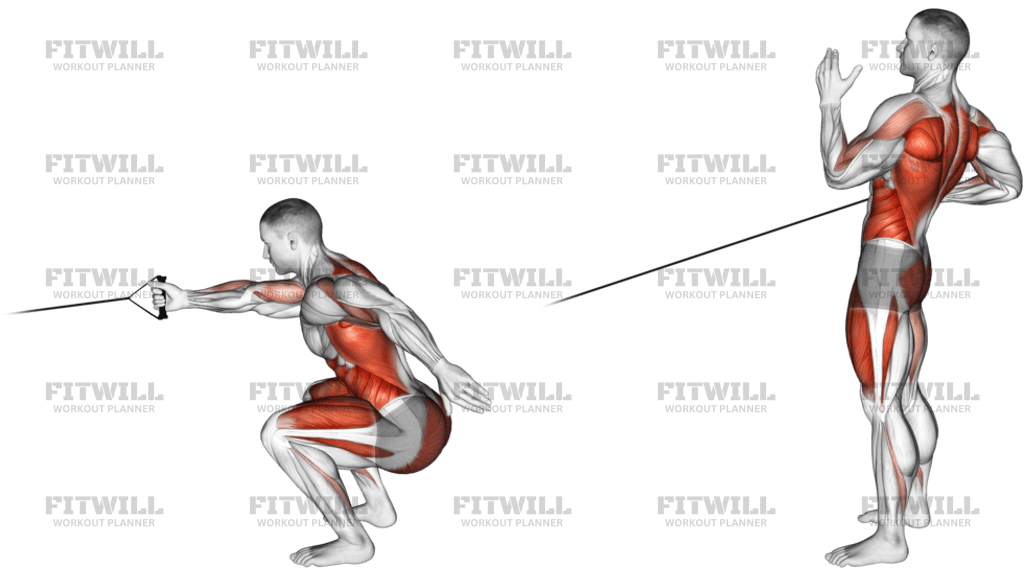
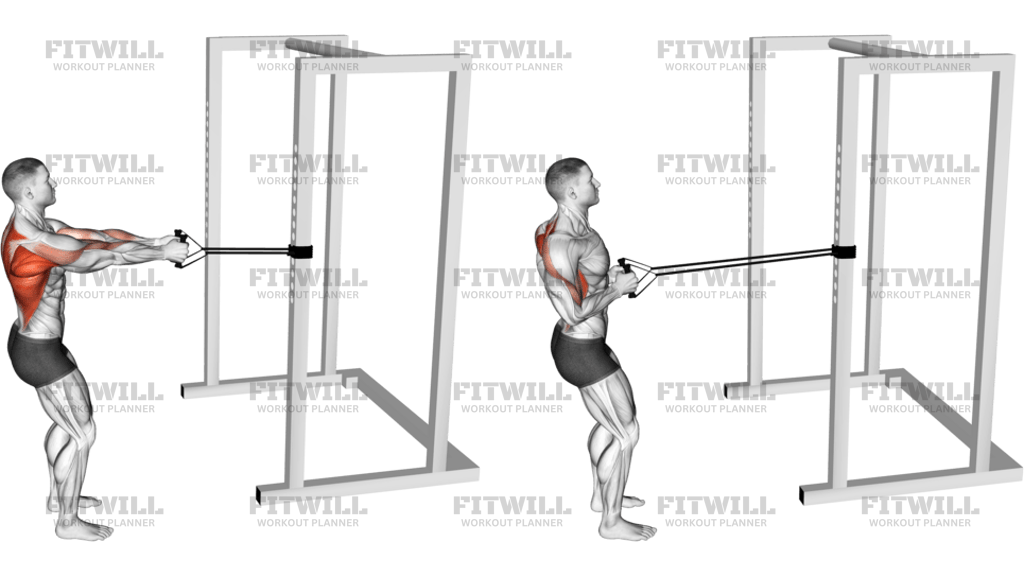
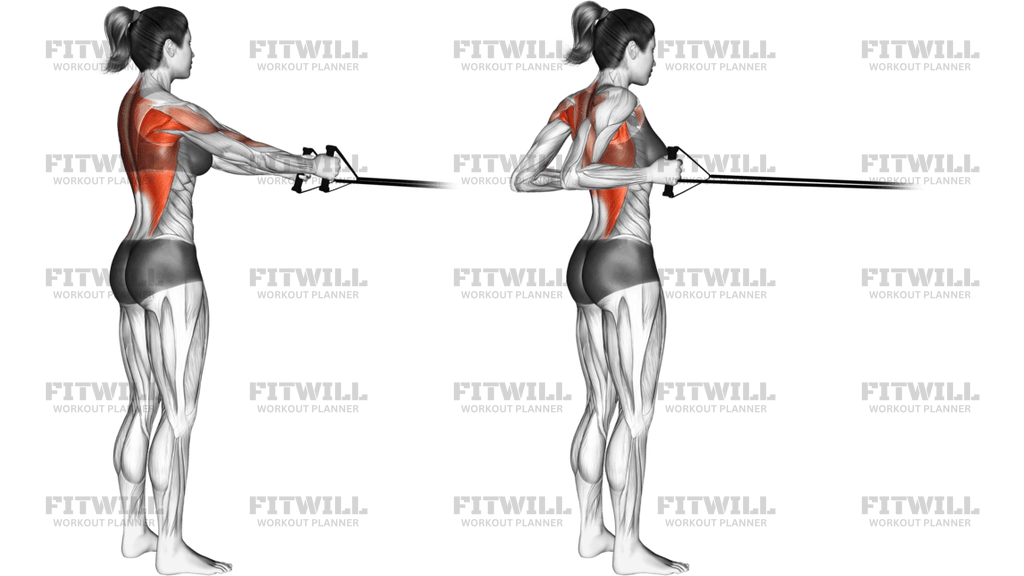
Band Squat With Single-Arm Row combines a squat with a horizontal row, so one rep trains your legs, upper back, and trunk at the same time. The band should be anchored in front of you at about chest height, and each repetition should feel like a synchronized push-and-pull: as you sit into the squat, the working arm reaches forward; as you stand up, the elbow drives back toward the ribs.
This pattern is useful when you want lower-body work without losing upper-back tension. The squat loads the quads and glutes, while the row targets the lats, mid-back, rear shoulder, and arm on the working side. Because the band pulls you forward, your core and upper back have to stay organized so the torso does not twist, shrug, or collapse as the tension changes through the range.
The setup matters more here than in a simple squat or row. Stand far enough from the anchor that the band is already under light tension in the start position, then set your feet flat and slightly wider than hip width. Keep the chest tall, ribs stacked over the pelvis, and the free hand relaxed for balance. From there, lower into the squat with control while the working arm lengthens forward, and keep the shoulder from rolling toward the ear.
On the way up, press through the floor and pull the elbow back in one smooth action. The hand should finish near the side of the chest or lower ribs, not behind the body. Avoid yanking with the arm alone; let the legs and torso rise together so the row feels connected to the squat rather than tacked on at the top. A brief pause at the end of the pull helps you feel the back working without using momentum.
Use this exercise for conditioning, accessory work, or coordination-focused strength training when you want a lot of work from a light setup. It is especially useful as a warm-up into full-body sessions or as a higher-rep circuit movement, but the quality should stay strict. If the squat depth makes the row sloppy, shorten the range or use a lighter band until you can keep the same path on every rep.
[ Workout Log & Planner ]
Put your next workout in Fitwill
Keep your plan and training log ready when you are.


Instructions
- Anchor a band in front of you at about chest height and stand facing the anchor with your working hand holding the handle or band end.
- Step back until the band is lightly taut, then place your feet about hip- to shoulder-width apart with a balanced, flat-footed stance.
- Keep your chest tall, ribs stacked, and free hand relaxed for balance before you start the first rep.
- Sit your hips back and bend your knees into a squat while the working arm reaches forward under control.
- Keep the shoulder down and the wrist straight as the band lengthens; do not let the torso twist toward the anchor.
- Drive through your feet to stand up while you pull the elbow back toward your lower ribs in the same rep.
- Finish tall with the shoulder blade gently squeezed, the elbow close to your side, and the band under tension.
- Return the arm forward as you descend into the next squat, keeping the movement smooth and continuous.
- Complete all reps on one side, then turn around and repeat with the opposite arm.
Tips & Tricks
- Keep the band anchored at roughly chest height so the row finishes in a straight line toward your lower ribs instead of pulling up into the shoulder.
- Use a stance wide enough to squat comfortably, but not so wide that your knees cave in or you lose balance when the band tightens.
- Let the arm reach forward as you descend, but do not protract the shoulder aggressively; the ribcage should stay stacked, not flared.
- Drive the elbow back close to your side instead of flaring it wide, which keeps the row on the lats and mid-back.
- If the band yanks you forward, step closer to the anchor or use a lighter band so the squat stays smooth.
- Keep the free hand quiet; swinging it for momentum usually means the row is too heavy or the squat is too fast.
- Exhale as you stand and row, then inhale as you return into the squat to help keep the torso braced.
- Stop the set when you can no longer keep the same row path on both sides or when the squat turns into a forward hinge.
Frequently Asked Questions
What does Band Squat With Single-Arm Row train?
It combines a squat for the quads and glutes with a single-arm row for the lats, mid-back, rear shoulder, and arm.
Should I row first or squat first?
Think of them as one connected rep: sit into the squat as the arm reaches forward, then stand and row back at the same time.
Where should the band be anchored?
Chest height is the best starting point because it lets the row finish cleanly toward the lower ribs without forcing the shoulder up.
What is the biggest form mistake?
Twisting the torso to finish the row is the most common issue. Keep the shoulders square and let the arm move without rotating the body.
Is this exercise good for beginners?
Yes, if the band is light and the squat depth is controlled. Start with a small range and build coordination before adding tension.
What if I feel it mainly in my shoulders or neck?
Usually the band is too heavy or the shoulder is shrugging. Reduce tension and keep the shoulder blade down as you row.
Can I use this in a circuit workout?
Yes. It works well in higher-rep circuits because it challenges the legs and upper back together without requiring much equipment.
How do I progress the movement safely?
Increase band tension only after you can keep the same squat depth, shoulder position, and row path on every rep.