Resistance Band Lateral Step And Squat
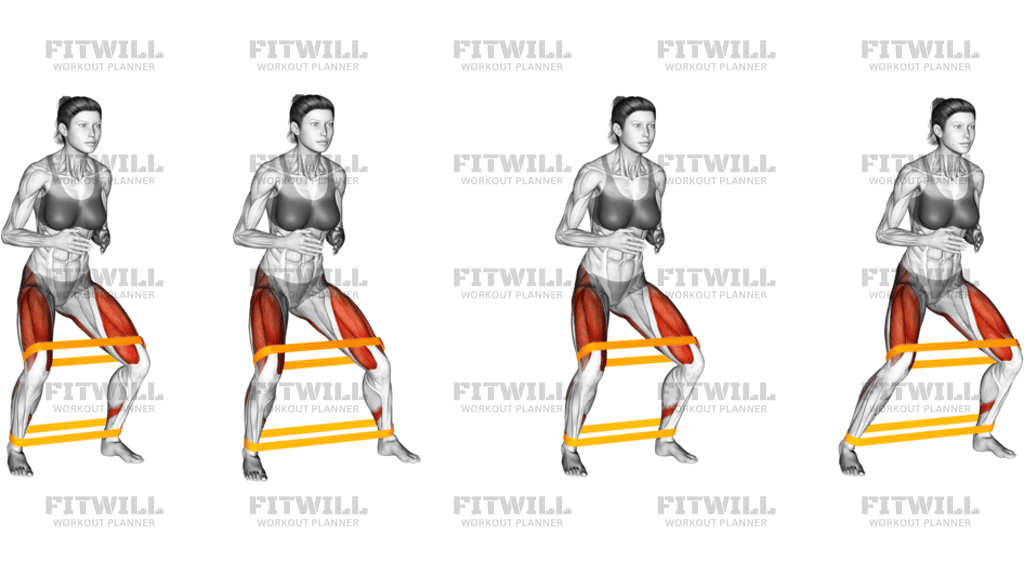
Resistance Band Lateral Step And Squat is a lower-body band drill that combines side stepping with a shallow squat to keep constant tension on the hips, glutes, and thighs. The loop band usually sits just above the knees, which helps you feel the knees track outward as you move instead of collapsing inward. It is useful when you want a low-impact way to build lateral control, squat pattern awareness, and hip stability in the same movement.
This exercise is not meant to be a deep strength squat or a fast cardio shuffle. The value comes from staying organized while the band tries to pull your knees together and your feet apart. That makes it a good accessory movement for glute work, warmups before squats or deadlifts, and lower-body circuits where you want the legs working without heavy joint stress.
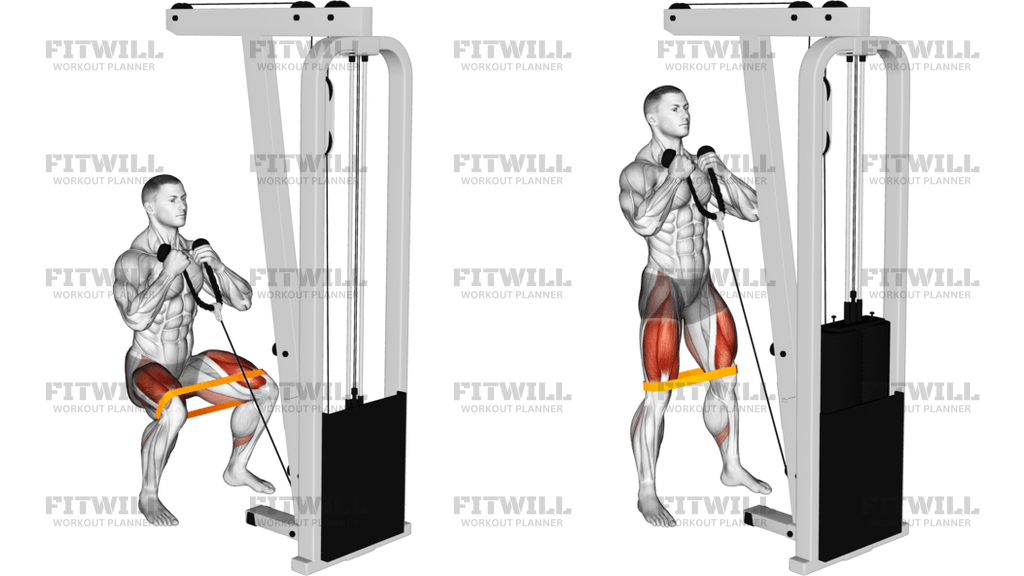
Start by standing tall with the band around the thighs just above the knees, feet about hip-width apart, and toes pointed slightly out. Sink into a quarter squat so your hips stay back, your chest stays lifted, and your weight stays in the midfoot and heels. From there, step laterally while keeping tension in the band and resisting the urge to stand all the way up between steps.
As you travel, keep the knees gently pressed out so the band stays active the whole time. The torso should stay quiet, with only a small natural lean from the hips, not a side bend or sway. If the movement starts to look like a wide walk with no squat, reset the stance and lower the hips a little more before continuing.
The exercise works best with short, controlled steps and a range you can repeat evenly from side to side. Beginners can use a lighter band and focus on posture, while stronger lifters can use more resistance only if the knees still track cleanly and the feet do not drag. When done well, the movement should feel like steady hip work and leg control rather than a rushed shuffle.
Use Resistance Band Lateral Step And Squat as an accessory movement, activation drill, or conditioning piece when you want to wake up the hips before heavier lower-body training. It is especially helpful for people who need better knee control during squats, lunges, and change-of-direction work. The key is to keep the band tension, keep the squat shallow and deliberate, and stop the set before your stance gets sloppy.
[ Workout Log & Planner ]
Put your next workout in Fitwill
Keep your plan and training log ready when you are.


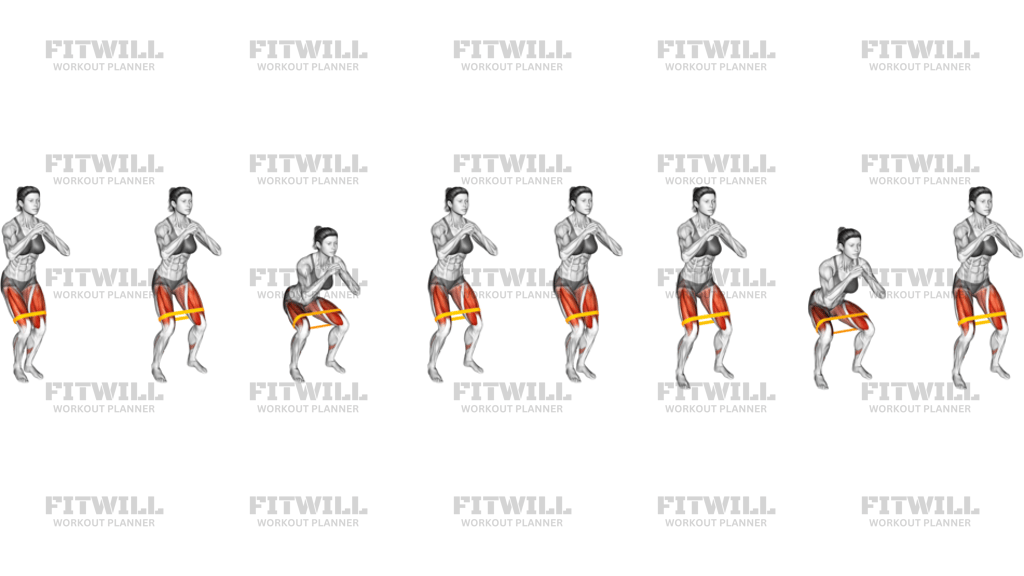
Instructions
- Loop the resistance band around your thighs just above your knees and stand with your feet about hip-width apart.
- Turn your toes slightly out, soften your knees, and lower into a shallow squat with your chest tall and your hips back.
- Press your knees gently outward so the band is already under light tension before you move.
- Step laterally with one foot while keeping the squat depth steady and your weight centered over the midfoot and heels.
- Bring the trailing foot in without letting the band go slack or letting your knees cave inward.
- Stay low and repeat the same side step in the same direction for the planned reps, keeping the torso quiet.
- Reverse direction and side-step back the other way with the same squat depth and band tension.
- Breathe steadily through the set and keep your neck relaxed instead of craning forward.
- Stand up fully and reset your stance only after the set is complete.
Tips & Tricks
- Place the band above the knees, not at the ankles, if you want the squat and knee position to stay easier to control.
- Keep the steps short; reaching too far to the side usually turns the rep into a sway instead of a controlled leg drill.
- If your knees knock inward, slow down and think about pushing the floor apart with both feet before each step.
- A shallow squat is enough here. Dropping too low often makes the torso tip forward and the band work disappear.
- Keep your feet planted between steps instead of bouncing from one side to the other.
- Use a band that creates clear tension without forcing your hips to twist or your feet to turn out aggressively.
- Drive from the standing leg and keep the moving foot light so the glutes stay active instead of the whole body lunging sideways.
- If the band rolls up the thighs, pause and reset it; slipping tension usually means the set is too fast or the band is too loose.
- This works well in higher reps, but only as long as the knees stay in line with the toes and the squat stays even.
Frequently Asked Questions
What muscles does Resistance Band Lateral Step And Squat train most?
It mainly targets the glutes and hip stabilizers, especially the outer hips, with the thighs and core helping you keep the squat and side step under control.
Where should the resistance band sit for Resistance Band Lateral Step And Squat?
The band should sit just above the knees so you can feel outward tension without the movement getting too unstable. That placement also makes it easier to keep the squat shallow and the knees tracking cleanly.
Should I stay low the whole time during Resistance Band Lateral Step And Squat?
Yes, stay in a shallow squat and keep the hips at nearly the same height while you step. If you keep standing up between steps, the movement turns into a walk and you lose the squat tension.
Can beginners do Resistance Band Lateral Step And Squat?
Yes, beginners usually do well with a light band and short side steps. The main priority is keeping the knees out and the torso steady rather than taking big steps.
Why do my knees cave inward during Resistance Band Lateral Step And Squat?
The band is probably too heavy, the steps are too long, or you are rushing the reps. Shorten the step, lighten the band, and think about gently pressing the knees outward before each move.
What is the biggest form mistake in Resistance Band Lateral Step And Squat?
A common mistake is letting the torso sway while the feet travel too far. Keep the chest up, the squat shallow, and the steps controlled so the hips do the work.
Is Resistance Band Lateral Step And Squat more of a warmup or a strength exercise?
It can be both, but it is most often used as a warmup, activation drill, or accessory movement. The band keeps constant tension, so it is better for control and glute endurance than max load.
How can I make Resistance Band Lateral Step And Squat harder?
Use a stronger band, keep the squat slightly deeper, or slow the side steps down. You can also pause for a second in the low position before taking the next step.