Band Split Jump With Single-Arm Row
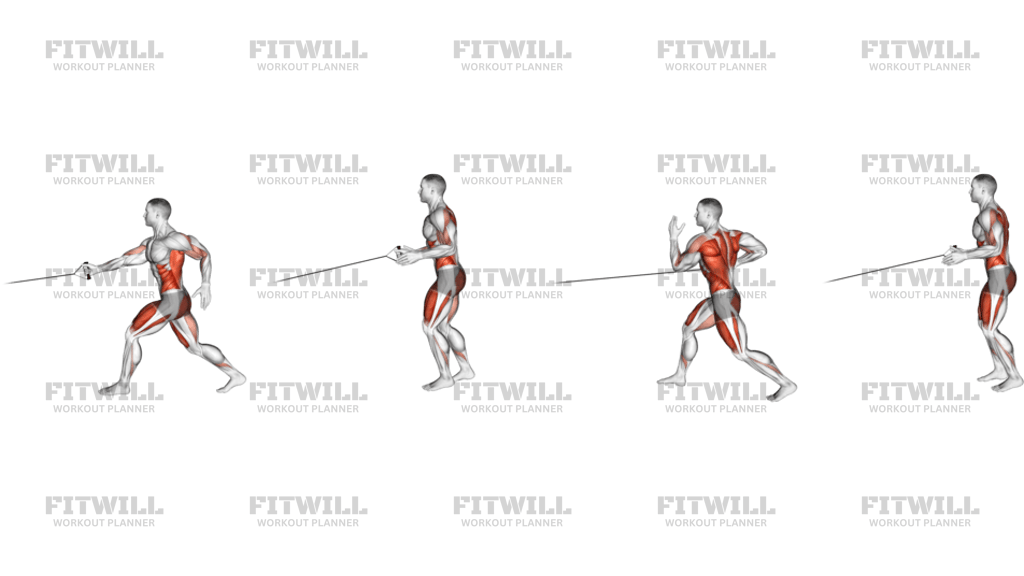
Band Split Jump With Single-Arm Row is a split-stance band row that combines an athletic lower-body position with a strong unilateral pull. In the image for this exercise, the body stays tall and staggered while the working arm rows the band toward the ribs, which makes the movement useful for back strength, trunk control, and coordination. If you perform the jump version, the lower body should stay springy and quiet so the row still looks and feels deliberate.
The exercise trains the lats, mid-back, rear shoulders, biceps, and the core muscles that keep the torso from twisting toward the anchor. Because only one side is pulling, the setup matters as much as the row itself: the stance, band angle, and distance from the anchor determine whether the load hits the back cleanly or turns into shoulder shrugging and body sway. A good setup gives you tension at the start without forcing you to lean, rotate, or reach.
Use a stable split stance with the leg opposite the working arm forward, the chest tall, and the ribs stacked over the pelvis. Hold the handle in the hand closest to the anchor, keep the shoulder down, and row the elbow back toward the lower ribs or back pocket. Pause briefly at the finish so the shoulder blade can squeeze back without the chest spinning open. Then lower the handle under control and reset your stance before the next rep.
This pattern works well as accessory work, athletic conditioning, or a warm-up drill when you want the upper back to work while the legs stay engaged. It is also useful for teaching anti-rotation, because the band wants to pull you sideways and the core has to resist that twist. Keep the resistance light enough that every rep stays crisp. If the jump variation feels too chaotic, use the static split-stance row first and add the hop only when you can land softly and keep the pull smooth.
Fitwill
Log Workouts, Track Progress & Build Strength.
Achieve more with Fitwill: explore over 9600 exercises with images and videos, access built-in and custom workouts, perfect for both gym and home sessions, and see real results.
Start your journey. Download today!




Instructions
- Anchor a light-to-moderate band at about chest height and stand far enough away to feel tension at the start.
- Step into a split stance with the leg opposite the working arm forward, and keep both knees softly bent.
- Hold the handle in the hand closest to the anchor with the arm extended, palm neutral, and shoulder set down away from the ear.
- Square your chest and hips to the anchor, then stack your ribs over your pelvis before you start the pull.
- Set your weight mostly through the midfoot of the front leg and keep the back heel light but grounded.
- Pull the handle toward your lower ribs or back pocket by driving the elbow back and keeping it close to your side.
- Squeeze the shoulder blade back without rotating your torso or shrugging the working shoulder.
- Lower the handle slowly until the arm is long again, then keep the band under control before the next rep.
- If you are using the jump variation, make the leg switch small and quiet, land softly, and reestablish the split stance before rowing again.
- Exhale as you row and inhale as you return, repeating for the planned number of reps.
Tips & Tricks
- Choose a band that lets you finish the row without your chest opening toward the anchor.
- Keep the elbow tracking back along your side instead of flaring high toward the shoulder.
- Use the front foot to stay balanced, but do not let the front knee collapse inward when you pull.
- If the band drags your shoulder forward, step a little closer to the anchor or shorten the starting reach.
- Keep the neck long and the chin slightly tucked so the upper traps do not take over the row.
- The row should feel like a back exercise first; if the legs are doing all the work, slow the stance or remove the jump.
- Pause for a split second at the top only if you can keep the torso square and the ribs down.
- Land quietly on jump reps and stop the set as soon as the band starts snapping you off balance.
Frequently Asked Questions
What muscles does Band Split Jump With Single-Arm Row work?
It primarily trains the lats and mid-back, with rear delts, biceps, core, and split-stance leg stabilizers helping keep the movement organized.
Do I need to actually jump to do this exercise?
No. The static split-stance row is the simplest version, and the jump variation is only useful if you can keep the pull smooth and the landing quiet.
Which hand should hold the band handle?
Use the hand closest to the anchor so the working side can row straight back while the torso stays square.
How far should I stand from the anchor point?
Far enough to create tension at the start, but not so far that you have to lean, twist, or shrug to reach the handle.
What is the most common form mistake?
People usually turn it into a torso twist or a shrug instead of a controlled elbow drive toward the ribs.
Is this more of a back exercise or a leg exercise?
It is mainly a back and core drill, but the split stance makes the legs work hard to keep you stable, especially if you add the jump.
Can beginners use this movement?
Yes. Start with a static split stance, light band tension, and a short row path before adding speed or the jump.
How do I make the exercise harder without losing form?
Use a slightly stronger band, add a brief pause at the top, or make the stance more athletic while keeping the row clean.