Incline Push-Up On Box
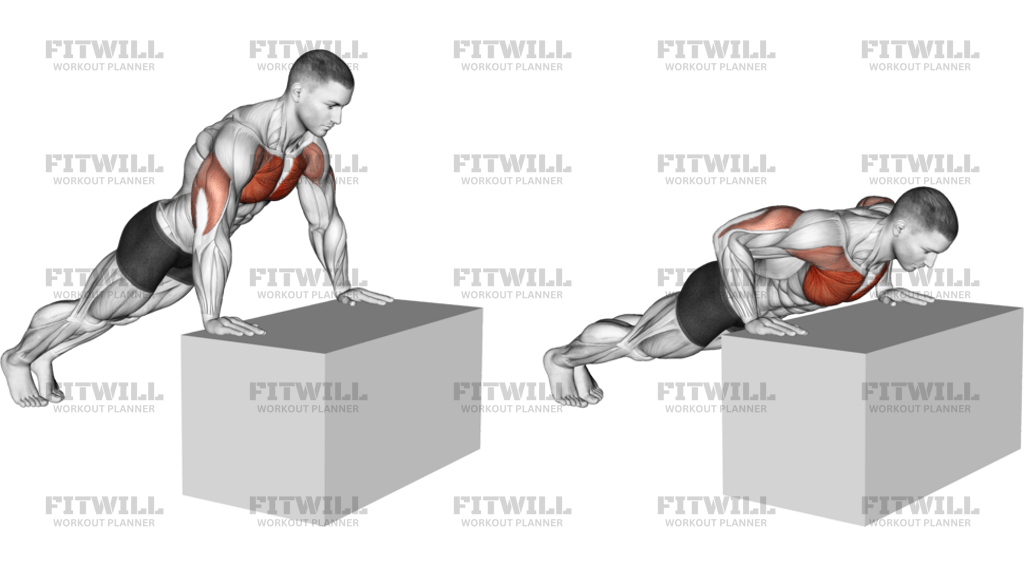
Incline Push-Up On Box is a bodyweight pressing exercise done with the hands on a stable box or bench and the feet on the floor. Elevating the hands shortens the leverage of the movement, which makes the rep easier than a floor push-up while still training the chest, shoulders, triceps, and trunk to work together under load.
The exercise is especially useful when you want to practice push-up mechanics before moving to the floor, when full push-ups are still too demanding, or when you want a cleaner rep style for higher-volume pressing work. The elevated setup should reduce load without turning the body into a loose hinge. The goal is still a straight line from head to heels, a controlled descent, and a strong press back to the starting position.
Setup matters because the box changes the angle of the press and the amount of stress on the shoulders and wrists. Place the hands on a firm, non-slip surface with the wrists under or slightly wider than the shoulders, then walk the feet back until the body forms one long plank. Keep the glutes and abdomen engaged so the lower back does not sag as the chest moves toward the box.
Each repetition should lower the chest toward the front edge of the box with the elbows tracking at a comfortable angle, usually slightly tucked rather than flared hard out to the sides. Pause or lightly touch the chest near the box if control stays intact, then press the floor away and finish with the elbows straight without shrugging into the ears. Breathe in on the way down and exhale as you drive up.
Use this variation when you need a scalable pressing pattern that still reinforces good shoulder position and body tension. A higher box makes the movement easier; a lower box increases the challenge. If the hips pike, the neck cranes forward, or the hands slide as you fatigue, the setup or intensity is too aggressive. The cleanest reps are the ones where the torso stays rigid, the descent is smooth, and the press finishes with the chest and shoulders doing the work rather than momentum.
[ Workout Log & Planner ]
Put your next workout in Fitwill
Keep your plan and training log ready when you are.


Instructions
- Place a stable box, bench, or other firm elevated surface in front of you and put both hands on the front edge slightly wider than shoulder width.
- Walk your feet back until your body forms a straight line from head to heels, with your shoulders stacked over your wrists.
- Squeeze your glutes and brace your midsection so your lower back stays flat before the first rep starts.
- Begin lowering by bending the elbows and guiding the chest toward the box under control.
- Keep the elbows angled slightly back from the shoulders instead of flaring them straight out to the sides.
- Lower until your chest is close to the top edge of the box or you reach your cleanest pain-free bottom position.
- Press the box away, exhale, and return to a strong plank without letting the hips sag or rise first.
- Finish each rep with the elbows straight, shoulders stable, and the neck relaxed before starting the next descent.
Tips & Tricks
- Choose a box height that lets you keep a straight plank; if your hips pike, the box is too low for the current set.
- Keep the hands planted through the full palm so the wrists do not collapse toward the edge of the box.
- Aim the chest toward the box edge, not the chin, so the neck stays neutral and the press path stays clean.
- Let the elbows travel about 30 to 45 degrees from the torso instead of forcing an extreme flare.
- Lower for a smooth count instead of dropping into the bottom, especially if the box surface is hard or unstable.
- If the shoulders shrug up near the ears, reduce the range slightly and keep the shoulder blades controlled.
- Move the feet farther back only if you can keep the ribs down and the lower back from arching.
- End the set when the last rep turns into a hip-pike or a partial press; that is the first sign the incline is too hard.
Frequently Asked Questions
What muscles does Incline Push-Up On Box work?
It mainly trains the chest, with the triceps, front shoulders, and core helping to stabilize and press.
Why use a box instead of the floor?
Elevating the hands makes the push-up easier to control, so it is a useful regression for building pressing strength and cleaner mechanics.
How high should the box be?
Use a height that lets you keep a rigid plank and complete smooth reps. A higher box reduces the load; a lower box makes the exercise harder.
Where should my chest go on each rep?
Lower the chest toward the front edge of the box, not toward the chin or stomach, so the shoulders and chest stay on the intended path.
Should my elbows flare out wide?
No. A moderate elbow angle is usually cleaner for this movement and keeps the shoulders from taking over the rep.
Can I use a bench or couch instead of a box?
Yes, as long as the surface is stable and will not slide or sink when your hands press into it.
Is this a good beginner push-up variation?
Yes. It is one of the best ways to learn push-up body position before progressing to lower inclines or floor push-ups.
What is the most common mistake?
Letting the hips sag or pike so the body stops moving as one unit is the most common error.