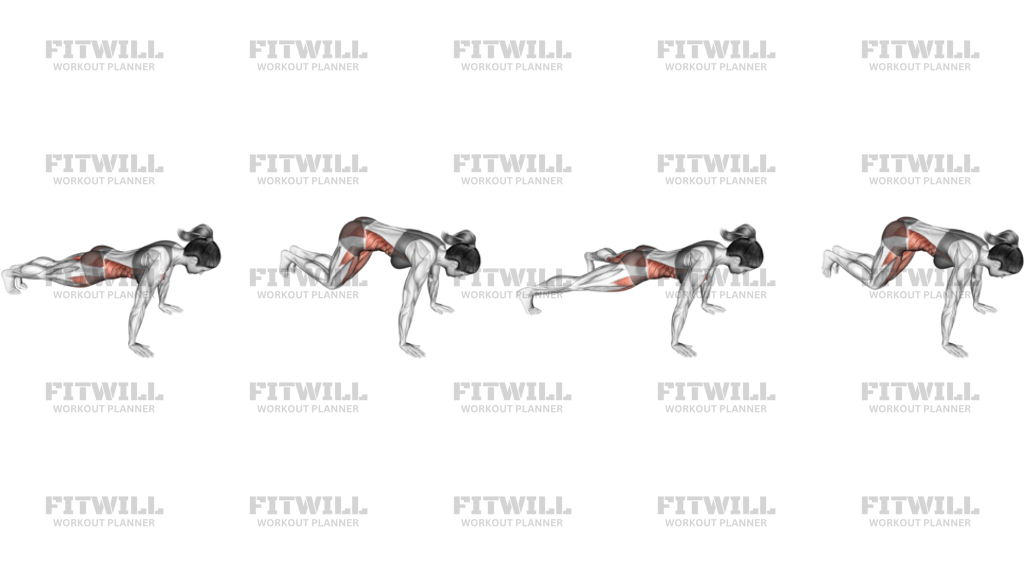
Front Plank Toe Tap
Front Plank Toe Tap is a bodyweight core exercise built around one simple demand: keep the torso steady while the feet make quick, controlled contact with the floor. It trains the deep abdominal wall, obliques, shoulders, and glutes at the same time, so it is useful when you want core work that also challenges plank stability and hip control.
The value of this movement is not in how far the foot reaches, but in how little the rest of the body moves while the tap happens. If the hips sway, the low back arches, or the shoulders drift behind the wrists, the set turns into a balance drill instead of a core-strength exercise. A good Front Plank Toe Tap keeps the ribs stacked, the pelvis level, and the neck long from the first rep to the last.
This exercise works well in warmups, accessory blocks, conditioning circuits, or dedicated core sessions. It is a useful option for people who want to progress beyond a static plank without jumping straight into unstable or loaded variations. Because the movement is small, the challenge comes from maintaining alignment and breathing under tension rather than chasing a big range of motion.
Use a floor surface that lets your hands or forearms stay planted securely, and set your feet wide enough to keep the plank from rocking. Tap one toe lightly, bring it back under control, then switch sides without rushing. If the shoulders start to shrug, the lower back drops, or the taps get sloppy, shorten the set and clean up the position before adding more reps.
Fitwill
Log Workouts, Track Progress & Build Strength.
Achieve more with Fitwill: explore over 9600 exercises with images and videos, access built-in and custom workouts, perfect for both gym and home sessions, and see real results.
Start your journey. Download today!




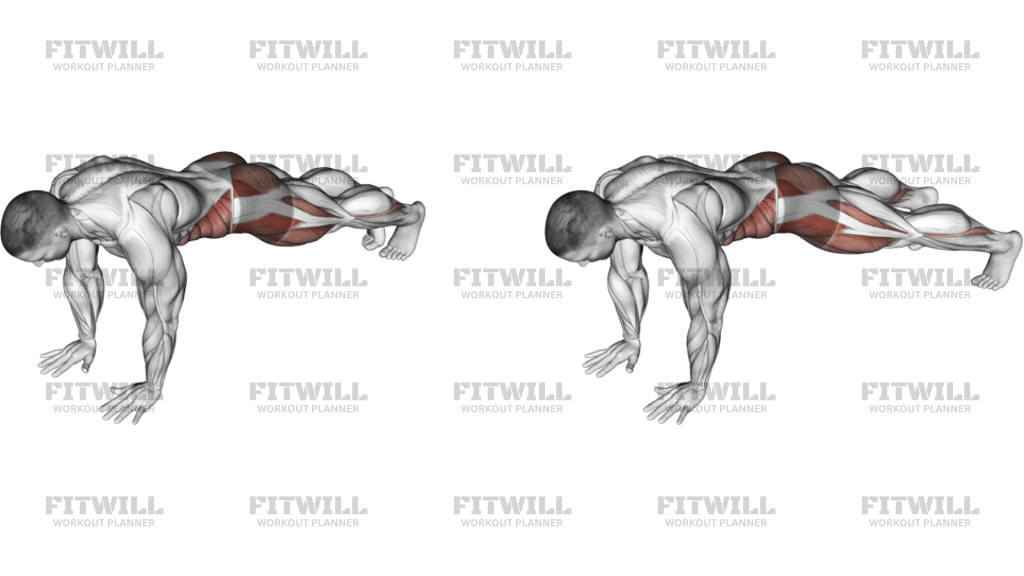
Instructions
- Start in a high plank with your hands under your shoulders, legs straight, and feet set slightly wider than hip width for balance.
- Press the floor away, tighten your glutes, and draw your ribs down so your body forms one long line from head to heels.
- Shift your weight just enough to lighten one foot, then tap the toes to the floor without letting your hips twist open.
- Bring that foot back to the plank position under control before the next tap begins.
- Alternate sides one rep at a time, keeping the shoulders stacked over the wrists and the neck relaxed.
- Breathe out as each foot taps and breathe in as you return to the plank.
- Keep the tap light and precise; do not stomp the foot or swing the leg wider than you can stabilize.
- Finish the set by lowering your knees or stepping one foot at a time out of the plank instead of dropping your hips.
Tips & Tricks
- Widen your feet a little if your hips rock from side to side on every toe tap.
- Keep the tap short and light; the goal is anti-rotation control, not a big leg swing.
- If your low back sags, squeeze your glutes harder and shorten the set before fatigue changes your plank line.
- Stack your shoulders directly over your wrists so the pressure stays centered instead of drifting forward.
- Imagine zippering your front ribs toward your pelvis to stop the torso from flaring as the feet move.
- Use a slower return to the plank than the tap itself if you tend to rush the transition.
- Keep your palms rooted and spread through the fingers so the upper body does not collapse into the shoulders.
- Stop the set when the hips start rotating instead of trying to force more alternating reps.
Frequently Asked Questions
What does Front Plank Toe Tap train?
It trains the deep core, obliques, shoulders, and glutes while teaching the torso to stay still as the feet move.
Is Front Plank Toe Tap good for beginners?
Yes, if you can hold a solid plank first. Start with a wider stance and fewer taps until you can keep the hips level.
Should my feet stay close together in Front Plank Toe Tap?
No. A slightly wider foot position usually makes it easier to control the plank and keep the hips from rocking.
What is the most common mistake in Front Plank Toe Tap?
The most common mistake is letting the pelvis twist or the low back sag when one foot leaves the floor.
Do I need to tap the toe far away from my body?
No. The tap should be small and controlled. A short reach is enough as long as the torso stays square.
Can I do Front Plank Toe Tap on my forearms instead of my hands?
Yes, if the forearm version lets you keep a flatter back and steadier hips. Use the support position that you can control best.
How many reps should I do?
Use a controlled alternating count, such as 8-20 total taps, and stop before the plank shape breaks down.
How can I make Front Plank Toe Tap harder?
Narrow your foot stance slightly, slow the return, or add a longer pause in the plank between taps.