Band Side Bend
Band Side Bend is a standing lateral-flexion exercise that trains the obliques to control the trunk against a steady line of band tension. It is especially useful when you want direct work for the waist without needing a heavy machine or a large setup. The movement looks simple, but the quality of the rep depends on keeping the pelvis quiet, the ribs stacked, and the shoulder relaxed while the torso bends and returns.
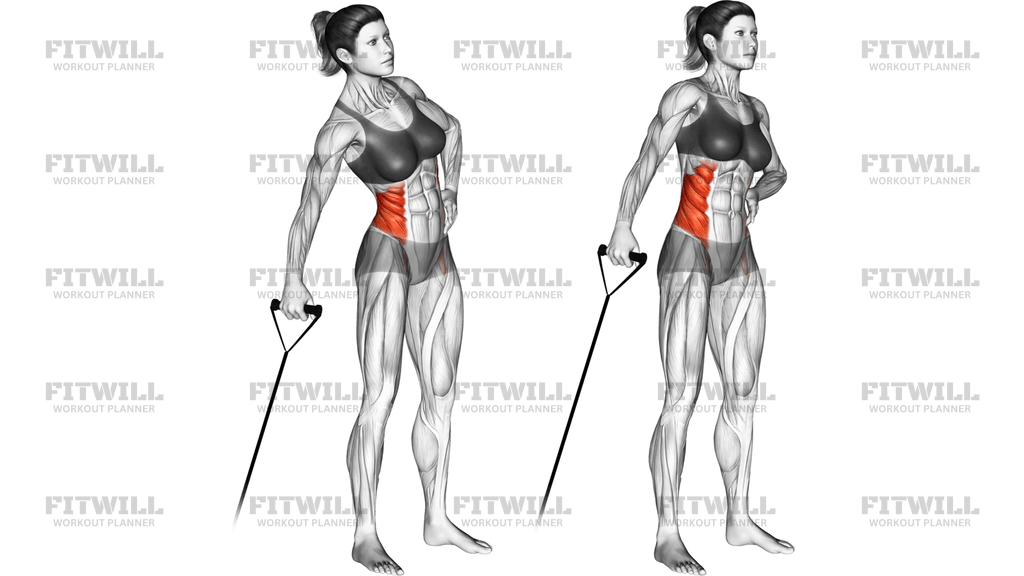
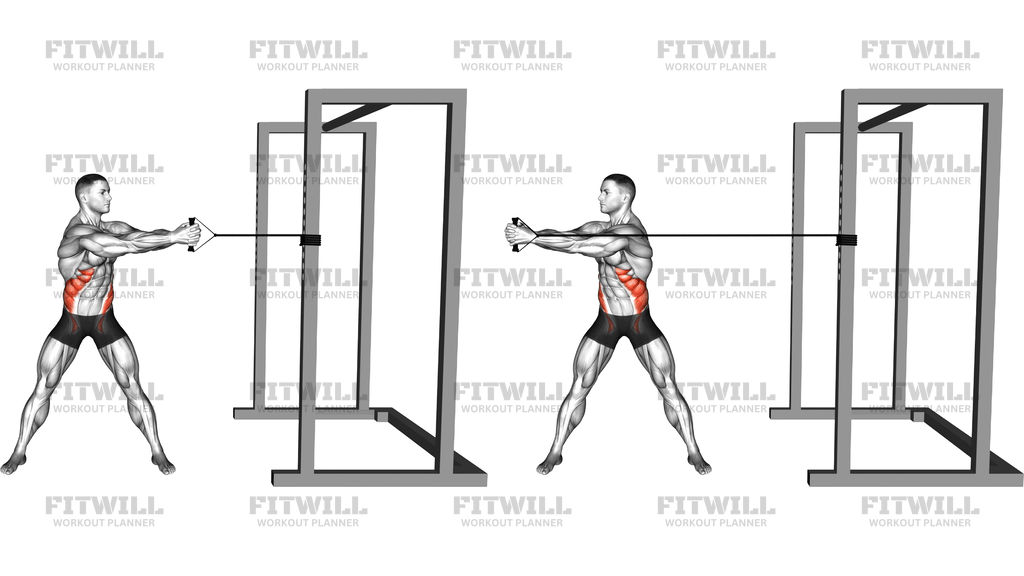
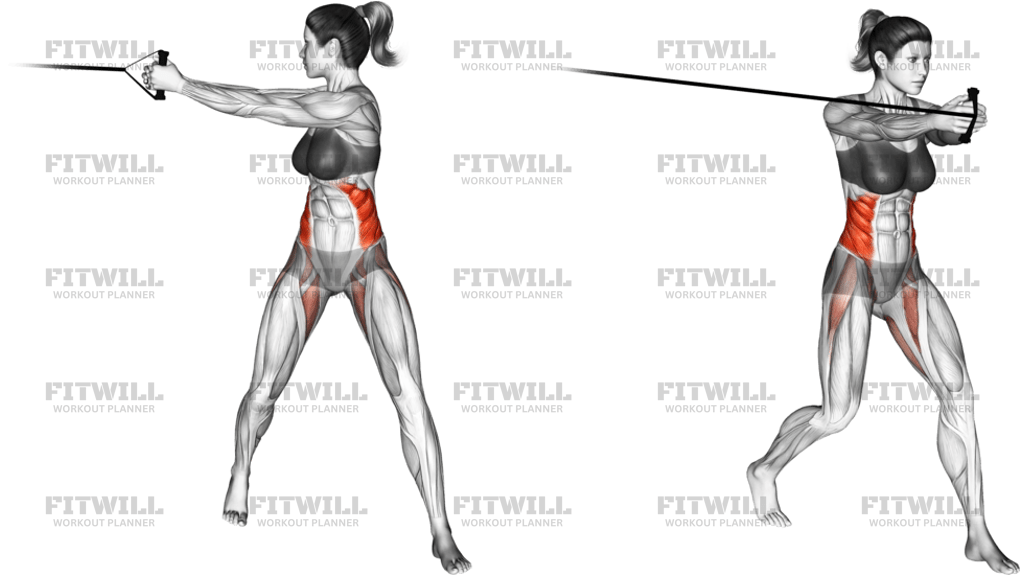
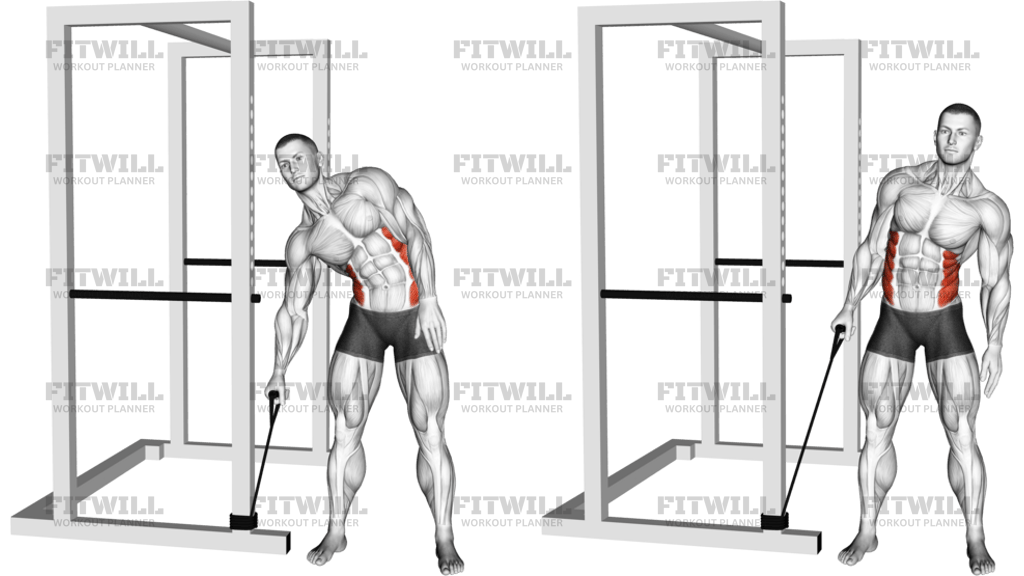
In the image setup, the band is anchored low beside the working side and the hand on that side holds the handle or band end near the thigh. That setup matters because it keeps the resistance line low and close to the body, which makes the side bend feel like a clean rib-to-hip movement instead of a twist or a shrug. The exercise primarily targets the external obliques, with the rectus abdominis, transversus abdominis, and erector spinae helping stabilize the spine through the range.
A good Band Side Bend starts tall, with the feet planted, knees soft, and shoulders square to the front. From there, the torso shortens on the loaded side as the rib cage moves toward the hip, then returns to upright under control. The arm should stay close to the leg and act like a connector, not a rowing action; if the shoulder lifts or the chest turns, the movement stops being a true side bend.
This is a practical accessory exercise for core sessions, warmups, or trunk work after your main lifts. It can also be helpful for beginners because the resistance is easy to scale and the range is easy to monitor, as long as the band is light enough to keep the motion smooth. Use a controlled tempo, stop the descent when the lower back starts to take over, and keep the head, rib cage, and pelvis moving as one organized unit.
Done well, Band Side Bend teaches the trunk to resist and produce lateral flexion without momentum. That makes it a useful choice for anyone who wants stronger side-body control, better waist stability, or a simple band movement that is easy to repeat on both sides. The rep should feel focused and deliberate from the first inch to the last, with no jerking out of the bottom and no leaning backward to finish.
Fitwill
Log Workouts, Track Progress & Build Strength.
Achieve more with Fitwill: explore over 9600 exercises with images and videos, access built-in and custom workouts, perfect for both gym and home sessions, and see real results.
Start your journey. Download today!




Instructions
- Stand beside a low band anchor with your feet about hip-width apart and hold the band or handle in the hand closest to the anchor.
- Let the band hang beside the outside thigh, keep your chest facing forward, and soften your knees without shifting your hips.
- Stack your ribs over your pelvis and relax the shoulder on the working side before the first rep.
- Exhale and bend the torso toward the loaded side, sliding the hand down the outside of the thigh as the waist shortens.
- Keep the shoulders square and avoid turning the chest or drifting the hips backward as you lower.
- Pause when you feel a strong stretch and tension on the side of the trunk without losing balance.
- Drive back to tall by bringing the rib cage back over the pelvis instead of yanking with the arm.
- Finish fully upright, reset the shoulder down, and repeat for the planned reps before switching sides.
Tips & Tricks
- Use a light band first; if you need to yank the handle to start moving, the resistance is too high.
- Keep the hand close to the outside thigh so the shoulder does not turn this into a reach or a shrug.
- Think about shortening the space between the rib cage and hip on the loaded side instead of leaning the whole body.
- Do not let the pelvis slide sideways or the opposite heel lift when you bend.
- A smaller range with perfect control is better than chasing a deep tilt that twists the torso.
- Exhale as you bend and inhale as you return so the trunk stays organized through each rep.
- If you feel the lower back more than the waist, reduce range and keep the chest facing straight ahead.
- Match both sides for reps and range so one side does not get extra work from a different setup.
Frequently Asked Questions
What muscle does Band Side Bend target most?
The main target is the obliques, especially the side of the trunk that shortens during the bend. The abs and lower back help keep the spine steady.
Can beginners perform this exercise?
Yes. Beginners usually do best with a light band, a short range, and a slow return to standing so the waist does the work instead of momentum.
Should I stand close to the band anchor or farther away?
Start close enough that the handle sits near the thigh at the top and the pull stays low. If the band feels loose at the top or jerky at the bottom, adjust your distance before adding more tension.
What is the most common mistake in Band Side Bend?
People usually turn it into a twist or let the shoulder shrug. Keep the chest facing forward and let the side of the waist do the bending.
Does Band Side Bend work the lower back too?
The erector spinae helps stabilize the trunk, but it should not be the main driver. If the lower back takes over, shorten the range and keep the ribs stacked over the pelvis.
Can I do Band Side Bend without a fixed anchor?
Yes. You can step on the band and hold the same-side end by your thigh, as long as the resistance line stays low and the shoulder stays relaxed.
Why does my torso want to lean forward during the rep?
That usually means the band is too heavy or the stance is too narrow. Widen the base slightly and keep the sternum facing forward as you bend.
How should Band Side Bend fit into a workout?
It works well as accessory core work after your main lifts or as part of a trunk-focused session. Keep the load moderate so every rep stays smooth and deliberate.