Plank Lateral Raise
Plank Lateral Raise is a bodyweight plank variation that challenges shoulder stability, anti-rotation control, and trunk stiffness while one arm reaches out to the side. It is not a pressing movement and it is not a speed drill. The value of the exercise comes from keeping the ribs, hips, and pelvis quiet while the supporting arm and shoulder work to hold a strong plank.
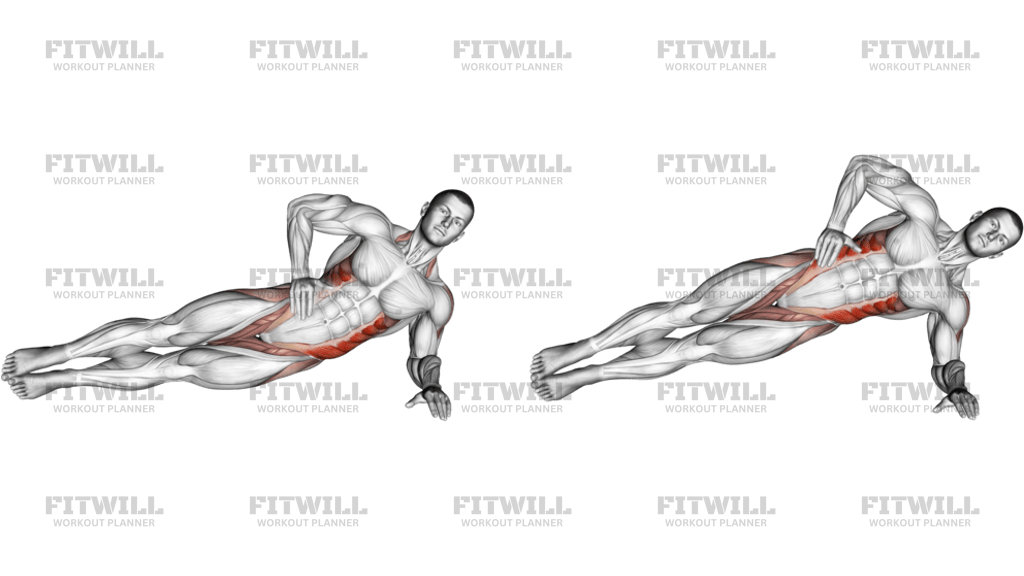
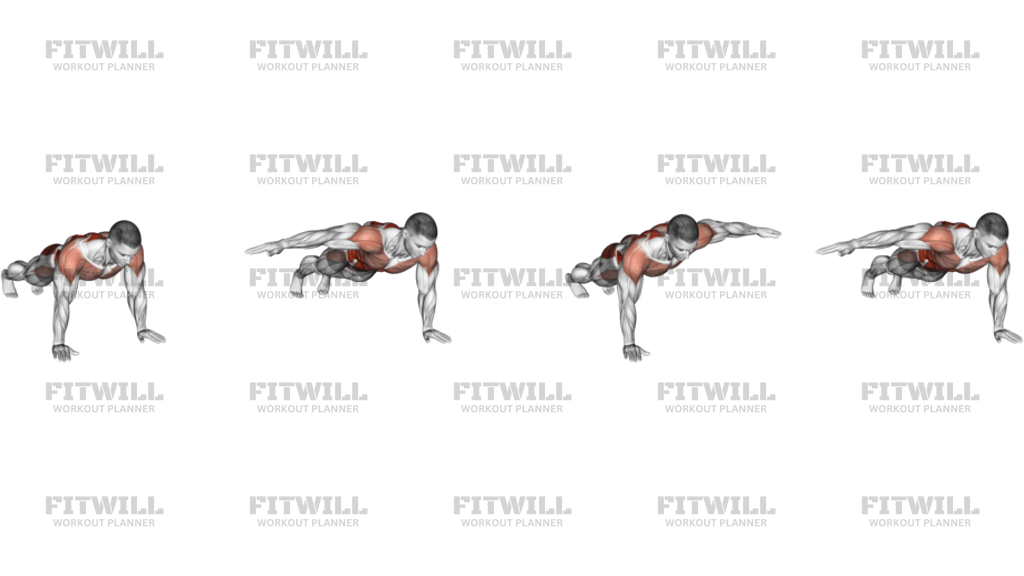
The image shows a high-plank position with the hands under the shoulders, the legs long, and the feet set wide enough to help resist twisting. From that base, one arm lifts or reaches laterally away from the floor while the torso stays level. That side reach asks the working shoulder to stay organized while the core prevents the body from rolling open. The movement is small on purpose: the cleanest reps usually look controlled, deliberate, and almost easy to watch.
Because the exercise depends on stability more than force, the setup matters. A solid plank line from head to heel gives the shoulder a reliable base, and a wider foot stance can make the anti-rotation demand manageable. If the hips drift, the lower back arches, or the chest turns toward the moving arm, the set stops being a plank lateral raise and becomes a compensation drill. The goal is to keep the torso square while the arm travels through its path.
Use this exercise when you want a core-and-shoulder accessory that teaches control without much equipment. It fits well in warm-ups, shoulder prep, trunk stability work, or lighter conditioning circuits. Repetitions should be smooth and repeatable, with enough pause to prove that the body stayed aligned. If you need to shorten the range or spread the feet wider to maintain form, that is a better choice than forcing a larger reach.
Done well, Plank Lateral Raise builds the kind of strength that carries over to pressing, crawling, carries, and any task that asks the torso to resist twisting while the arm moves. The exercise rewards patience, clean alignment, and a controlled return to the floor far more than load or speed.
[ Workout Log & Planner ]
Put your next workout in Fitwill
Keep your plan and training log ready when you are.


Instructions
- Set up in a high plank with your hands under your shoulders, arms straight, legs long, and feet slightly wider than hip width.
- Press through both palms and brace your abs so your head, ribs, hips, and heels stay in one line.
- Shift a little more weight into the supporting hand and the opposite foot pair before you move the free arm.
- Lift or reach one arm laterally away from the floor until it is in line with your shoulder, keeping the torso square.
- Pause for a brief moment at the top without letting the hips rotate open.
- Lower the arm back to the floor under control and return to a balanced plank.
- Reset your brace and breathing before the next rep, then repeat on the other side if the set is alternating.
- Stop the set if your lower back sags, your hips twist, or the supporting shoulder starts to collapse.
Tips & Tricks
- Keep your feet a little wider than a normal plank stance if you need extra anti-rotation control.
- Think about reaching the arm long rather than shrugging it up toward your ear.
- Do not let the supporting elbow lock painfully hard; keep the shoulder active and stacked over the wrist.
- Keep your ribs pulled down so the movement does not turn into a low-back arch.
- Exhale as the arm lifts, then take a small breath before lowering it back down.
- If the body rocks from side to side, shorten the reach and slow the tempo.
- A clean rep is more important than getting the arm high.
- Use the floor as a reference: the torso should stay almost as still as the floor itself.
Frequently Asked Questions
What muscle does Plank Lateral Raise target most?
It mainly challenges the shoulders and deep core, especially the muscles that keep the torso from twisting while one arm moves.
Can beginners perform this exercise?
Yes, but beginners should keep the feet wider, move the arm only as far as they can stay square, and stop the set when the plank position starts to break down.
Should my hips rotate when I lift the arm?
No. The goal is to keep the hips level and facing the floor while the arm reaches laterally.
How wide should my feet be in the plank?
Wide enough that you can stay stable without rocking. A slightly wider stance usually makes the anti-rotation demand more manageable.
What if I feel it mostly in my supporting shoulder?
That is normal to a point, but the shoulder should feel strong and organized, not pinched or collapsed. If it feels sloppy, reduce the range or widen your stance.
Is this more of a core exercise or a shoulder exercise?
It is both. The arm lift creates a shoulder challenge, while the plank position forces the trunk to resist rotation.
What is the biggest form mistake to avoid?
Letting the torso twist open toward the lifting arm. If that happens, the rep becomes too heavy or too fast.
How should the movement feel when it is done well?
You should feel steady pressure through the supporting hand, a strong brace through the midsection, and a controlled reach through the lifting arm without losing plank tension.