Resistance Band Long Jump
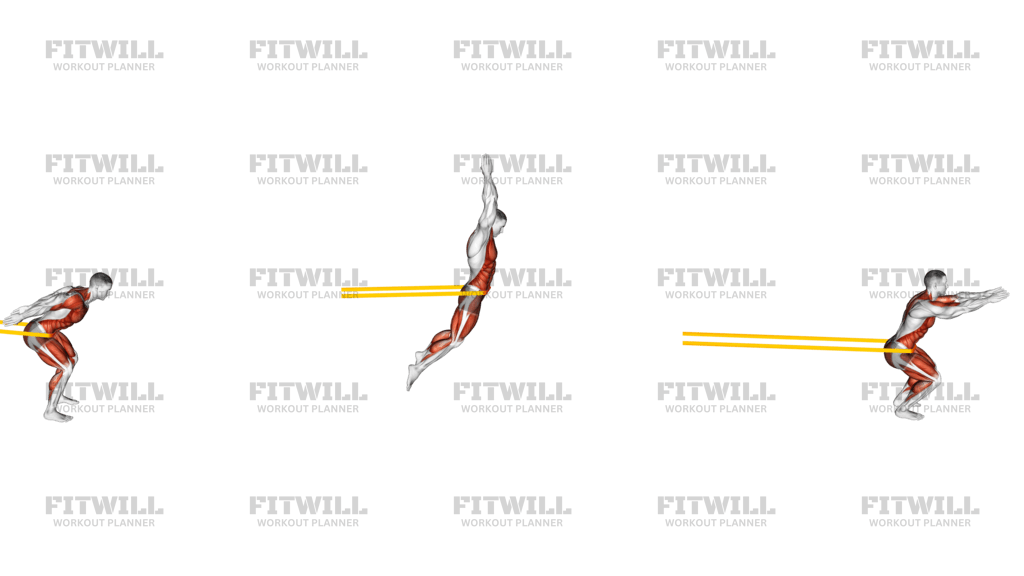
Resistance Band Long Jump is a resisted horizontal plyometric drill that develops lower-body explosiveness, landing control, and trunk stiffness under forward drive. The band adds backward tension during the jump, so every rep has to overcome resistance with the hips, legs, and arm swing instead of simply covering distance with momentum.
The setup matters because the band should pull from behind at the waist or hips while you keep a balanced athletic stance. That rearward tension changes the jump mechanics: you need a deeper pre-load, a sharper extension through the ankles, knees, and hips, and a cleaner landing to stop the body from folding forward or collapsing at the knees. When the setup is right, the drill reinforces the same qualities used for sprint starts, broad jumps, and other horizontal power work.
Use the exercise as a power-focused plyometric rather than a conditioning hop. The goal is one clean jump at a time, with a strong arm swing, a long takeoff angle, and a controlled stick on the landing. The torso should stay organized from the dip into takeoff, and the landing should absorb force quietly through the midfoot with the hips back and the chest proud. If the band is too heavy, the jump turns into a squat thrust; if it is too light, the drill stops challenging horizontal force production.
This movement is useful for athletes and general trainees who want to improve triple-extension power, deceleration, and single-rep quality in the lower body. It is also a good accessory for sprint prep or jump training because it teaches you to project the body forward while staying tight through the core and pelvis. Keep the reps crisp, stop before the jump height or distance drops off, and use enough space behind the anchor so the band never snaps you off balance.
[ Workout Log & Planner ]
Put your next workout in Fitwill
Keep your plan and training log ready when you are.


Instructions
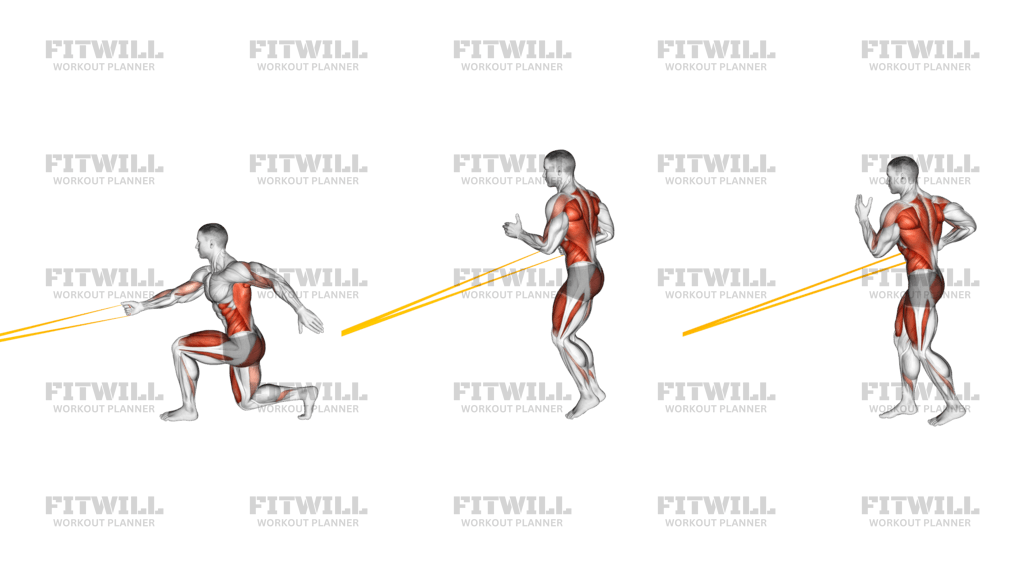
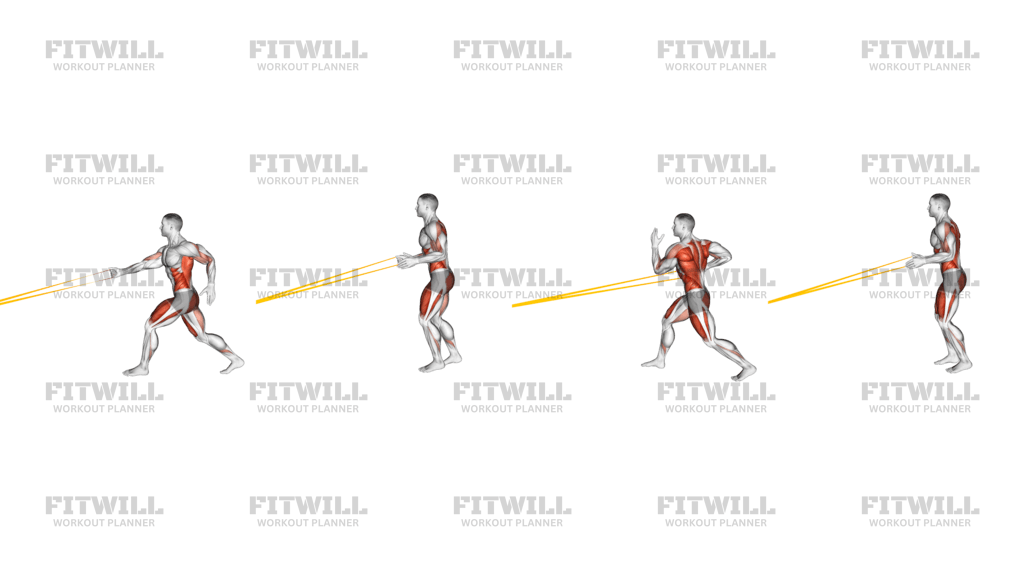
- Loop the resistance band around your waist or hips and anchor it securely behind you at about waist height.
- Stand facing away from the anchor with your feet about hip-width apart, knees and hips slightly bent, and your weight centered over the midfoot.
- Take a small step forward until the band is snug enough to give you backward tension without pulling you out of position.
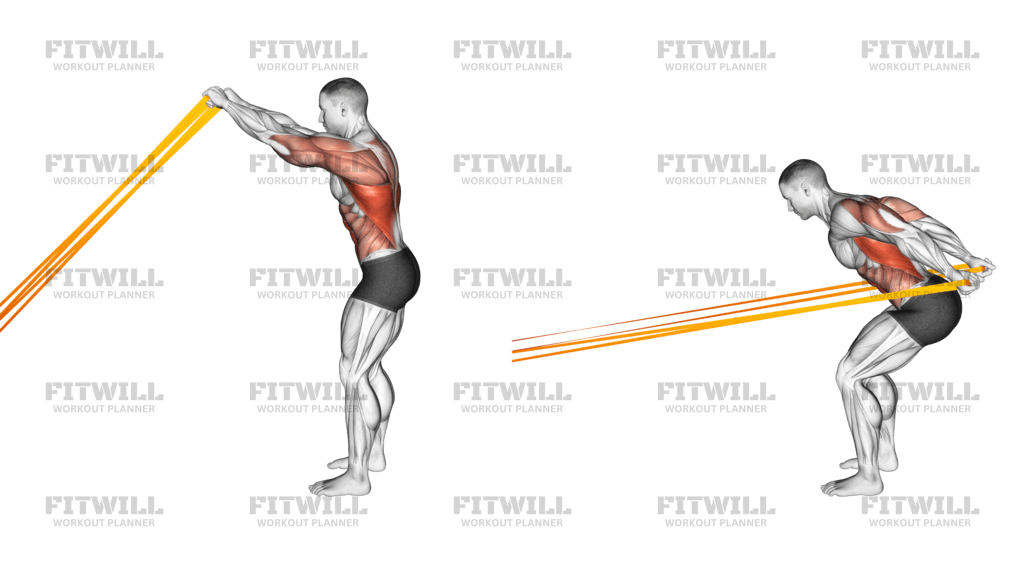
- Reach your hips back and swing your arms behind you to load the jump.
- Drive your arms forward and explode forward into a long jump, extending your ankles, knees, and hips at the same time.
- Land softly on both feet with your knees bent, hips back, and chest up so you can absorb the force quietly.
- Hold the landing for a brief reset before standing back up or taking the next rep.
- Reset your feet, re-stack your posture, and repeat for the planned number of jumps.
Tips & Tricks
- Anchor the band far enough behind you that it creates tension in the crouch, but not so much that it drags you backward on takeoff.
- Keep the band centered at the waist or high hips so the pull stays in line with the jump instead of twisting your torso.
- Use a quick arm swing back and then forward; the arms should help project you, not flail after takeoff.
- Land with your knees tracking over the toes instead of letting them cave inward as you absorb force.
- Stay on the midfoot through the landing so the contact is quiet and stable rather than heel-heavy and braking hard.
- Think of jumping long, not just high; the goal is a forward projection with a controlled stick.
- Use low band tension first, because a heavy band can ruin takeoff mechanics and turn the drill into a strength grind.
- Stop the set when the landing gets loud, the torso folds, or the jump distance clearly drops.
- Breathe in during the reset and exhale sharply as you drive into the jump.
Frequently Asked Questions
What does the resistance band add to the long jump?
The band adds backward tension, so you have to produce more horizontal force through the hips, legs, and arm swing to travel forward.
Where should I place the band for this jump?
Place it around the waist or high hips so the pull stays straight backward and does not shift your trunk sideways.
How low should I crouch before I jump?
Use a short athletic dip with the hips back and knees bent enough to load the jump, but not so deep that you turn it into a squat.
What muscles work hardest in Resistance Band Long Jump?
The glutes, quadriceps, hamstrings, calves, and trunk all contribute, with the hips doing most of the force production.
Should I try to jump high or far?
Focus on a long forward jump with a stable landing. The drill is about horizontal power, not vertical height.
How do I know the band is too heavy?
If it pulls you backward at the start, shortens your takeoff, or makes the landing sloppy, the tension is too high.
Can beginners do this exercise?
Yes, but only with light resistance and a very controlled landing. Start with small jumps before trying bigger horizontal distance.
What is the most common mistake?
Letting the knees cave in or collapsing the chest on landing. The rep should finish with a quiet, balanced stick.