Resistance Band Skier
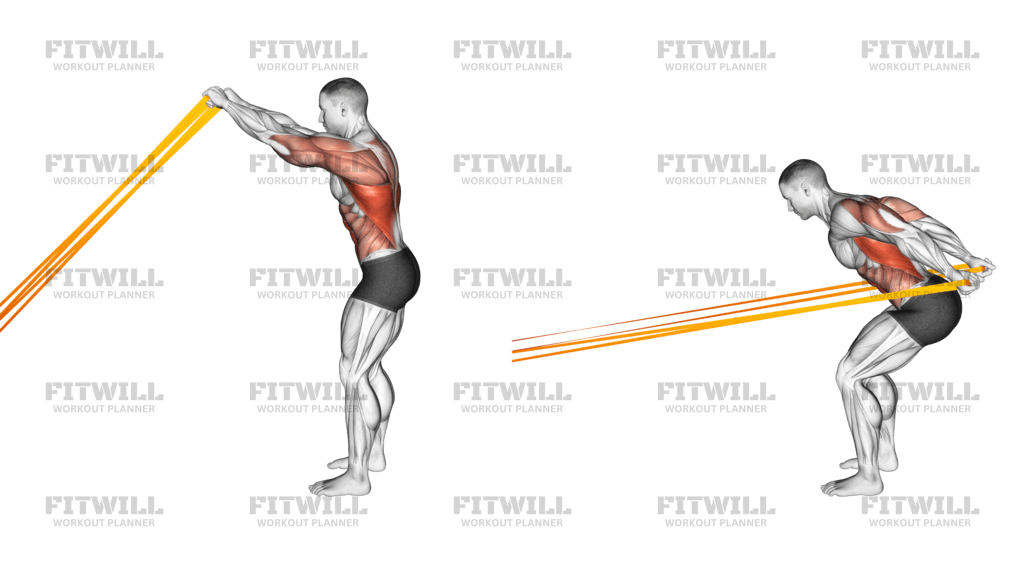
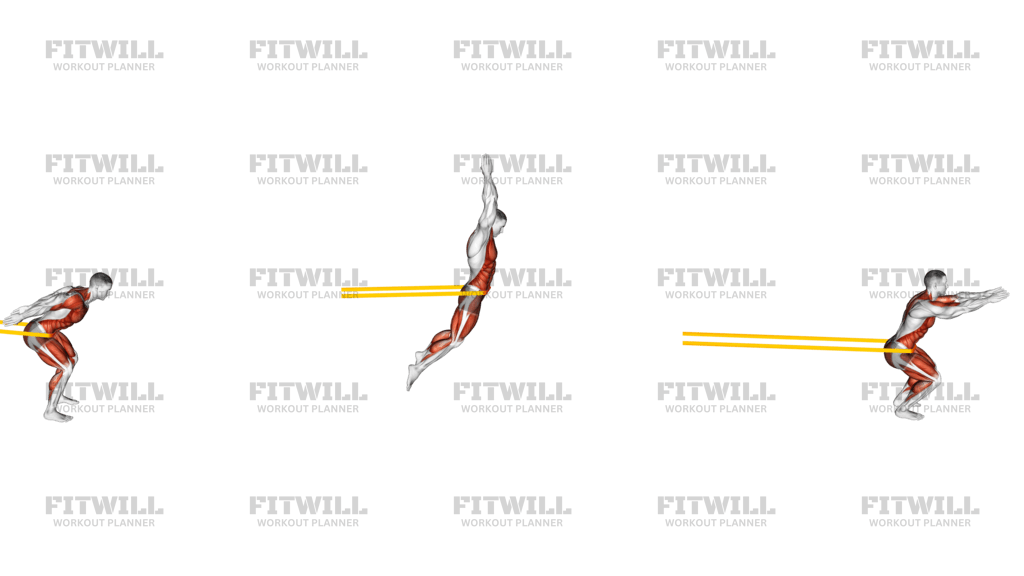
Resistance Band Skier is a standing band-resisted hip hinge that starts with the arms reaching forward and high, then drives the hands back toward the hips as the torso folds into a strong forward position. The image shows a fixed band anchored in front of the lifter, so the exercise is built around controlling tension as the body moves away from and then back toward that anchor. It is not a jump or a sprint drill in this form; it is a standing resistance movement that rewards clean posture, coordinated hinging, and a smooth pull.
The main training value is posterior-chain and upper-back control. As you hinge, the glutes and hamstrings help manage the body position while the lats, rear delts, and mid-back keep the shoulders organized and the band path steady. The core works hard to stop the rib cage from flaring and the lower back from taking over. That makes this a useful option when you want a ski-like pull pattern, but with controlled resistance instead of impact.
Set the feet about hip-width apart and face the anchor so the band has tension before the first rep. Start tall with a slight bend in the knees, ribs stacked over the pelvis, and the arms extended forward in line with the band. From there, hinge at the hips and let the torso travel forward while the hands sweep back toward the sides of the body. Keep the movement smooth rather than jerky, and stop the descent before the lower back rounds or the shoulders roll forward.
On the way back up, press through the feet, squeeze the glutes, and return to a tall stance while keeping the band under control. The arms should travel with the body instead of flinging independently. Exhale through the effort and avoid letting the anchor pull you out of position at the bottom. A good rep looks rhythmic, balanced, and repeatable, with the same path every time.
Use Resistance Band Skier as accessory work for posture, hinge mechanics, or athletic conditioning when you want tension without loading the spine heavily. It fits well in warm-ups, circuits, or lower-body sessions that need a pulling hinge pattern. Choose a band that lets you keep the chest organized and the hips driving the motion. If the setup or anchor height changes the line of pull, adjust your stance so the band still challenges the hinge without forcing shoulder shrugging or low-back strain.
[ Workout Log & Planner ]
Put your next workout in Fitwill
Keep your plan and training log ready when you are.


Instructions
- Face the band anchor with your feet about hip-width apart and take the handles or band ends in both hands.
- Step back until the band has light tension, then raise your arms forward and slightly overhead with the elbows soft.
- Stack your ribs over your pelvis, keep a slight bend in the knees, and brace before the first rep.
- Hinge at the hips and send your hips back while your torso folds forward under control.
- Let the hands travel back toward your hips as the band pulls against the motion.
- Keep your chest long, neck neutral, and shoulders away from your ears throughout the hinge.
- Stop when you reach your strongest controlled forward position without rounding the lower back.
- Drive through your feet and squeeze your glutes to return to the tall start position.
- Reset the arms to the forward start with steady tension before the next repetition.
Tips & Tricks
- Keep the band anchored in front of you; if the line of pull drifts sideways, the hinge becomes unstable fast.
- The knees should stay slightly soft, not turn into a squat, so the hips can actually move back.
- Think about folding at the hips while the torso stays long instead of collapsing through the lower back.
- Do not let the shoulders shrug when the band gets tight; keep the neck long and the shoulder blades set.
- A smaller range with clean tension is better than reaching so far forward that the spine rounds.
- Match the return speed to the pull phase so the band never yanks you back to the start.
- If the handles finish far behind the hips, reduce resistance and keep the elbows from drifting too wide.
- Use the glutes to stand up, not a bounce from the toes or a whip from the arms.
Frequently Asked Questions
What does Resistance Band Skier train most?
It mainly trains the posterior chain and upper back, especially the glutes, hamstrings, lats, rear delts, and core.
Can beginners perform this exercise?
Yes. Start with a light band and learn the hip hinge before adding speed or tension.
Where should the band be anchored?
The image shows the band anchored in front of the lifter, slightly above shoulder height, so the pull stays forward and upward.
Should my arms stay straight or bent?
Keep only a soft bend in the elbows. The arms should travel with the body, not turn into a rowing motion.
What is the most common form mistake?
Rounding the lower back or turning the movement into a squat instead of a hip hinge.
How hard should the band feel?
Heavy enough to challenge the hinge and pull, but light enough that you can keep the chest organized and the motion smooth.
Can I use this as a warm-up drill?
Yes. Use a lighter band and treat it as a hinge-pattern primer before lower-body or athletic work.
What should I feel at the bottom of the rep?
You should feel tension across the glutes, hamstrings, lats, and upper back, not a pinch in the low back.
How do I progress the exercise?
Use a stronger band, increase the pause at the bottom, or slow the return while keeping the same clean hinge path.