Sprinter Crunch
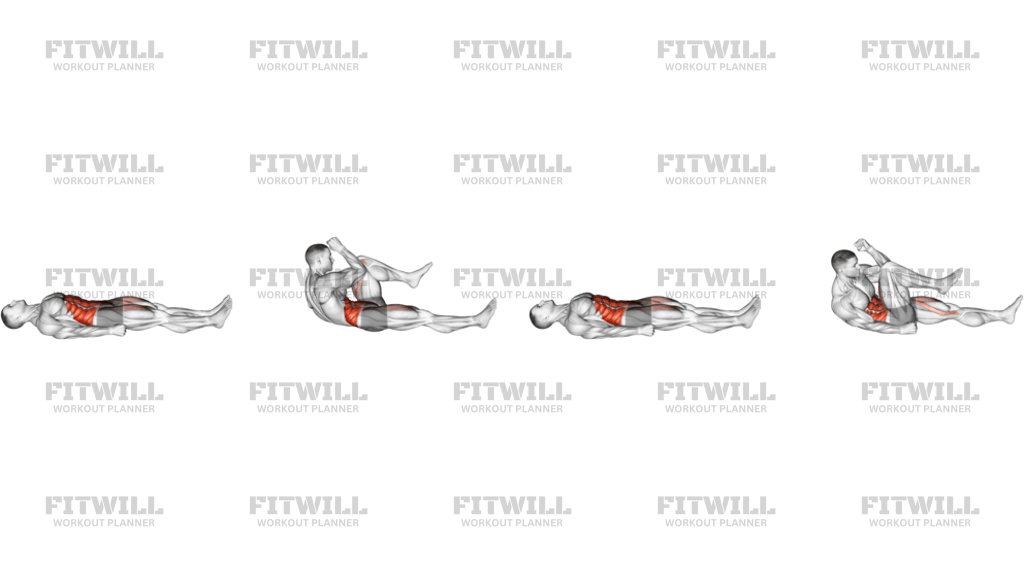
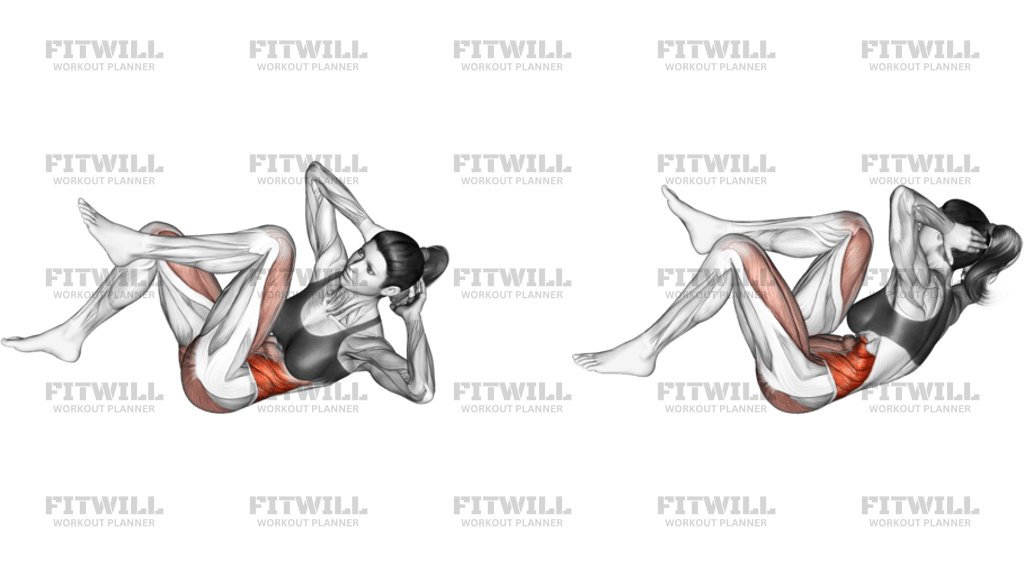
Sprinter Crunch is a body-weight floor exercise that trains the front of the trunk, the obliques, and the hip flexors through a quick but controlled alternating crunch pattern. In the image, one knee drives toward the torso while the opposite leg stays long, which makes the exercise more demanding than a simple curl-up because the abs have to hold the pelvis steady while the legs switch.
The setup matters because this movement is built on small, repeatable positions rather than force. Lie on your back with your shoulders off the floor, your hands lightly supporting the head, and one leg extended while the other knee comes in. That split position gives you the leverage for each rep and helps keep the lower back from arching or the motion from turning into a sloppy bicycle kick.
Each repetition should feel like a coordinated crunch and knee drive, not a yank from the neck or a swing from the hips. The ribcage closes toward the raised knee, the extended leg reaches long without dumping into the floor, and the switch happens under control. When the torso opens back up, keep tension in the midsection instead of fully relaxing between sides.
Sprinter Crunch is useful as direct core work, a warmup drill for trunk control, or a finisher when you want a higher-rep abdominal movement without equipment. It is most effective when the range stays crisp, the neck stays quiet, and the pelvis does not rock side to side. If your lower back starts to lift or the shoulders stop curling, shorten the range and slow the pace before adding more reps.
[ Workout Log & Planner ]
Put your next workout in Fitwill
Keep your plan and training log ready when you are.


Instructions
- Lie on your back on a mat with your hands lightly behind your head or at your temples and your elbows open.
- Lift your shoulders off the floor and press your lower back gently toward the mat before starting the first rep.
- Extend one leg long and keep the other knee bent so the torso starts in the split-leg position shown in the image.
- Crunch your ribcage up while you drive the bent knee toward the opposite elbow.
- Keep the extended leg reaching away from your hips instead of letting it collapse inward.
- Switch sides in a smooth scissor action, keeping the movement driven by your abs rather than by momentum.
- Exhale as you crunch and inhale as you open back up.
- Lower your shoulders with control and repeat for the planned number of reps.
Tips & Tricks
- Keep your hands light so your neck does not do the work of the crunch.
- Think about bringing the ribs toward the knee, not the elbow toward the thigh.
- Let the extended leg stay long, but do not force it so low that your lower back arches.
- Use a short, quick crunch only if you can keep the pelvis steady on the mat.
- If the hips start rocking, slow the switch and reduce the range of motion.
- Keep the chin slightly tucked so the back of the neck stays long.
- Pause for a beat at the top of each crunch instead of bouncing side to side.
- Stop the set when the shoulders stop lifting cleanly or the lower back starts to peel up.
Frequently Asked Questions
What muscles does Sprinter Crunch work most?
It primarily targets the abdominal wall, especially the rectus abdominis and obliques, with the hip flexors helping during the knee drive.
Is this the same as a bicycle crunch?
It is very close, but the sprinter version usually emphasizes one knee drive and one extended leg with a faster alternating rhythm.
Should my lower back stay on the floor?
Yes. Keep the low back gently pressed down so the movement comes from the abs instead of from arching through the spine.
Do I need to touch my elbow to my knee?
No. The goal is to crunch the torso toward the raised knee with control, not to force a hard elbow-to-knee collision.
Can beginners do Sprinter Crunch?
Yes, if they keep the range short, move slowly, and avoid pulling on the head or arching the lower back.
What is the most common form mistake?
Pulling the neck forward and using momentum to swing the legs instead of controlling the alternating crunch.
How should I breathe during the rep?
Exhale as the knee drives in and the torso curls up, then inhale as you extend and switch sides.
How can I make the exercise harder?
Slow the lowering phase, hold the top position briefly, or keep the extended leg lower without letting the back arch.