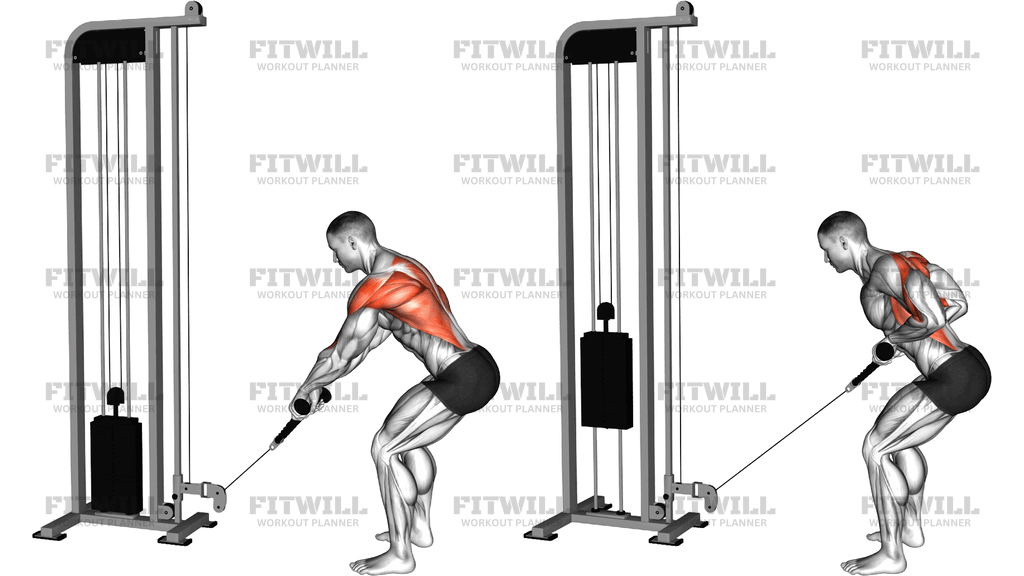
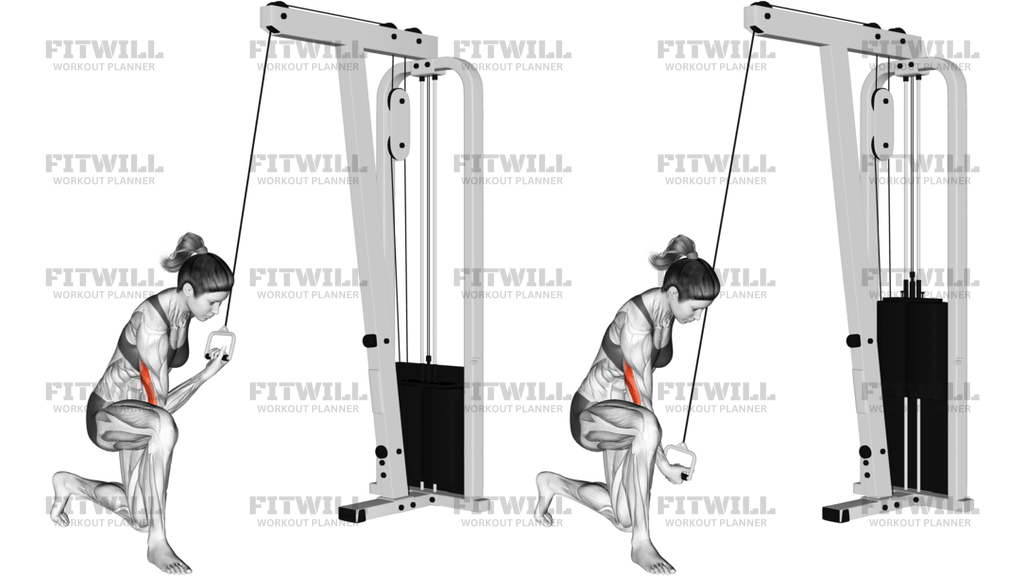
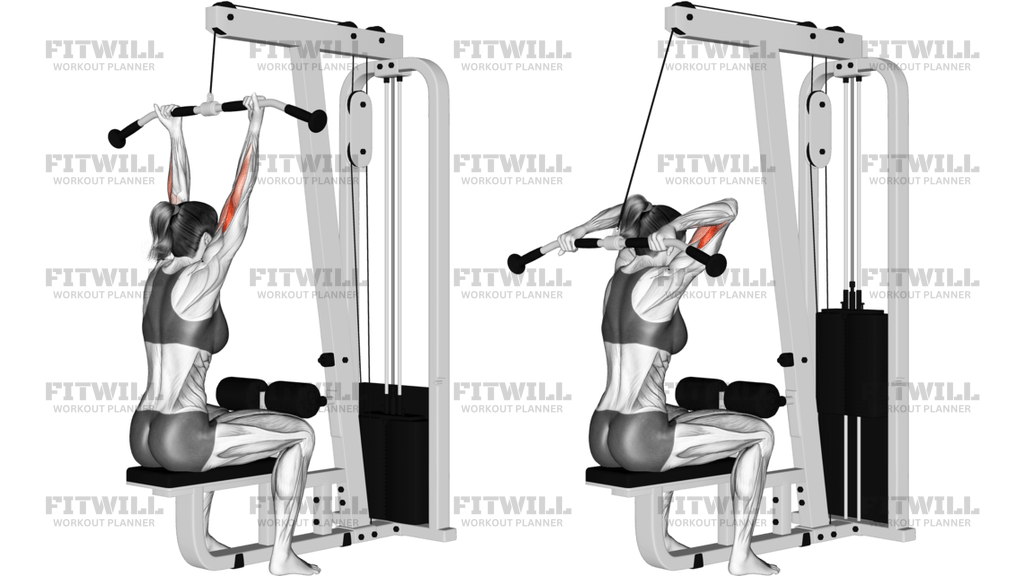
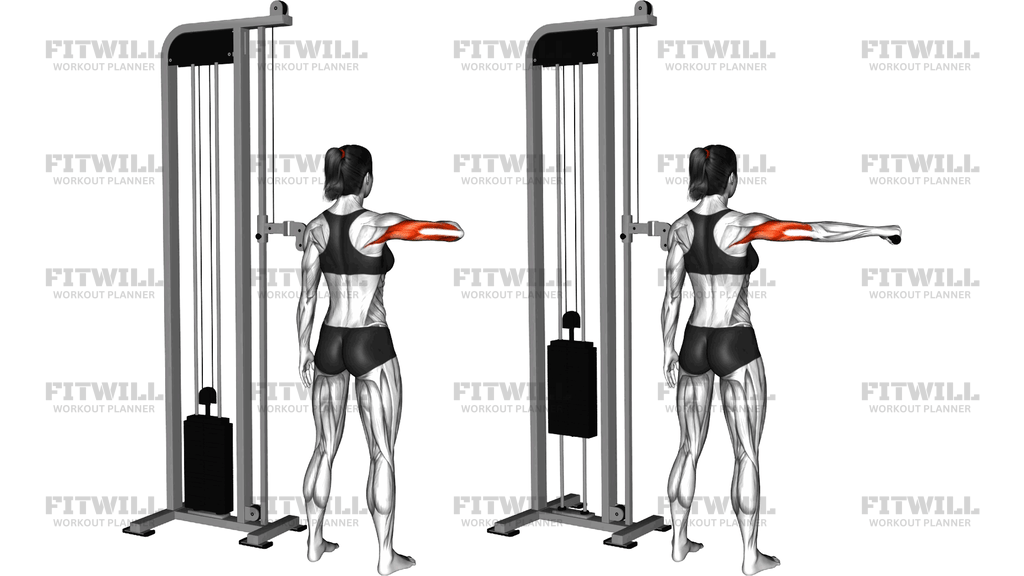
Cable Leaning Lateral Raise
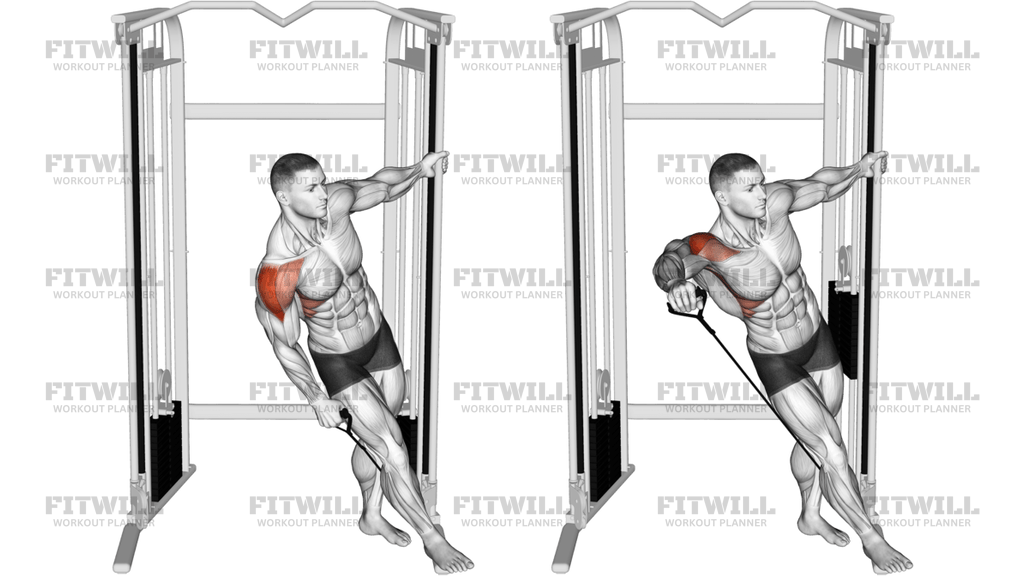
Cable Leaning Lateral Raise is a one-arm shoulder exercise performed beside a low cable pulley while you lean away from the stack. That lean is the key feature of the movement: it keeps the cable pulling on the arm from the very start, so the side deltoid has to work through a long, constant line of tension instead of only at the top of the rep.
The exercise is built to train shoulder abduction with more continuous resistance than a dumbbell raise. The side delts do most of the work, while the upper traps, rotator cuff, grip, and trunk help stabilize the body as you hold the lean. Because the cable changes direction as the handle travels, the hardest part of the rep can feel smoother and more controlled than a free-weight raise when the setup is right.
The setup matters more here than on many shoulder drills. Stand sideways to the machine, take the handle in the hand farthest from the stack, and step away until the cable is already under tension with your arm crossing slightly in front of the thigh. A slight lean away from the stack increases the start tension and keeps the shoulder working instead of letting momentum or body swing take over the rep.
On the way up, lead with the elbow and lift the arm out in a smooth arc until the hand reaches about shoulder height. Keep the wrist quiet, the elbow softly bent, and the shoulder from shrugging toward the ear. The goal is a clean lateral path, not a heave or a twist through the torso. Lower the handle under control along the same line and reset the tension before the next rep.
This movement is useful as accessory work for physique training, shoulder balance, or any upper-body session that benefits from more isolated side-delt loading. It also works well for lifters who struggle to feel lateral raises in the target shoulder because the cable gives better feedback through the range. Use a lighter load than you think, especially at first, because the long lever and fixed line of pull make it easy to cheat with the torso.
If the shoulder feels pinchy, shorten the range slightly, keep the arm a little in front of the body, and do not force the hand above shoulder level. The best version of this exercise feels smooth, stable, and precise from the first inch of the lift to the last inch of the return.
[ Workout Log & Planner ]
Put your next workout in Fitwill
Keep your plan and training log ready when you are.


Instructions
- Set a single handle on a low cable pulley and stand sideways to the machine with the working hand farthest from the stack.
- Step away until the cable is lightly tensioned and let the working arm hang slightly in front of the outside thigh.
- Lean your torso away from the stack, keep your feet staggered, and stay tall through the ribcage.
- Hold the handle with a neutral wrist and a soft bend in the elbow.
- Exhale as you raise the arm out in a smooth arc, leading with the elbow instead of the hand.
- Lift until the hand reaches about shoulder height or the shoulder starts to shrug.
- Pause briefly at the top without twisting the torso or letting the cable slacken.
- Lower the handle slowly along the same path until the arm returns near the starting thigh position.
- Reset the shoulder and cable tension before the next repetition, then switch sides when finished.
Tips & Tricks
- Keep the pulley low enough that the cable pulls across the body at the bottom; that bottom tension is what makes this version different from a dumbbell raise.
- Do not let the shoulder roll forward as the handle comes up; the arm should travel out and slightly away from the body, not straight in front of you.
- A small elbow bend is fine, but do not turn the rep into a press by straightening the arm and swinging the load.
- Lean from the ankles and hips, not by crunching the ribs sideways; the torso should stay long and braced.
- Choose a lighter load than for a standing dumbbell lateral raise because the cable keeps tension on the shoulder for longer.
- Keep the wrist quiet and stacked over the handle; bending the wrist often steals force and irritates the forearm.
- Stop the lift when the shoulder starts to shrug or the trap takes over, even if that is slightly below shoulder height.
- Lower the handle slowly so the side delt stays loaded on the way down instead of letting the stack drop you back to the start.
Frequently Asked Questions
What muscles does the Cable Leaning Lateral Raise train?
It mainly trains the side delts, with the upper traps, rotator cuff, grip, and trunk helping stabilize the body.
Why do I lean away from the cable stack?
Leaning away keeps tension on the shoulder at the bottom of the rep and makes the raise feel smoother through the full arc.
Should my arm stay straight or bent during the lift?
Keep a soft bend in the elbow. A locked elbow usually turns the movement sloppy and puts more stress on the shoulder and wrist.
How high should I raise the handle?
For most lifters, shoulder height is enough. If the shoulder starts shrugging before that, stop slightly lower.
Is this better than a dumbbell lateral raise?
It is not better in general, but the cable gives steadier tension and can make the side delt easier to isolate for some lifters.
What if I feel it mostly in my upper traps?
Use less weight, keep the shoulder down, and stop the lift before the trap takes over. A shorter range is often cleaner.
Can beginners use this exercise?
Yes, as long as the load is light and the lean is controlled. The cable makes cheating obvious, which can actually help beginners learn better shoulder mechanics.
Should the handle travel straight out to the side?
It should travel in a smooth arc, slightly in front of the body on the way up and back to the outside thigh on the way down.
What should I do if the shoulder feels pinchy?
Shorten the range, reduce the lean, and keep the arm a little in front of the torso. Do not force the top position if it irritates the joint.