Hanging Toes To Bar
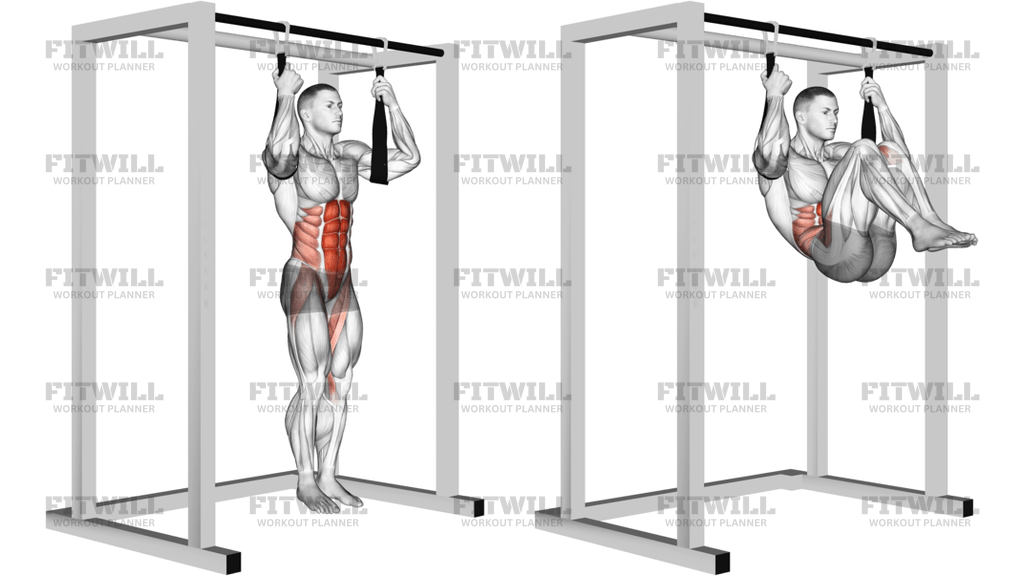
Hanging Toes To Bar is a bodyweight core exercise performed from a pull-up bar, where you lift your feet all the way up to the bar with control. It combines strong grip work, shoulder stability, and deliberate trunk flexion, so the set only feels clean when the hang, brace, and leg path are all organized before the first rep starts.
The main emphasis is on the abs, especially the rectus abdominis, with the obliques and hip flexors helping drive the lift and keep the torso from swinging open. Because the body hangs freely, the setup matters as much as the range of motion: a stable overhand grip, active shoulders, and legs kept together make the movement strict instead of sloppy.
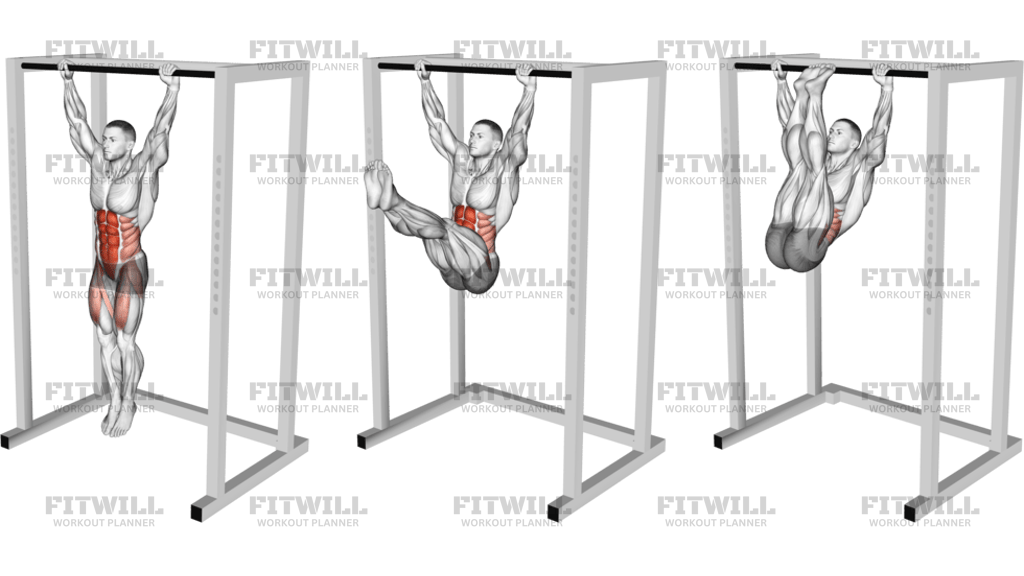
A good repetition starts in a controlled hang with the ribs tucked down and the pelvis slightly curled under. From there, pull the knees and straight legs forward and upward in one smooth arc, aiming to bring the toes to the bar without kicking or throwing the lower body. If you are using a strict version, the descent should be just as deliberate as the ascent so the next rep begins from a quiet hang rather than residual swing.
This exercise is useful for gymnasts, CrossFit-style conditioning, and core training blocks where you want more than a simple crunch pattern. It rewards patience, coordination, and clean timing more than brute force. If shoulder comfort, grip strength, or hamstring length limit your range, scale the lift so you can keep the motion strict and repeatable while still training the same bracing pattern.
Stop the set when the body starts to kip uncontrollably, the shoulders lose their active position, or the hips can no longer control the return. The best reps look smooth, symmetrical, and identical from one rep to the next, with the torso doing the work instead of momentum taking over.
[ Workout Log & Planner ]
Put your next workout in Fitwill
Keep your plan and training log ready when you are.


Instructions
- Grip the pull-up bar with an overhand grip slightly wider than shoulder width, then hang with your arms straight and your feet together.
- Set your shoulders down away from your ears and create an active hang before you start moving.
- Tuck your ribs slightly and bring your pelvis under you so the torso starts braced instead of loose.
- From the dead hang, lift your legs forward in a controlled arc rather than kicking them up.
- Keep the legs together and extend them long as you raise your feet toward the bar.
- Continue curling the pelvis and lifting the toes until they touch or come as close as possible to the bar.
- Lower the legs slowly back to the hang, keeping tension through the abs instead of dropping straight down.
- Reset the shoulders and stop any swing before beginning the next repetition.
- Breathe out as the legs rise and inhale as you return to the hang.
- Repeat for the planned number of strict repetitions.
Tips & Tricks
- A quiet start matters here; if your body is already swinging, pause until the hang is still before the first rep.
- Think about bringing your ribs toward your pelvis, not just lifting your feet with momentum.
- Keeping the legs squeezed together makes the movement cleaner and usually helps prevent twisting through the torso.
- If straight legs are too aggressive, bend the knees slightly before you lose control of the hang.
- Touching the bar with the toes is a target, but a strict high raise is better than a sloppy full touch.
- Your shoulders should stay active the whole set; if they drift upward, the rep usually turns into a swing.
- Use chalk or a firm grip if the set is limited by slipping before the abs fail.
- Lower under control, because the eccentric phase is where a lot of the core work happens.
- If the lower back starts arching hard, shorten the range and reestablish a hollow body position.
- Stop when the path changes from a crisp leg raise to a kip driven by momentum.
Frequently Asked Questions
What muscles do hanging toes to bar work the most?
The rectus abdominis does most of the work, with the obliques and hip flexors helping to lift and stabilize the legs.
Do I need to touch the bar with my toes every rep?
No. A strict high raise is better than forcing contact if you have to swing or lose shoulder position to make it.
Should my legs stay straight the whole time?
Yes for the strict version, but a small knee bend is an acceptable regression if straight legs make you lose control.
What is the biggest form mistake with this exercise?
The most common mistake is using a kip or body swing to swing the feet up instead of controlling the trunk and leg path.
Is the active hang important?
Yes. Keeping the shoulders engaged protects the hang position and helps keep the rep clean instead of loose and jerky.
Can beginners do hanging toes to bar?
Yes, but most beginners should start with hanging knee raises or bent-knee raises before trying full toes-to-bar reps.
How do I keep from swinging between reps?
Lower slowly, reset the shoulders, and wait for the body to go quiet before starting the next rep.
What should I do if my grip gives out first?
Use chalk, cut the set before the grip fails, or switch to a shorter set so the abs can still do the work.
Where should I feel the exercise besides my abs?
It is normal to feel the hip flexors, forearms, and lats helping, but the main tension should stay around the front of the torso.