Band Bent-Over Row
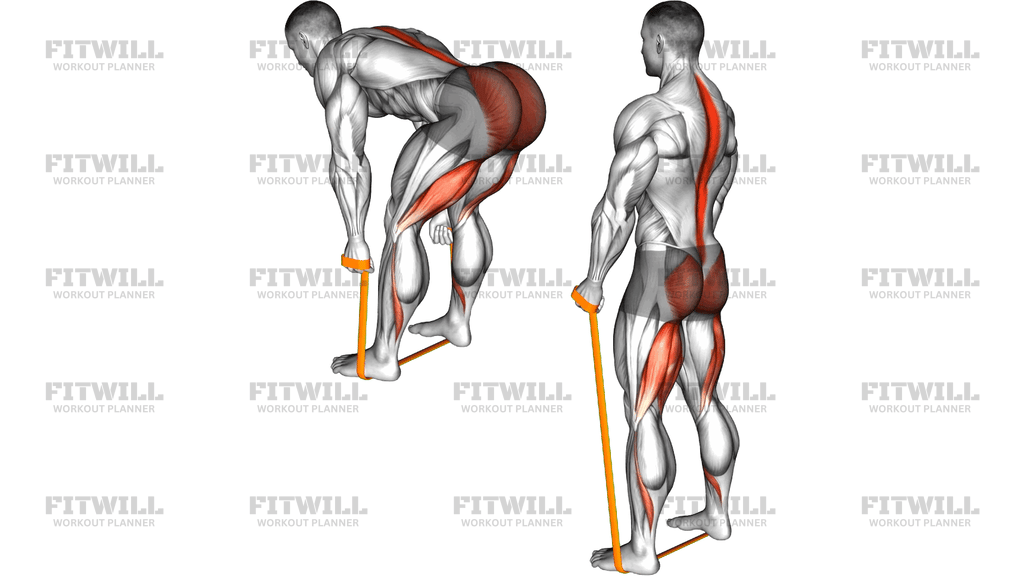
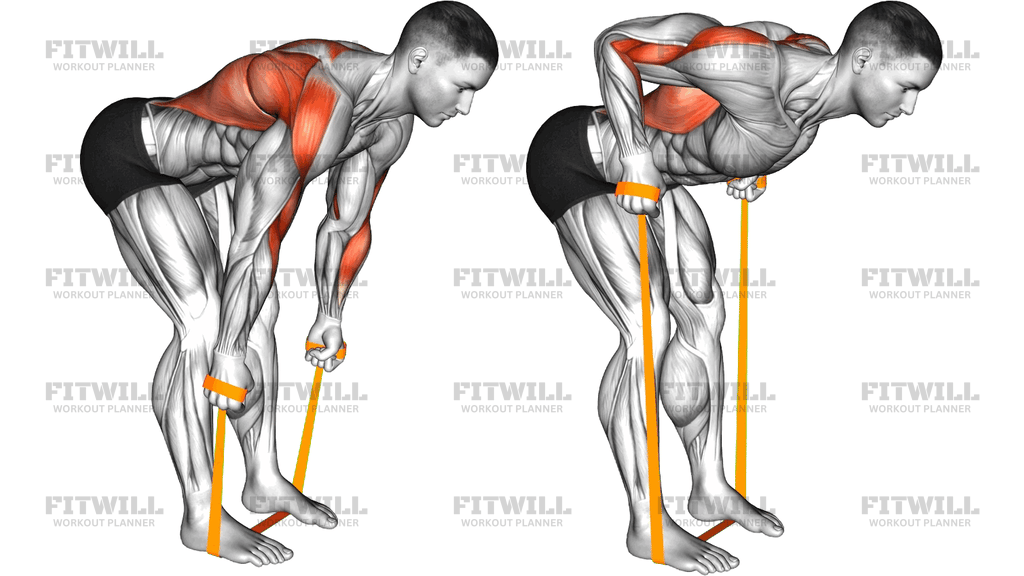
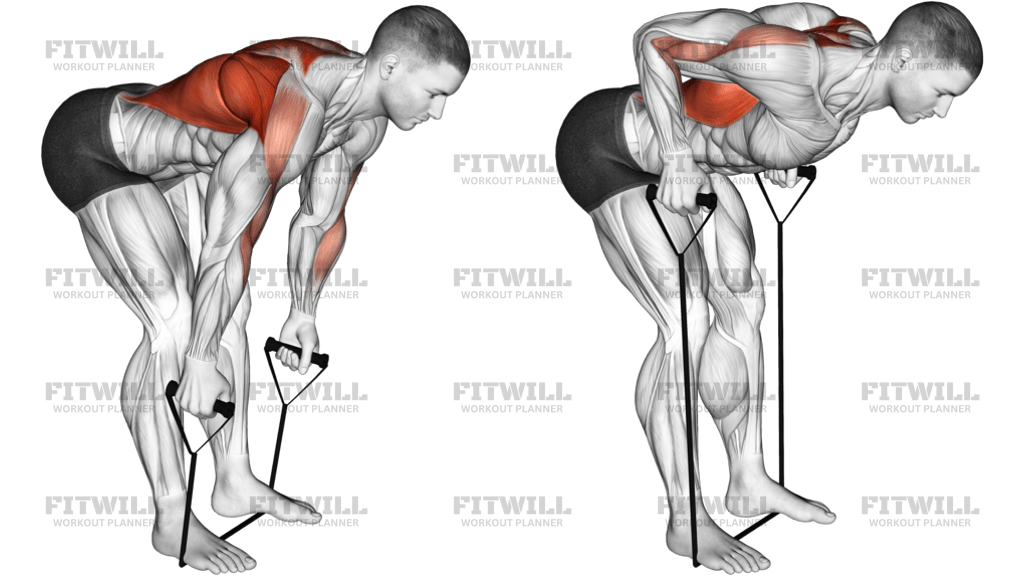
Band Bent-Over Row is a hip-hinged pulling exercise that uses a resistance band anchored under the feet to train the back without needing a machine or bench. In the setup shown here, the torso stays angled forward, the spine stays long, and the band is pulled from below the knees toward the lower ribs. That fixed hinge is the key feature of the movement: the band provides resistance, but your trunk should stay quiet while the arms and upper back do the work.
The main emphasis is on the lats, with the mid-back, rear shoulders, biceps, and forearms helping to stabilize and finish each rep. In anatomical terms, the exercise strongly involves the latissimus dorsi, rhomboids, biceps brachii, and forearm flexors. Because the band gets harder as it stretches, the top of the row is usually the hardest part, which makes controlled elbow drive and a clean finish especially important.
Good reps start before the pull begins. Stand on the band evenly, hinge at the hips until your torso is close to parallel or about 30 to 45 degrees above it, and keep a soft bend in the knees. Let the hands hang under the shoulders, keep the neck neutral, and set the shoulders down away from the ears. If the hinge collapses, the pull turns into a lower-back exercise instead of a row.
From there, row by driving the elbows back and slightly in toward the body until the handles reach the lower ribs or upper waist. Squeeze the shoulder blades together without jerking the torso upright, then lower the band under control until the arms are long again. The return should stay smooth and deliberate so the back keeps tension instead of letting the band snap you forward.
This exercise fits well in back, posture, and accessory strength work, especially when you want a simple setup with a lot of control over band tension. It is beginner-friendly when the band is light and the hinge is short, but the same movement can be made much harder by using a thicker band, standing narrower, or pausing at the top. Keep the range pain-free, avoid shrugging, and stop the set if the torso starts to rise every rep.
[ Workout Log & Planner ]
Put your next workout in Fitwill
Keep your plan and training log ready when you are.


Instructions
- Stand on the band with both feet about hip-width apart and grip a handle or band end in each hand.
- Hinge at the hips until your torso is angled forward and your chest stays long, with a slight bend in the knees.
- Let your arms hang under your shoulders with palms facing in and your shoulders set down away from your ears.
- Brace your midsection and keep your weight balanced through the midfoot and heels.
- Pull the handles toward your lower ribs by driving your elbows back along the sides of your body.
- Keep your torso still as you finish the row and briefly squeeze your upper back at the top.
- Lower the handles slowly until your arms are long again and the band returns to steady tension.
- Reset your breath and repeat for the planned number of reps without losing the hip hinge.
Tips & Tricks
- Think about pulling the elbows back, not yanking the handles with the hands.
- Keep the chest pointed at the floor instead of letting it pop up on every rep.
- Stop the pull around the lower ribs or upper waist so the band does not drag your shoulders forward.
- Keep your wrists stacked over the handles; bent wrists make the forearms take over early.
- Use a slower lowering phase so the band stays under control instead of snapping you into the start position.
- If your lower back feels overworked, reduce the hinge angle and keep the knees a little softer.
- Avoid shrugging at the top; the shoulders should stay down while the elbows travel back.
- Choose a band tension that lets the last few reps look the same as the first few reps.
- Exhale as you row and inhale as the arms come back down.
- If the torso starts swinging, shorten the range before you make the band harder.
Frequently Asked Questions
What muscles does the Band Bent-Over Row work most?
It mainly targets the lats and mid-back, with the rear delts, biceps, and forearms helping to finish and stabilize the pull.
Can beginners perform this exercise?
Yes. A light band and a shorter hip hinge make it easy to learn before you progress to heavier tension.
Where should the handles end up on each rep?
Aim to bring them to the lower ribs or upper waist, not up to the chest, so the row stays in a strong back path.
Why does my lower back get tired during bent-over band rows?
Usually the hinge is too deep, the core is not braced, or the torso is rising during the pull. Shorten the hinge and keep the spine long.
Should I squeeze my shoulder blades together hard at the top?
A small squeeze is enough. The elbows should finish the row, but the shoulders should not shrug or jam backward.
Do I need handles on the band?
Handles are helpful, but you can also grip the band itself as long as your hands stay secure and neutral.
What is the most common form mistake?
The biggest issue is turning the row into a standing up-and-down motion instead of keeping the hips fixed and rowing the elbows back.
How can I make the movement harder without changing exercises?
Use a thicker band, stand narrower, pause briefly at the top, or slow the lowering phase while keeping the torso locked in place.