Resistance Band One Leg Kickback Bent Position
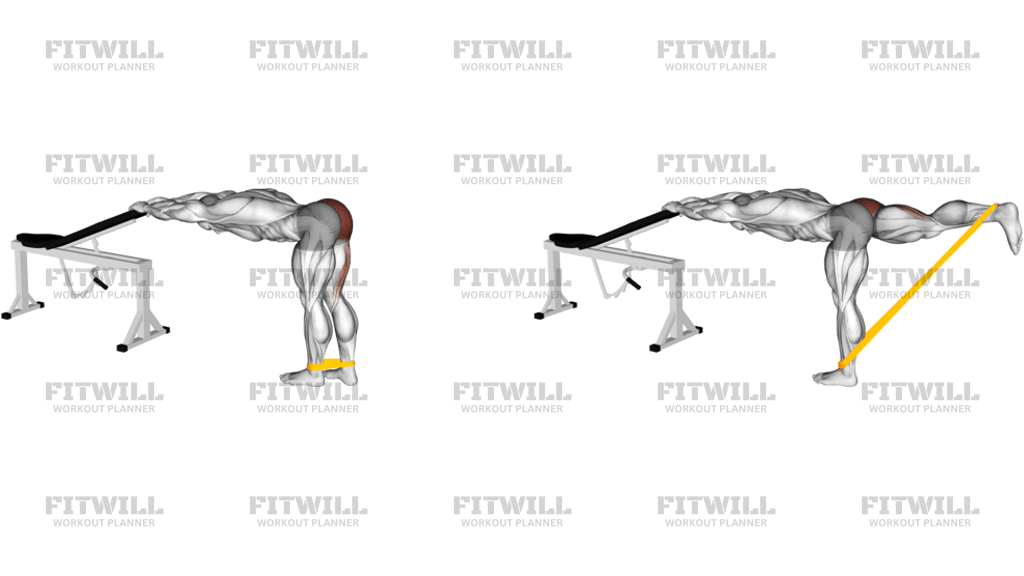
Resistance Band One Leg Kickback Bent Position is a bent-over glute exercise built around a stable hinge, a fixed hand support, and controlled hip extension against band tension. The torso stays folded forward while one leg works through a backward kick, which makes the movement feel less like a general leg swing and more like a direct glute contraction. When the setup is correct, the band stays loaded from the first inch of motion and the pelvis stays square instead of twisting to cheat the rep.
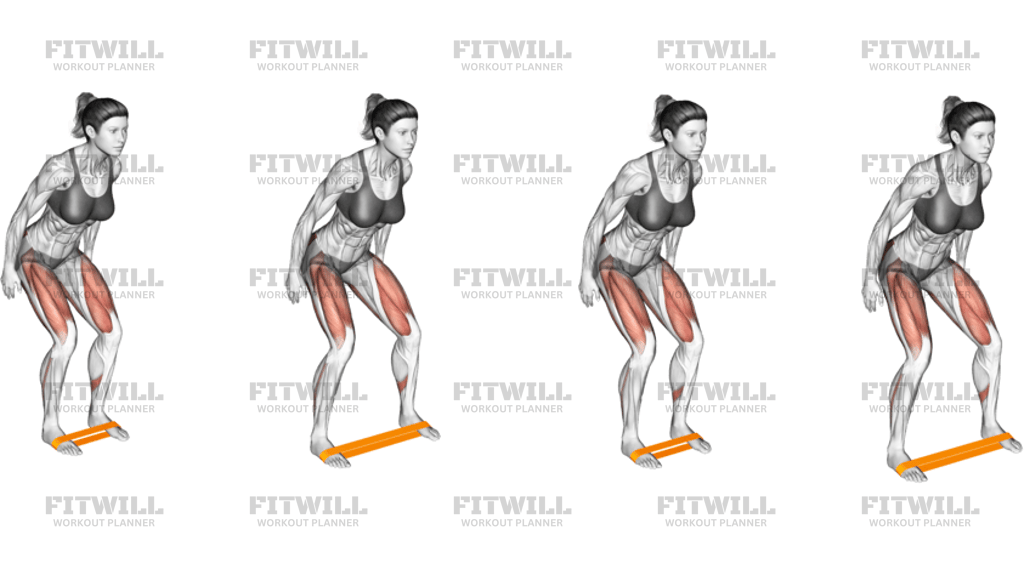
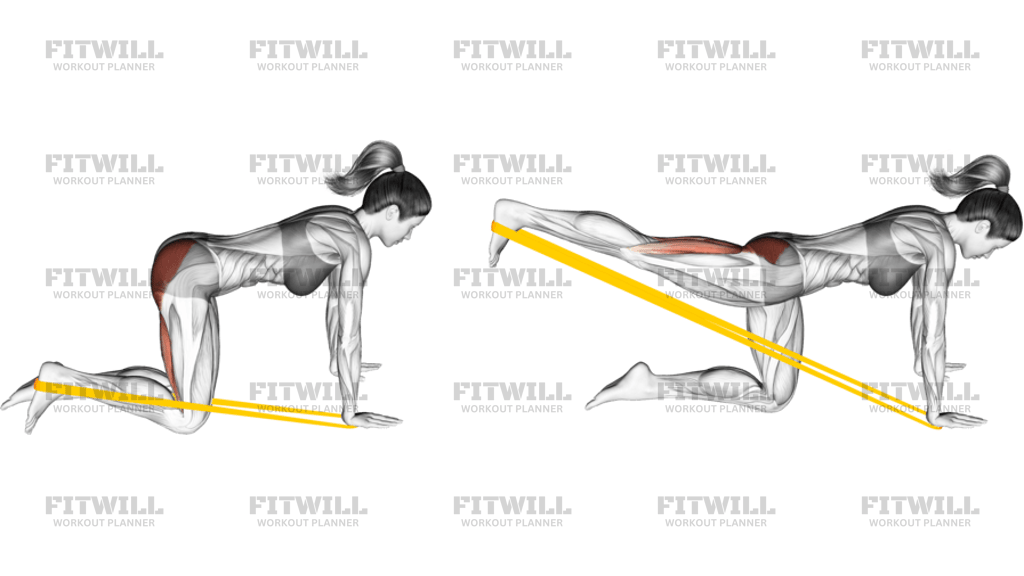
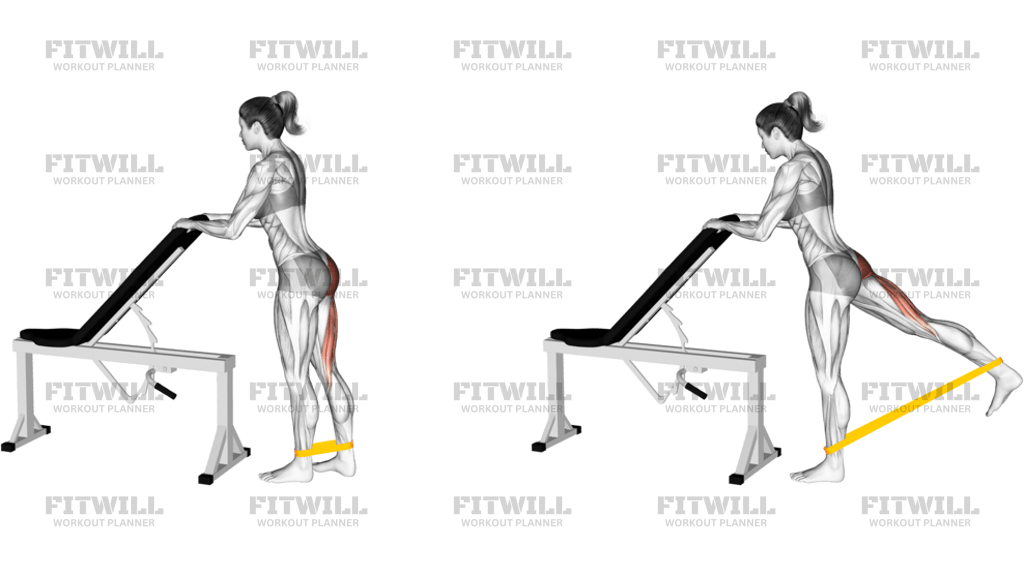
The exercise mainly targets the gluteus maximus, with the hamstrings, deep core, and spinal erectors helping stabilize the body while the kicking leg moves. That support work matters because the goal is not to arch the low back or jerk the leg behind you. The goal is to extend at the hip while the standing leg, abs, and upper-body support keep the trunk quiet. The image shows a bent-over stance with both hands braced on a support, which is exactly the position that helps you keep the rep strict and repeatable.
This is a strong choice when you want unilateral glute work without a heavy barbell or machine. It fits well in glute-focused sessions, lower-body accessories, activation work, and higher-rep hypertrophy blocks. Because the movement is controlled and the external load is modest, it is also useful for learning pelvic control and for adding volume when you do not want fatigue from larger compound lifts. The exercise works best when the band is tight, the stance is stable, and the motion is driven by the hip rather than momentum.
To perform it well, hinge forward, secure your support, set the working leg under the hips, and kick back in a smooth path until the glute is fully engaged. Pause briefly at the top without rotating open, then lower slowly until the band tension reloads. Keep breathing steady so the brace does not collapse as fatigue builds. If the lower back starts taking over or the body starts swaying, shorten the range and lighten the band rather than forcing a bigger rep. Clean tension is the point of the exercise, not height or speed.
[ Workout Log & Planner ]
Put your next workout in Fitwill
Keep your plan and training log ready when you are.


Instructions
- Loop the band so it creates tension between the planted foot and the working ankle or foot, then stand beside a stable support you can hold with both hands.
- Hinge forward at the hips until your torso is almost parallel to the floor and keep your chest long instead of rounding your back.
- Plant the standing foot firmly, keep a small bend in that knee, and square both hip bones toward the floor.
- Start with the working leg under your hips and your toes pointing down or slightly forward so the glute can drive the motion.
- Brace your midsection and keep your hands steady on the support before the kickback begins.
- Drive the working leg straight back and slightly up from the hip until you feel a strong glute squeeze.
- Keep the pelvis level and avoid twisting the torso, arching the low back, or swinging the leg to get higher.
- Lower the leg slowly until the band tension returns, then reset your breath and repeat for the planned reps.
Tips & Tricks
- Keep both hands light on the support so the arms stabilize you instead of helping to pull the body through the rep.
- Think about pushing the heel back, not flicking the foot up.
- If the low back feels crowded, reduce the kick height and keep the ribs pinned down.
- A soft bend in the standing knee usually makes the pelvis easier to control than a locked knee.
- Use a band that is already under tension at the bottom so the glutes have to start the rep, not the momentum.
- Pause for a second at the top if you want a cleaner glute squeeze and less swinging.
- Keep the working leg long enough to feel the hip extend, but do not force it so far back that the pelvis opens.
- Slow the lowering phase to keep tension on the glute instead of letting the band snap the leg back.
Frequently Asked Questions
What muscle does Resistance Band One Leg Kickback (Bent Position) target most?
The glutes do most of the work, especially the gluteus maximus as the leg extends backward.
Where should the band sit during the kickback?
It should stay loaded through the working leg so there is tension at the start of the rep and throughout the kickback path.
Should my torso stay upright or bent over?
Stay bent over with a hip hinge. The torso position is part of what keeps the glutes isolated and the low back out of the rep.
Can I bend the standing knee?
Yes. A slight bend usually helps you keep balance and prevents the pelvis from shifting as the leg moves.
Why do I feel this in my lower back sometimes?
That usually means the leg is going too high or the torso is arching to fake the kickback. Shorten the range and keep the ribs down.
Is this a good beginner glute exercise?
Yes. A light band, a stable support, and a short controlled range make it approachable for beginners.
What is the most common form mistake?
The most common mistake is twisting the hips open or swinging the leg instead of extending the hip under control.
How can I make the exercise harder without losing form?
Use a slightly stronger band, add a pause at the top, or slow the return while keeping the same strict body position.