Standing Side Leg Raise
Standing Side Leg Raise is a bodyweight hip exercise that trains the outer hip and glute area while asking the trunk to stay quiet. The movement looks simple, but the training effect depends on how still you can keep the pelvis and torso while one leg moves out to the side. That is what makes it useful for warm-ups, accessory work, and low-load strength sessions where you want clean control instead of speed.
The exercise mainly challenges the glutes and the muscles that stabilize the hips and pelvis while you stand on one leg. Your core works to keep the ribcage stacked over the pelvis, and the standing leg has to stay stable so the lifted leg can move without the body drifting or leaning. If the torso twists or the standing hip collapses inward, the target work shifts away from the side-hip pattern and into momentum.
A good setup starts with an upright stance, feet under control, and hands on the hips so you can feel whether the pelvis stays level. Keep the standing knee unlocked but straight, point both hip bones forward, and raise the working leg out to the side without hiking the lower back. The lift should feel like the leg is moving away from the body from the hip joint, not like you are throwing the foot outward.
At the top, pause long enough to feel the side of the hip working, then lower the leg slowly until the foot returns near the floor with the trunk still tall. The return is just as important as the lift, because dropping the leg or swinging it through makes the set easier but removes most of the control that gives the exercise its value. Breathe steadily and keep the neck relaxed so the effort stays local to the hips instead of spreading into the shoulders and lower back.
Standing Side Leg Raise is a smart option when you want to improve single-leg balance, hip control, and side-to-side stability without external load. It is also a useful accessory after bigger lower-body lifts because it can wake up the hips without adding much fatigue. If balance is the limiting factor, shorten the range and keep the motion smooth; if the pelvis starts to tip or the torso begins to lean, that is the signal to stop the set rather than force more reps.
[ Workout Log & Planner ]
Put your next workout in Fitwill
Keep your plan and training log ready when you are.


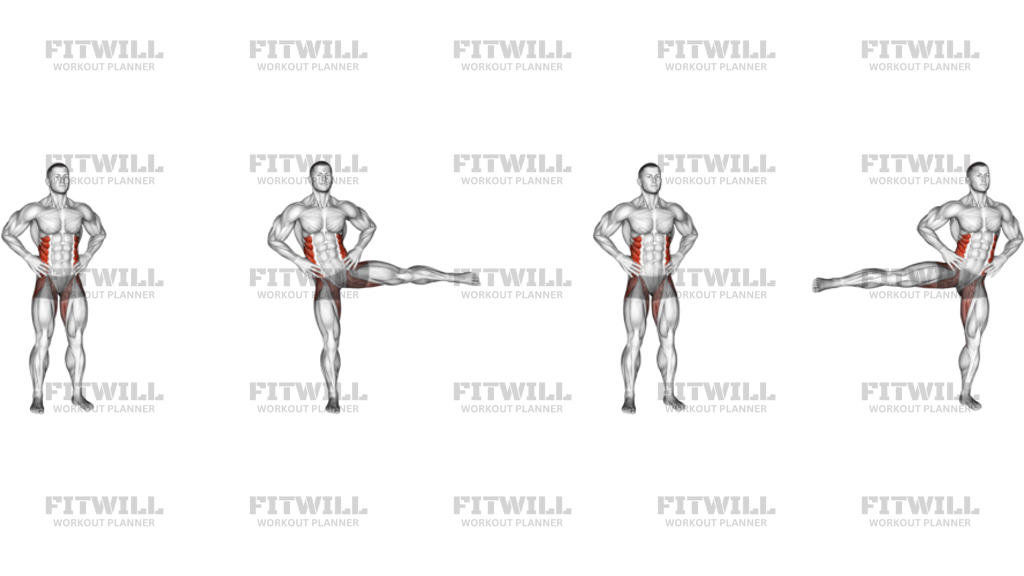
Instructions
- Stand tall on one leg with the working side free, place your hands on your hips, and keep your feet and pelvis facing forward.
- Lock your eyes on one point ahead of you and keep the standing knee soft but stable before the first rep.
- Brace your abdomen lightly so your ribs stay stacked over your hips instead of leaning toward the lifted leg.
- Raise the free leg out to the side from the hip joint, keeping the foot relaxed and the toes pointed mostly forward.
- Lift only as high as you can without tilting the pelvis or rotating the torso.
- Pause for a brief squeeze at the top while staying upright on the standing leg.
- Lower the leg slowly back toward the floor with the same control you used to lift it.
- Reset your stance if balance drifts, then repeat for the planned reps before switching sides.
Tips & Tricks
- Keep both hip bones pointed straight ahead; if the lifted side opens up, the repetition turns into a twist instead of a side leg raise.
- Move the leg slowly enough that you can feel the standing glute holding the pelvis steady on every rep.
- Stop the lift before your torso starts to lean away from the working leg; extra height is not worth losing alignment.
- Let the foot travel slightly in front of the body if a pure side path pinches the hip, but do not swing it across the midline.
- Keep the standing foot planted and avoid rolling onto the outside edge, which usually means the ankle is taking over for the hip.
- Use a one-second pause at the top to remove momentum and make each rep more honest.
- Exhale as the leg lifts so your trunk stays stacked and you do not brace so hard that the shoulders rise.
- If balance is the first thing to fail, reduce the range before you reduce the tempo.
Frequently Asked Questions
What muscles does Standing Side Leg Raise work?
It mainly works the glutes and outer hip on the moving side, while the core and standing leg stabilize your body.
Is Standing Side Leg Raise good for beginners?
Yes. It is a good beginner hip-control drill because it uses body weight and a very small load, as long as you keep the torso upright.
How high should I lift the leg?
Lift only until you can no longer keep the pelvis level. The best range is usually lower than people expect.
Why do I feel Standing Side Leg Raise in my lower back?
That usually means you are leaning or arching to fake a higher lift. Shorten the range and keep the ribs stacked over the hips.
Should my toes point forward or up?
Keep the toes mostly forward or only slightly turned out. If the toes open too much, the hip often rotates instead of abducting cleanly.
Can I hold onto something for balance?
Yes. A light fingertip touch on a wall or rack is fine if it helps you keep the pelvis level and the movement strict.
What is the biggest mistake in Standing Side Leg Raise?
Swinging the leg and tilting the torso. If the body moves more than the leg, the hip work drops off quickly.
How can I progress Standing Side Leg Raise?
Add a slower lowering phase, a longer pause at the top, or a small ankle weight only after you can keep the stance perfectly steady.