Tuck Up
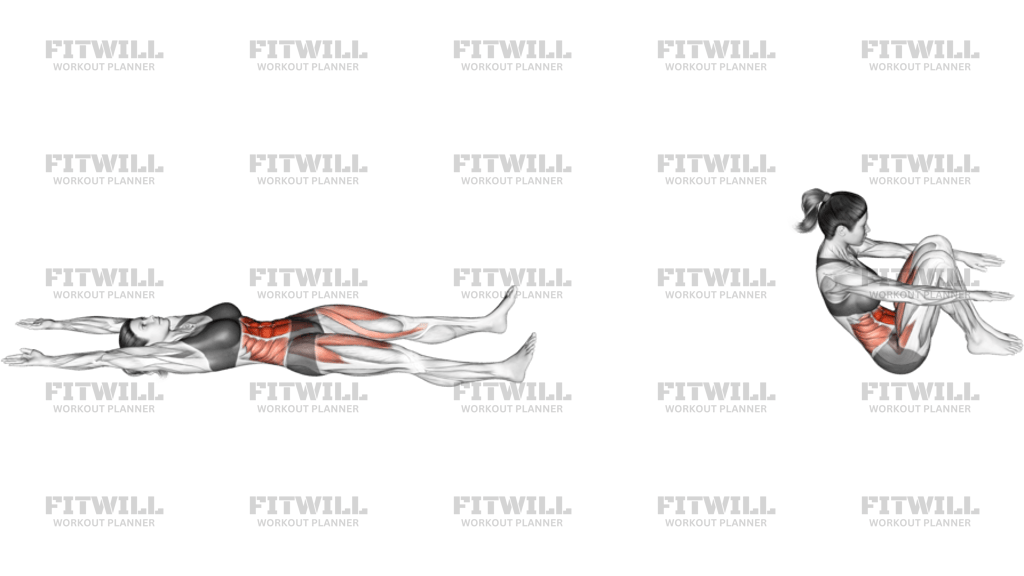
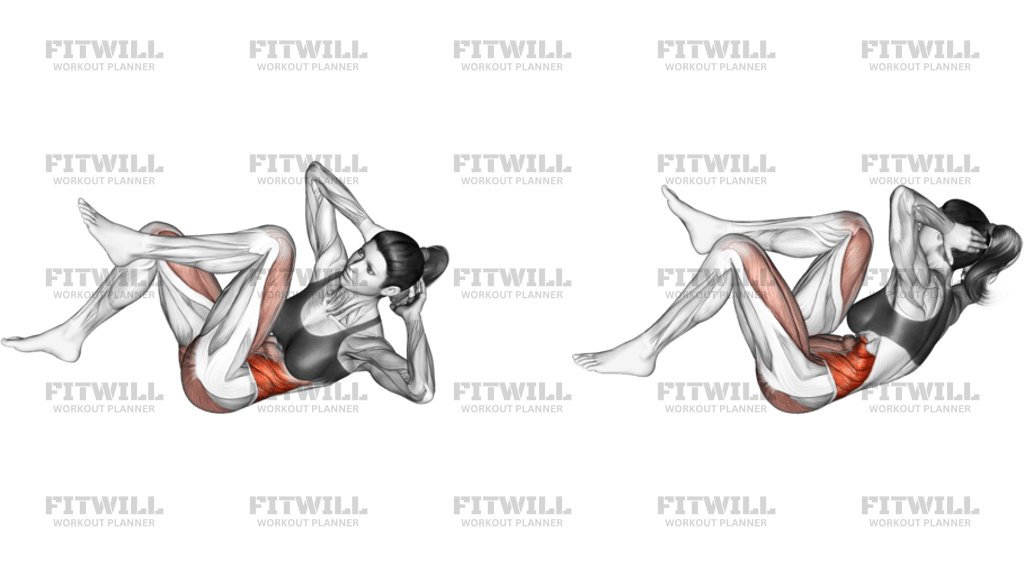
Tuck Up is a body-weight floor exercise that trains the front of the torso, the hip flexors, and the deep muscles that control how the ribs and pelvis move together. In the pictured version, you start lying on your back with your arms reaching overhead and your legs long, then fold the body into a compact tuck by drawing the knees and upper body toward each other. The goal is not just to get small at the top; it is to control the whole curl so the abs do the work instead of momentum.
The setup matters because this exercise only stays useful when the lower back and neck stay organized. If the ribs flare or the legs swing, the movement turns into a fast rock rather than a clean abdominal contraction. Lying flat on the floor gives you a clear starting length, but you still need to keep a light connection through the midsection so the first rep begins under control, not from a loose arch in the back.
A good rep starts with an exhale and a deliberate curl. As the shoulders leave the floor, bring the knees toward the chest and fold the torso forward so the body closes into a tight tuck. Keep the chin slightly tucked, reach toward the shins or feet, and pause briefly when the trunk and thighs are closest together. Then lower slowly, lengthening the legs and arms back out while keeping the abs engaged so the ribs do not pop up and the low back does not take over.
Tuck Ups fit well in core circuits, warm-ups, conditioning blocks, or accessory work when you want controlled trunk flexion rather than heavy loading. They are also easy to regress by bending the knees more or shortening the range if the hip flexors or lower back feel dominant. If your neck starts to work harder than your abs, or if you cannot keep the return smooth, reduce the range and make each rep cleaner before adding speed or volume.
Fitwill
Log Workouts, Track Progress & Build Strength.
Achieve more with Fitwill: explore over 9600 exercises with images and videos, access built-in and custom workouts, perfect for both gym and home sessions, and see real results.
Start your journey. Download today!




Instructions
- Lie on your back on a mat with your legs straight, feet together, and your arms reaching overhead on the floor.
- Press your lower back gently toward the mat and keep your ribs down before you start the first rep.
- Exhale, curl your shoulders off the floor, and begin reaching your hands toward your feet.
- At the same time, bend your knees and draw them toward your chest so the torso and thighs move toward each other.
- Keep your chin slightly tucked and your neck relaxed as you fold into the tightest tuck you can control.
- Pause for a moment at the top with your abs fully shortened and the movement still under control.
- Inhale and slowly unfold the body, extending the legs and arms back out without losing abdominal tension.
- Stop the descent before your low back arches hard or your heels slam down, then begin the next rep.
- Repeat for the planned number of reps with the same smooth curl and return each time.
Tips & Tricks
- Think of the rep as a fold from the ribs and hips, not a fast sit-up.
- If your low back lifts hard off the floor on the way down, shorten the range and keep the return slower.
- Reach your arms toward your shins instead of yanking your head forward with your hands.
- Keep the knees coming in with the torso; if the legs lag behind, the rep becomes more of a swing than a tuck.
- A smooth exhale through the upward curl usually makes the abdominal contraction easier to feel.
- Bending the knees more is a smart regression when straight-leg tucks pull too much into the hip flexors.
- Use the floor as a reference point and lower only as far as you can keep tension through the center of the body.
- If the neck takes over, keep the chin slightly tucked and focus your eyes toward the thighs instead of the ceiling.
- Do not chase speed; each clean tuck should look nearly identical from rep to rep.
Frequently Asked Questions
What does the Tuck Up work most?
It mainly targets the abdominal wall, especially the rectus abdominis, while the hip flexors help bring the knees in.
Is the Tuck Up different from a regular crunch?
Yes. A crunch only shortens the torso, while a tuck up also folds the hips and knees into a compact ball shape.
Should my legs stay straight the whole time?
They can start straight like the image, but beginners often do better with a slight knee bend on the return to keep the low back comfortable.
Where should I feel the Tuck Up?
You should feel the front of the abs working hard, with some hip flexor involvement as the knees travel toward the chest.
Why do my neck and shoulders get tired first?
That usually means you are pulling yourself up with the upper body instead of folding the ribs and pelvis together. Reduce the speed and keep the chin gently tucked.
Can beginners do Tuck Ups safely?
Yes, if they keep the range small, move slowly, and regress to bent knees before form breaks down.
What is the biggest mistake with this movement?
Using momentum to rock from flat to tucked instead of controlling both the curl up and the lengthened return.
How can I make the Tuck Up harder?
You can slow the lowering phase, keep the legs straighter, or add more total reps while keeping each rep crisp.