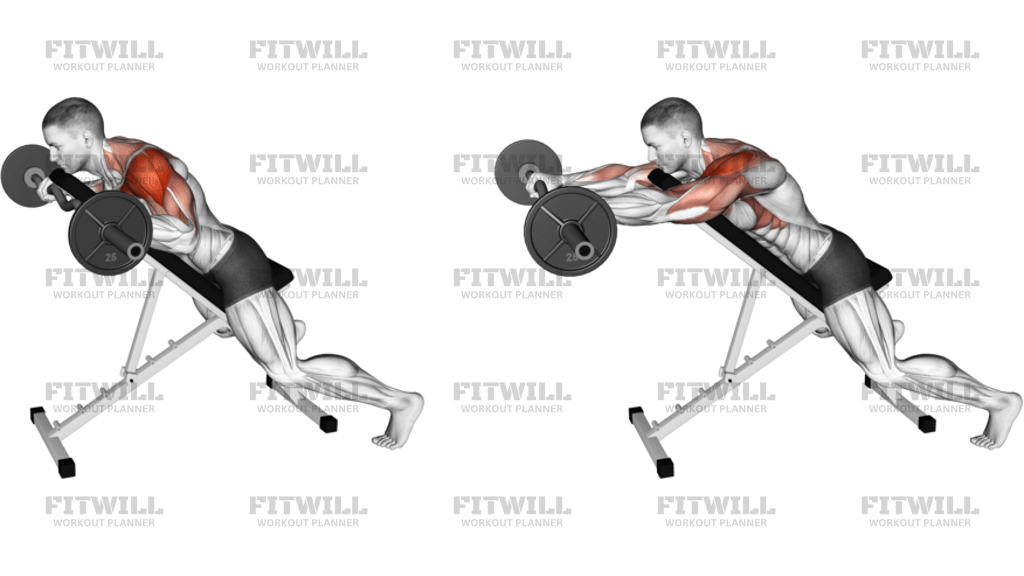
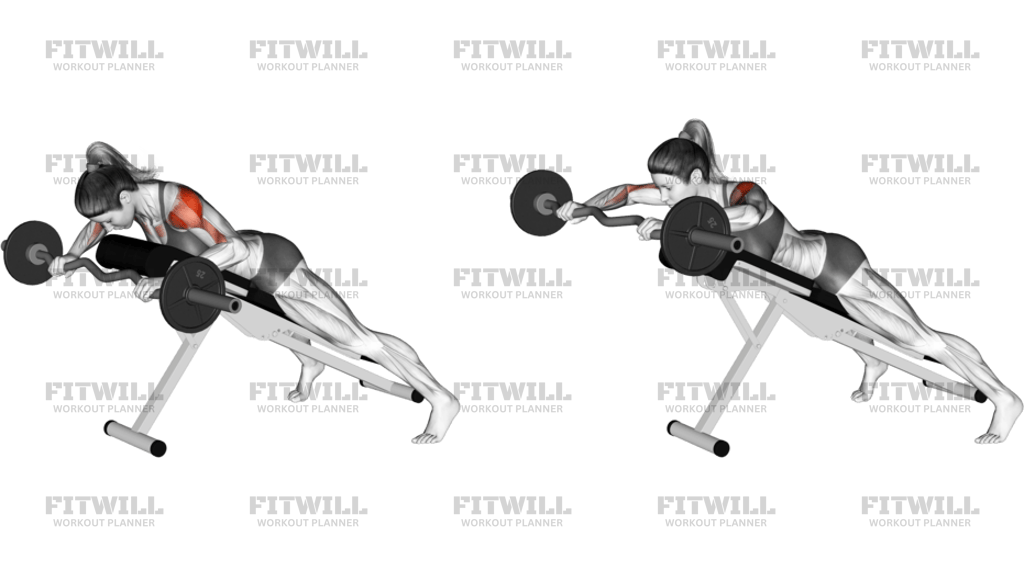
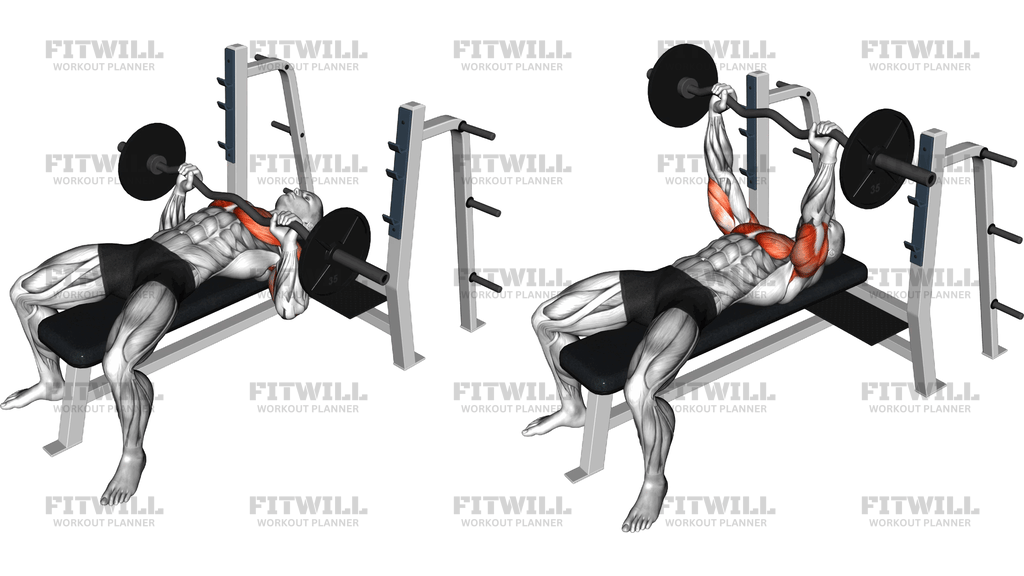
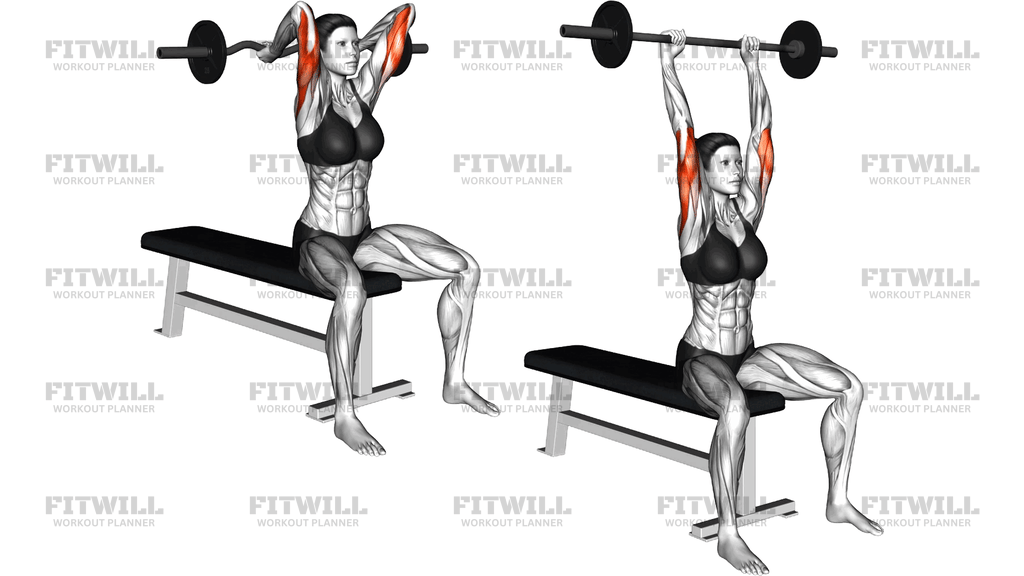
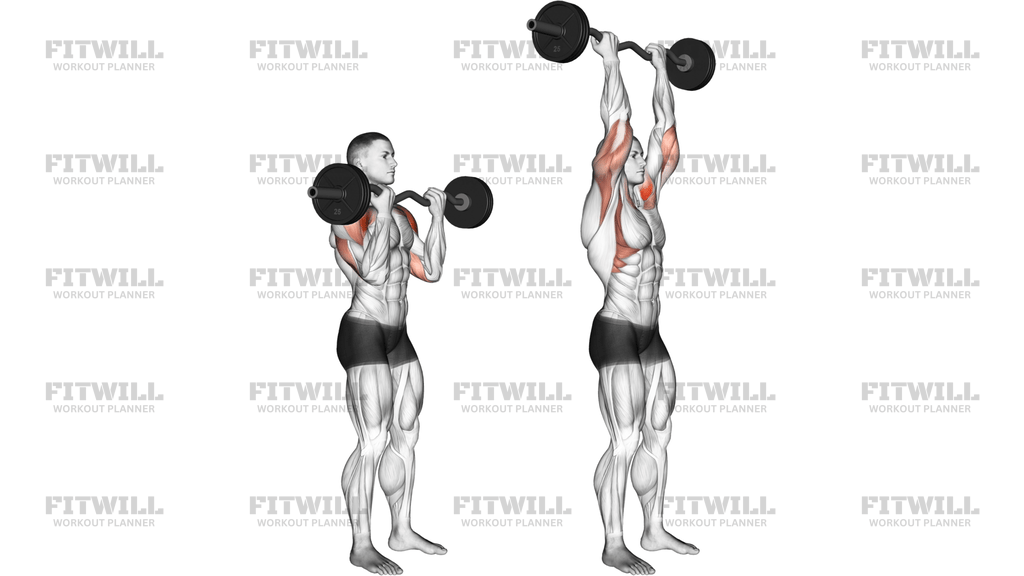
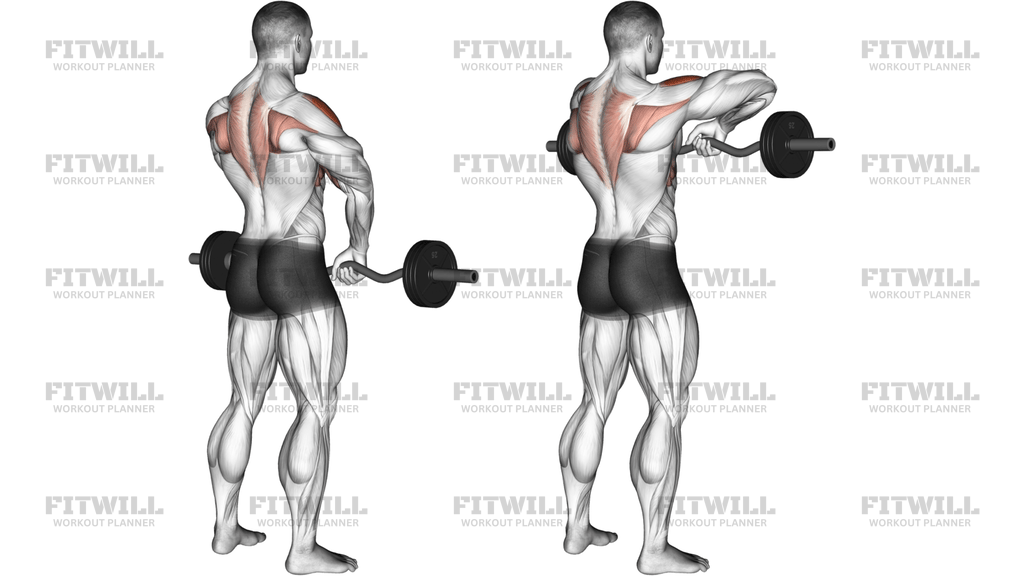
EZ-Bar Incline Front Raise
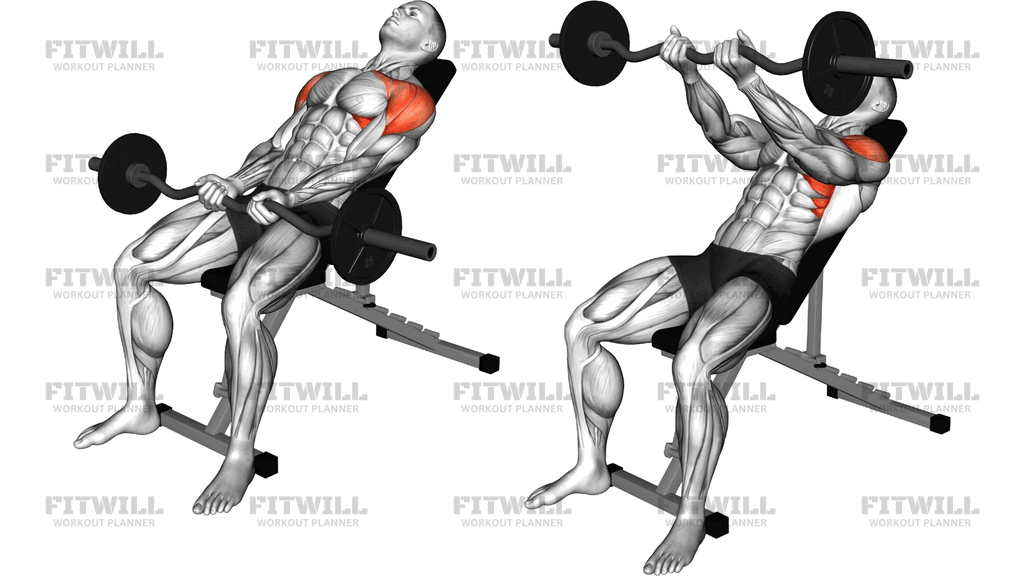
EZ-Bar Incline Front Raise is a supported shoulder isolation exercise that lets you train the front of the delts without relying on body swing. The incline bench removes a lot of the cheating that can creep into a standing front raise, so the shoulders have to do the work through a cleaner, more repeatable path. It is especially useful when you want direct anterior shoulder tension with a little more control over the torso and upper back.
The movement mainly targets the front shoulders, with the upper chest, triceps, and upper back contributing to stability and control. The incline position also changes the feel of the lift slightly compared with a standing raise, because the bench helps keep the ribcage and spine organized while the bar travels forward and upward. That support makes EZ-Bar Incline Front Raise a useful accessory exercise for lifters who want to keep tension on the delts instead of turning the set into a momentum drill.
Set the incline bench to roughly 30-45 degrees and sit with your upper back and head supported. Plant your feet firmly, grip the EZ bar with an overhand hold on a comfortable angled section, and let the bar hang in front of your thighs with the elbows softly bent. Before the first rep, pull your ribs down, brace your abdomen, and keep the shoulders from rolling forward or shrugging up toward your ears.
Lift the bar in a smooth arc until your hands reach about shoulder height or slightly above, then pause for a moment and lower it with control. The path should stay in front of your body, not drift into a press or a full-body swing. Keep the neck long, the wrists stacked, and the elbows quiet so the front delts stay loaded throughout the set. If the top position turns into a shrug, the range is too high or the load is too heavy.
EZ-Bar Incline Front Raise works well as accessory shoulder work after pressing, as part of a delt-focused session, or anywhere you want light to moderate loading with strict mechanics. It is usually best performed with controlled reps and a weight that lets you keep the bench contact, bar path, and breathing steady from start to finish. Done well, it is a simple way to challenge the front of the shoulders without needing a lot of load or body English.
[ Workout Log & Planner ]
Put your next workout in Fitwill
Keep your plan and training log ready when you are.


Instructions
- Set an incline bench to about 30-45 degrees and sit with your upper back and head supported, feet flat on the floor.
- Hold the EZ bar in front of your thighs with an overhand grip on a comfortable angled section, about shoulder width apart.
- Keep your chest lifted against the bench, draw your ribs down, and brace your abdomen before the first rep.
- Start with a soft bend in the elbows and let the bar hang close to your thighs without shrugging your shoulders.
- Raise the bar in a smooth arc in front of you until your hands reach shoulder height or slightly above.
- Keep the wrists stacked over the forearms and avoid leaning back or kicking the weight up with your hips.
- Pause briefly at the top while keeping the neck long and the shoulders down.
- Lower the bar slowly back to the starting position under control.
- Reset your shoulders, breathe, and repeat for the planned number of repetitions before setting the bar down carefully.
Tips & Tricks
- If the top of the rep turns into a shrug, lower the bar only to shoulder height instead of chasing extra range.
- Choose a bench angle that supports your upper back without turning the movement into an almost-vertical front raise.
- Keep a soft elbow bend fixed through the whole set so the wrists and elbows do not take over the lift.
- Use the angled sections of the EZ bar that let your wrists stay neutral instead of forcing a straight-bar grip.
- If your lower back starts to arch off the pad, the load is too heavy or the bench is set too upright.
- A slower lowering phase usually keeps more tension on the front shoulders than a quick drop back to the thighs.
- Stop short of the point where the traps take over; the front delts should still feel like the main driver.
- Keep your feet planted and avoid leg drive, since the bench support is meant to remove body swing from the rep.
Frequently Asked Questions
What muscles does EZ-Bar Incline Front Raise work?
It mainly works the front shoulders, with the upper chest, triceps, and upper back helping stabilize the lift.
Why use an incline bench for EZ-Bar Incline Front Raise?
The bench support reduces body swing and makes it easier to keep tension on the front delts instead of cheating the weight up.
How high should I raise the EZ bar?
Raise it to shoulder height or slightly above if you can keep the shoulders down; going higher usually shifts the work into the traps.
What grip works best on the EZ bar?
Use a comfortable overhand grip on the angled parts of the bar, usually around shoulder width, so your wrists stay neutral.
Is EZ-Bar Incline Front Raise good for beginners?
Yes, as long as the load is light and the bench support keeps the movement strict.
What is the most common mistake on EZ-Bar Incline Front Raise?
Letting the bar turn into a shrug or using hip drive to get the weight moving instead of lifting smoothly with the shoulders.
Can I use dumbbells instead of an EZ bar?
Yes. Dumbbells are a fine substitute if you want each arm to move independently or the bar bothers your wrists.
What should I do if this movement feels pinchy in my shoulders?
Lower the bench angle, shorten the range, and keep the elbows softly bent; if it still hurts, skip the exercise.