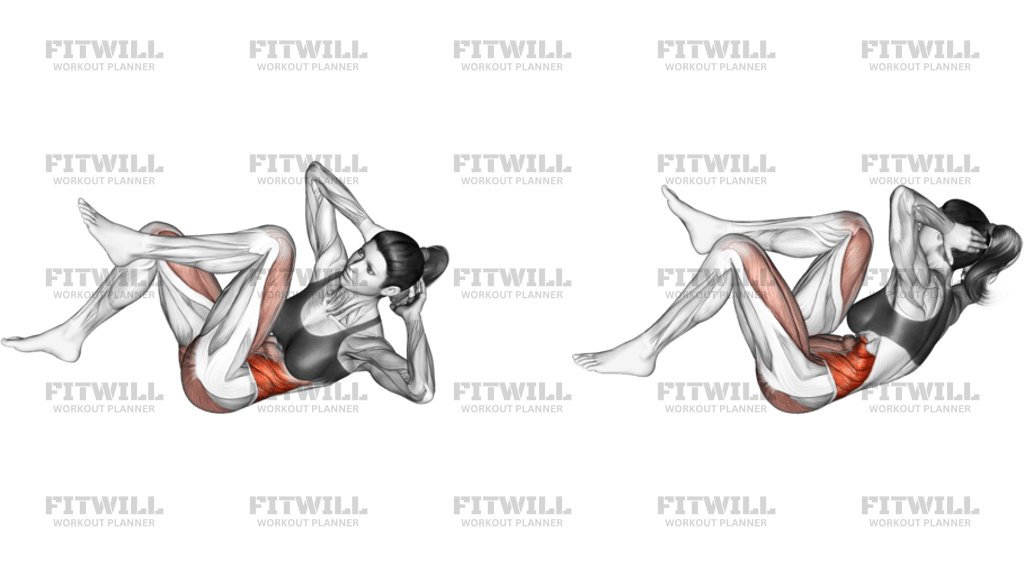
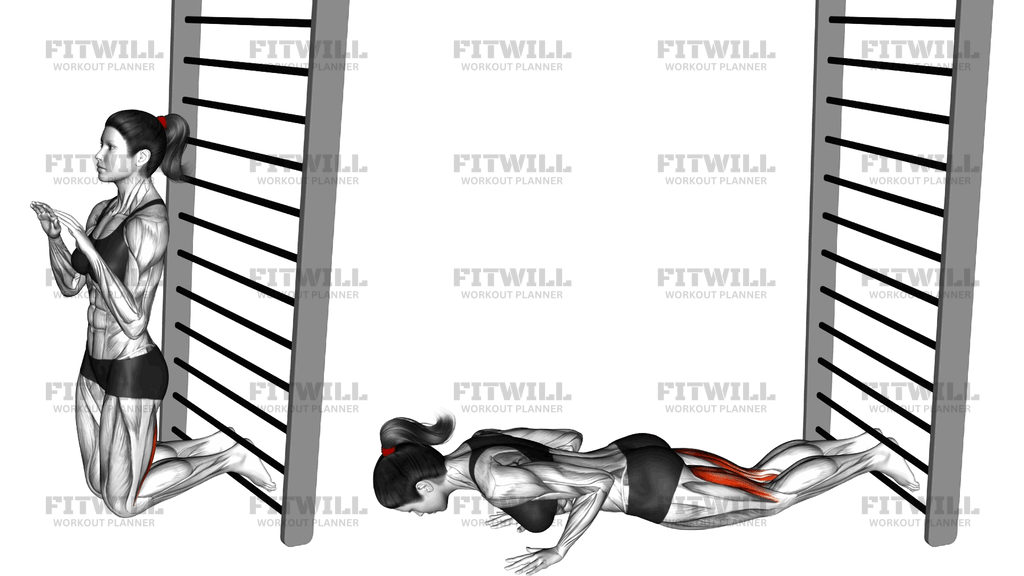
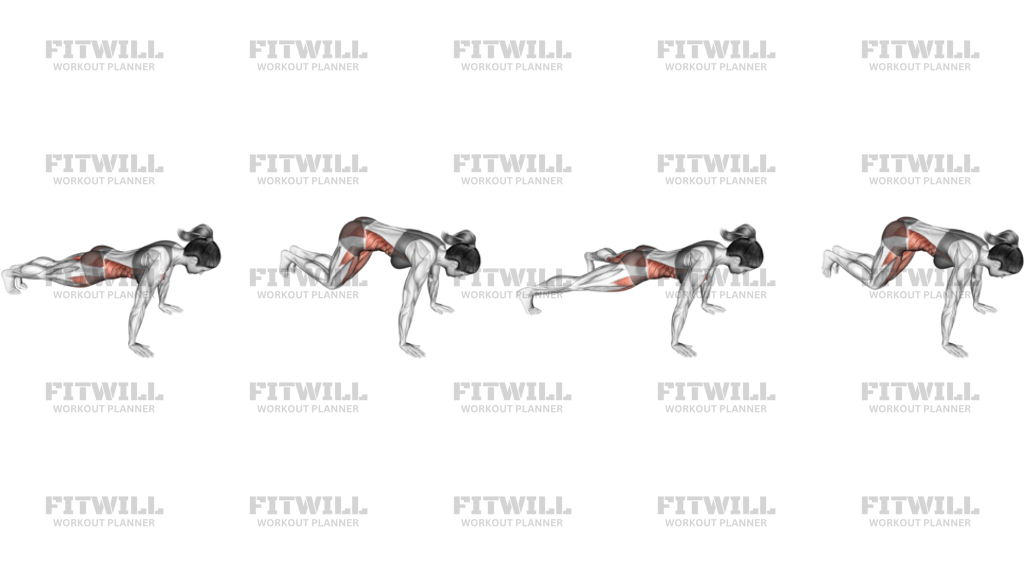
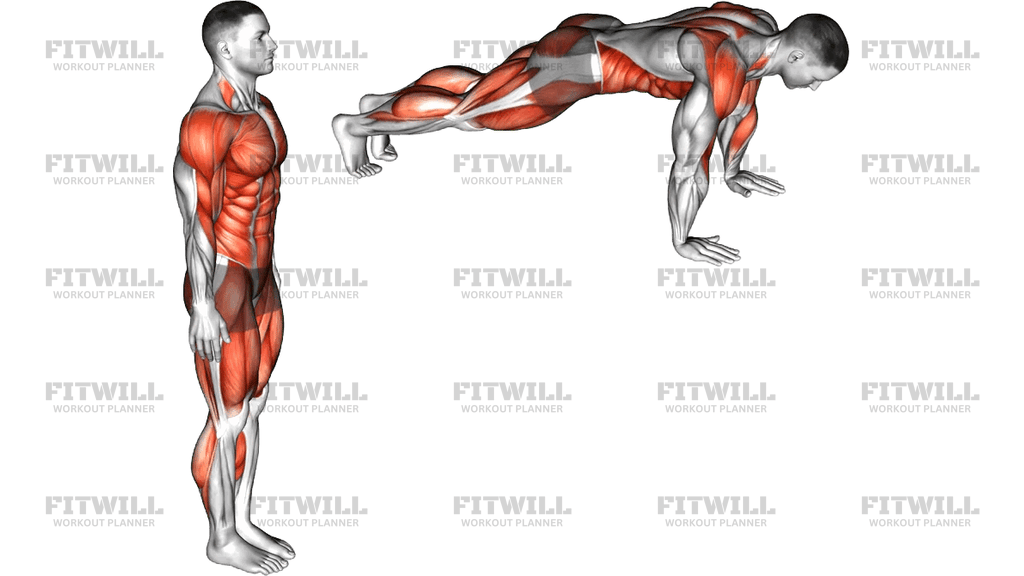
V-Up Double Crunch
V-Up Double Crunch is a body-weight floor exercise that combines a crunch and a reverse crunch into one coordinated abdominal fold. You start flat on your back with the legs extended and the arms reaching long, then bring the rib cage and pelvis toward each other so the torso closes into a V shape. The movement is designed to train trunk flexion control rather than brute force, so the quality of each rep matters more than how high the feet travel or how fast you can cycle through the set.
This pattern strongly targets the rectus abdominis while also demanding work from the hip flexors and deep stabilizers that keep the pelvis and ribs from flaring apart. The setup is important because the rep becomes much harder to control if the lower back arches or if the shoulders and legs leave the floor out of sync. A clean V-up double crunch should look compact and deliberate, with the midsection doing the folding instead of the body swinging upward.
Set up on a firm floor space, then brace before the first rep so your ribs stay down and your low back stays organized. As you lift, the upper body and lower body should rise together, not one after the other. Reach toward your shins or feet as the pelvis rolls slightly upward, then pause briefly when the abs are fully shortened. On the way down, lower under control until your shoulders and heels are close to the floor, keeping the movement smooth and repeatable.
This exercise fits well in body-weight core sessions, warmups, and accessory work where you want abdominal tension without external load. It is especially useful when you need a compact flexion drill that teaches control through the middle of the body. Beginners can shorten the lever by bending the knees or limiting the range, while advanced trainees can slow the lowering phase or add a top-end pause. Stop the set if the neck takes over, the low back starts to arch, or the legs begin to swing instead of lifting with the torso.
[ Workout Log & Planner ]
Put your next workout in Fitwill
Keep your plan and training log ready when you are.


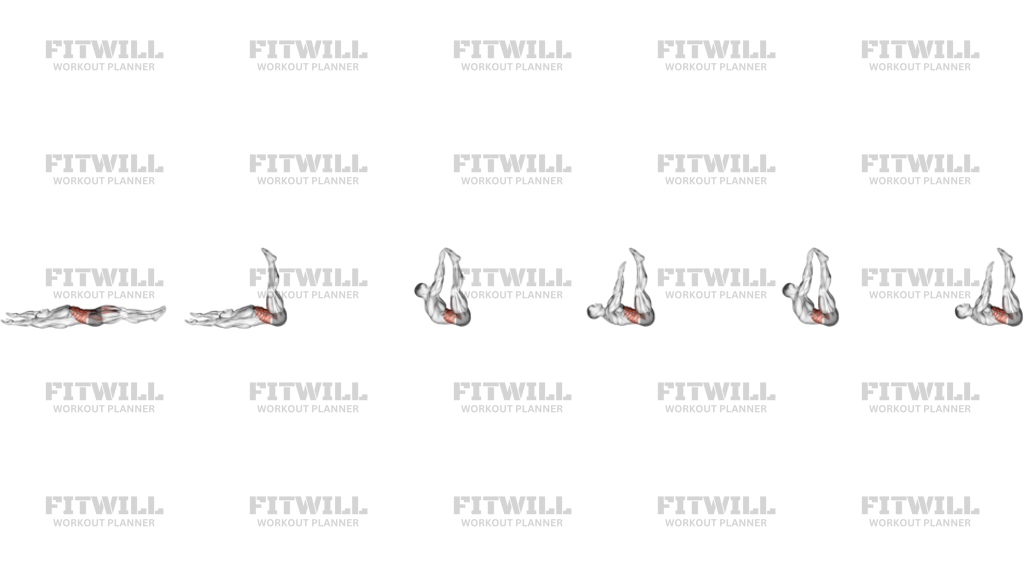
Instructions
- Lie flat on your back on the floor with your legs straight and together, and reach your arms overhead.
- Press your ribs down, gently flatten your lower back against the floor, and brace your midsection before the first rep.
- Inhale, then lift your shoulders and legs off the floor at the same time.
- Keep your legs long and together as you curl your torso upward and reach your hands toward your shins or feet.
- Roll your pelvis up slightly so the chest and thighs move toward each other instead of swinging past one another.
- Pause briefly at the top when your abs are fully shortened and your body is folded into the V position.
- Lower your torso and legs together in a slow, controlled arc until your shoulders and heels are just above the floor.
- Reset your brace and repeat for the planned number of reps without letting momentum take over.
Tips & Tricks
- If your low back arches on the way down, shorten the range before trying to add more reps.
- Keep your chin slightly tucked so the neck does not become the easiest part of the movement.
- Exhale as you curl up; the breath should help the rib cage close, not push the belly out.
- A slow 2-3 second lowering phase usually gives better ab tension than dropping back to the floor.
- Think about bringing ribs and pelvis together, not just kicking the legs upward.
- If straight legs feel too long, bend the knees slightly and keep the same folding path.
- Stop each rep before your feet touch down if that helps you keep tension in the midsection.
- Choose a rep count that lets every repetition look the same from start to finish.
Frequently Asked Questions
What muscles does the V-Up Double Crunch work?
It mainly trains the rectus abdominis, with the hip flexors and deep trunk stabilizers helping control the fold.
Is this different from a regular V-up?
Yes. The double crunch emphasizes both the upper crunch and the pelvic curl, so the chest and hips move toward each other more clearly.
Can I bend my knees if the straight-leg version is too hard?
Yes. A slight knee bend shortens the lever and makes it easier to keep the low back from arching.
Why does my lower back come off the floor?
That usually means the range is too long or the brace is lost. Shorten the descent and keep the ribs pulled down.
Where should I feel this exercise?
You should feel a strong contraction through the abs, with some hip flexor work. If the neck or low back dominate, reduce the range.
Is this a good beginner core exercise?
It can be, but beginners usually need a smaller range, bent knees, or slower tempo to keep the rep controlled.
How can I make the V-Up Double Crunch harder?
Slow the lowering phase, pause at the top, or extend the legs more only if you can keep the fold crisp.
Can I use it in a core circuit?
Yes. It works well in short core circuits as long as each rep stays smooth and you stop before form breaks down.