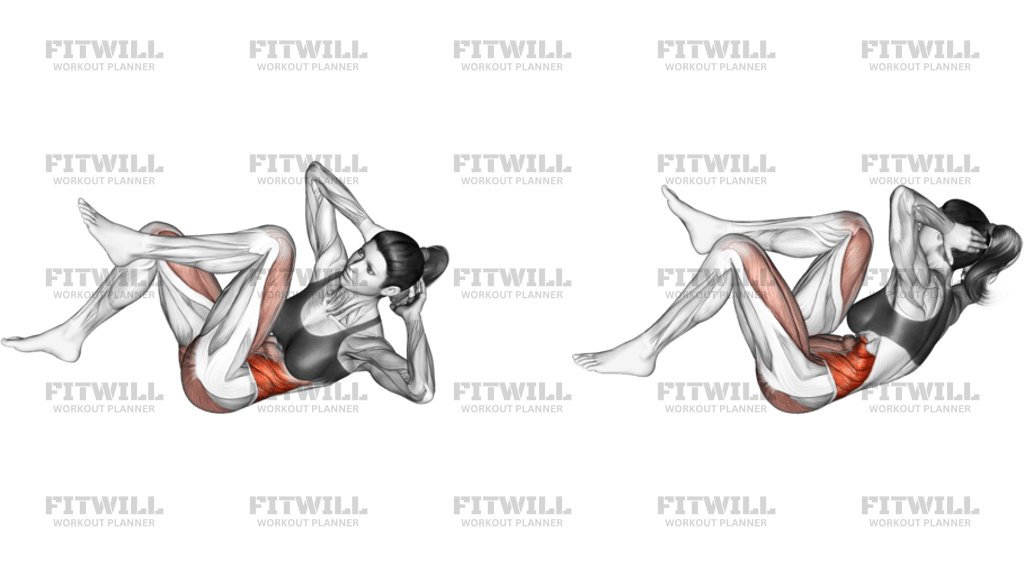
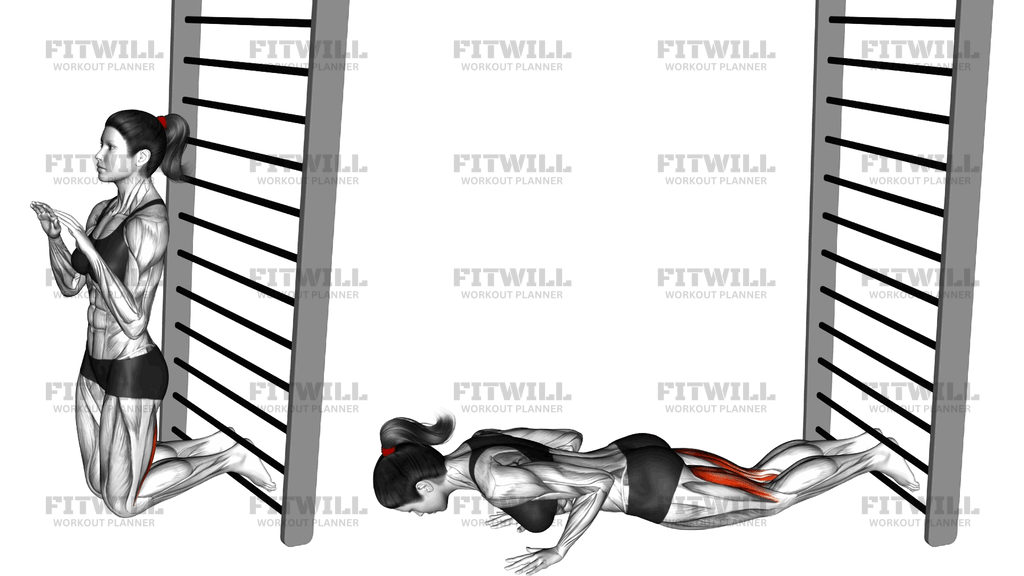
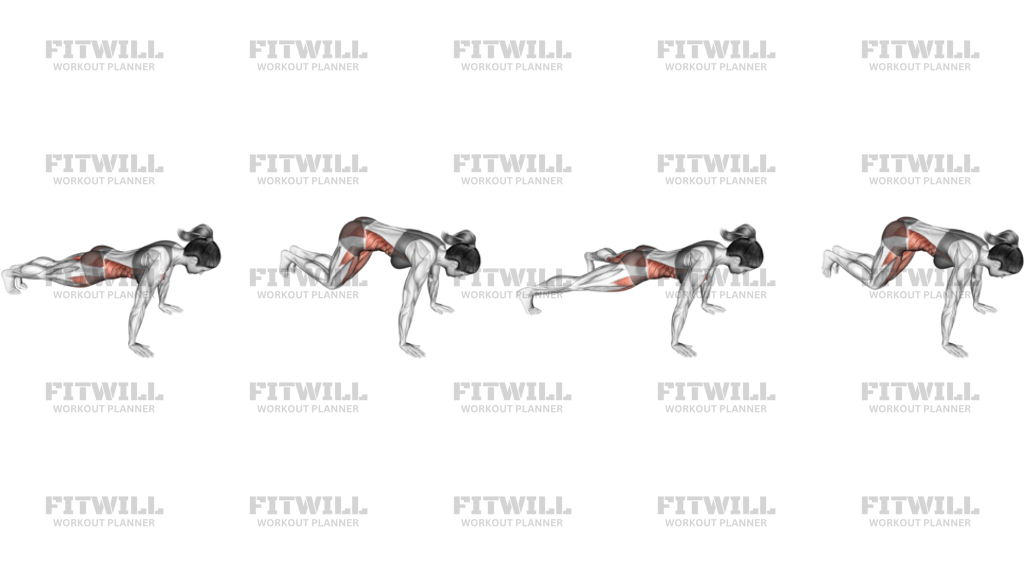
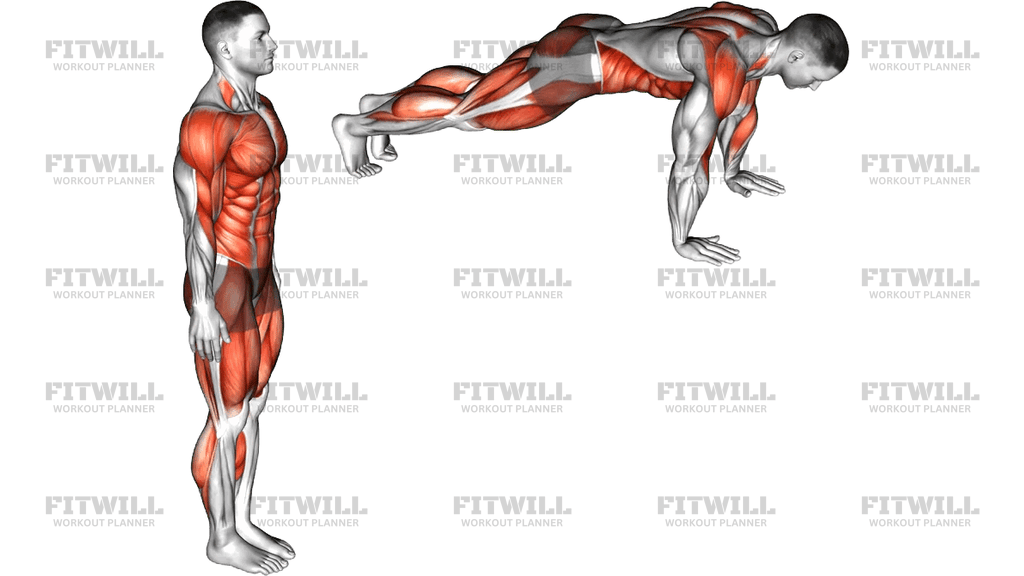
Dead Bug With Stability Ball
Dead Bug With Stability Ball is a floor-based core exercise that combines opposite-arm and opposite-leg movement with an isometric squeeze on the ball. It is useful when you want to train trunk control, coordination, and low-back-friendly bracing without loading the spine the way a heavy lift might. The ball adds a clear external cue: if you lose tension, the setup becomes unstable immediately.
The exercise is built around keeping the ribs, pelvis, and lower back organized while the limbs move. That makes it especially valuable for beginners learning to control the torso, and for experienced lifters who want a more demanding anti-extension drill. The working muscles are the deep abs, obliques, hip flexors, and the smaller stabilizers that keep the shoulders and hips aligned.
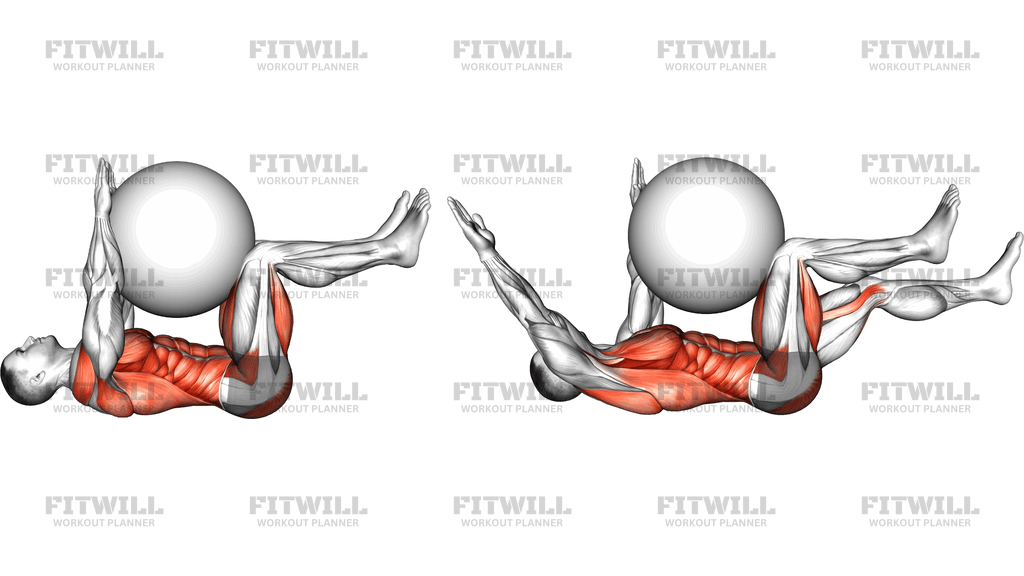
Start by lying on your back with your hips and knees bent, then place the stability ball between your hands and knees so you can press into it before you move. That squeeze should stay active through the set. The pressure helps you feel whether your torso is drifting, arching, or twisting as one arm and the opposite leg reach away from the center line.
Each rep should look slow, deliberate, and quiet. Extend only as far as you can keep the low back from popping up and the ball from losing pressure. If the leg reach is too long or the arm drift is too far overhead, shorten the range and keep the pelvis steady. The goal is clean control, not a bigger stretch or a faster pace.
Dead Bug With Stability Ball works well in warm-ups, core circuits, and accessory blocks because it teaches control without needing much equipment or load. It is also a useful regression if traditional dead bugs feel too easy, because the ball creates extra feedback through the hands and knees. Keep the setup strict, breathe under control, and stop the set as soon as the squeeze or spinal position starts to slip.
[ Workout Log & Planner ]
Put your next workout in Fitwill
Keep your plan and training log ready when you are.


Instructions
- Lie on your back with your knees bent above your hips and the stability ball pinned between your hands and knees.
- Press the ball firmly enough that your arms, thighs, and trunk all feel active before the first rep.
- Flatten your lower back gently toward the floor without yanking your ribs down or tucking your pelvis hard.
- Lift one arm and the opposite leg away from the ball until they are almost straight, keeping the other hand and knee squeezing the ball.
- Keep your low back, rib cage, and pelvis as still as possible while the free arm and leg move.
- Bring the arm and leg back in with control and reestablish the squeeze before starting the next rep.
- Switch sides and match the same range of motion, pressure, and tempo on both sides.
- Breathe out as the arm and leg reach away, then inhale as you return to the ball.
- Finish the set by lowering both limbs, relaxing the ball squeeze, and placing your feet back down with control.
Tips & Tricks
- If the ball slips, use a smaller or softer ball so you can keep the squeeze without straining your shoulders.
- Stop the leg reach before your lower back arches; the best range is the one that keeps your waist pinned to the floor.
- Keep the moving arm just off the floor rather than letting it swing overhead and pull your ribs open.
- Think about squeezing the ball inward, not crushing it with your knees alone; the hands should stay active too.
- If your neck tenses up, rest the head lightly and keep your gaze on the ceiling instead of curling forward.
- Move slowly enough that the ball pressure stays consistent through the whole rep, especially at the farthest reach.
- Make the exhale happen during the extension so you do not lose tension when the limbs leave the center line.
- Reduce range before you reduce tempo; a shorter reach with steady pressure is better than a bigger, sloppy rep.
- If one side feels harder, keep the easier side honest by matching the same reach distance and pause time.
- Stop the set the moment the ball squeeze turns into a clamp or the low back starts to lift off the floor.
Frequently Asked Questions
What muscles does Dead Bug With Stability Ball train?
It mainly trains the deep core, especially the transverse abdominis and obliques, with hip flexors and shoulder stabilizers helping you hold position.
How do I hold the stability ball during Dead Bug With Stability Ball?
Pin the ball between your hands and knees and keep light, steady pressure on it while the opposite arm and leg move.
Why does my lower back arch during Dead Bug With Stability Ball?
The reach is probably too long or the squeeze on the ball is fading. Shorten the arm and leg extension until your lower back stays close to the floor.
Is Dead Bug With Stability Ball good for beginners?
Yes, because the floor position and the ball give clear feedback. Beginners should use a short reach and keep the movement slow.
What is the main mistake people make with the ball?
They squeeze so hard that they tense the neck and shoulders, or they let the pressure disappear as the free arm and leg extend.
Should the moving leg touch the floor in Dead Bug With Stability Ball?
Not unless you can keep the low back flat and the ball pressure steady. Many people get better core control by hovering the leg just above the floor.
Can I use this as a warm-up exercise?
Yes. It works well before pressing, squatting, or running because it wakes up the trunk without tiring you out.
How can I make Dead Bug With Stability Ball harder?
Lengthen the reach, slow the return, or add a brief pause with the arm and leg hovering while the ball pressure stays steady.