Band Biceps Curl
Band Biceps Curl is a standing curl performed with a resistance band anchored under both feet and the handles moving from thigh level up toward the shoulders. It is a simple but effective arm exercise for training elbow flexion against a smooth resistance curve, making it useful for building biceps strength, reinforcing clean curl mechanics, and adding joint-friendly volume at the end of an upper-body session.
The setup matters because the band tension is created by your stance. A narrower stance makes the movement easier to start but can reduce stability, while a wider stance increases the starting tension and can make the curl feel heavier right away. Stand tall, keep the handles centered, and let the elbows stay close to your sides so the curl comes from the arms instead of a hip drive or shoulder swing.
At the top of the rep, the handles should finish near the front of the shoulders without the ribs flaring or the elbows drifting far forward. The lowering phase should be just as deliberate as the curl itself, because the band pulls back quickly and can tempt you to let the hands drop too fast. Controlled tension on the way down is part of the training effect, not just a return to the start.
This exercise fits well as accessory work, a biceps-focused finisher, or a lighter option when you want arm volume without loading a barbell or dumbbells. It is also easy to scale by changing band thickness, stance width, or range of motion, which makes it practical for home training and warm-ups. Keep the motion smooth and repetitive so each rep looks the same.
Use a band that lets you complete the set without leaning back, shrugging, or turning the curl into a partial row. If your wrists, elbows, or shoulders feel irritated, reduce the resistance and keep the elbows pinned closer to the torso. The goal is a strict curl with steady breathing, a quiet torso, and a controlled return to the start.
Fitwill
Log Workouts, Track Progress & Build Strength.
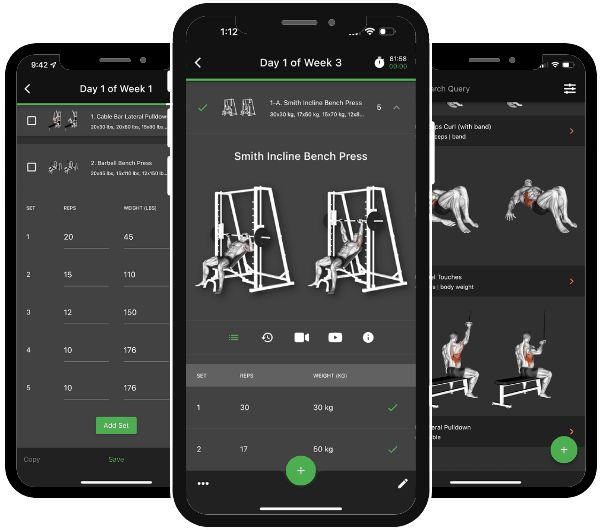
Achieve more with Fitwill: explore over 5000 exercises with images and videos, access built-in and custom workouts, perfect for both gym and home sessions, and see real results.
Start your journey. Download today!


Instructions
- Stand on the middle of the band with feet about hip-width apart and hold a handle in each hand with the palms facing forward.
- Let your arms hang by your sides, keep the handles just outside the thighs, and tuck the elbows close to your ribs.
- Stack your ribs over your pelvis, soften the knees, and keep the shoulders down instead of reaching them forward.
- Brace lightly before each rep so the torso stays still while the elbows begin to bend.
- Curl the handles upward in a smooth arc toward the front of your shoulders without letting the upper arms drift forward.
- Squeeze the biceps briefly at the top while keeping the wrists straight and the neck relaxed.
- Lower the handles slowly until the elbows are almost straight and the band is still under control.
- Exhale as you curl up, inhale as you lower, and reset before the next repetition.
Tips & Tricks
- Choose a stance width that gives enough tension to challenge the curl without forcing you to lean back on the first rep.
- Keep the elbows near the sides for most of the set; if they travel far forward, the front delts start stealing the work.
- Do not let the wrists fold back at the top, because band tension can bend them harder than dumbbells do.
- Use a slower lowering phase than lifting phase to keep the band from snapping the handles back down.
- If the band feels unstable under both feet, stagger one foot slightly behind the other for a stronger base.
- Stop each rep just before the shoulders shrug or the chest flares to finish the curl.
- A lighter band with strict form is better than a heavy band that turns the movement into a sway.
- Keep the handles moving in the same path every rep so the set stays strict and easy to track.
Frequently Asked Questions
What does Band Biceps Curl train most?
It mainly trains the biceps through elbow flexion, with the forearms and shoulder stabilizers helping you keep the curl strict.
Where should the band be placed for this curl?
Stand on the middle of the band with one handle in each hand. The handles should start beside your thighs, and the band should stay centered under both feet.
Should my elbows move forward during the rep?
Only slightly, if at all. Keeping the elbows close to the ribs keeps tension on the biceps instead of turning the set into a front-shoulder movement.
Is this exercise good for beginners?
Yes. A light band makes it easy to learn elbow position, wrist control, and a smooth lowering phase before moving to heavier resistance.
What is the most common mistake with band curls?
Leaning back, swinging the torso, or shrugging the shoulders to help the curl usually means the band is too heavy or the stance is too narrow.
How high should I curl the handles?
Curl until the handles reach about shoulder height or the front of the shoulders, then squeeze briefly without letting the elbows drift far forward.
Can I do one arm at a time?
Yes. A single-arm version can help you fix side-to-side differences, but keep the same strict elbow path and torso position.
How do I make the band curl harder without changing bands?
Take a slightly wider stance, start with the hands lower in the band’s tension curve, or slow the lowering phase to increase time under tension.