Band Upper Crunch
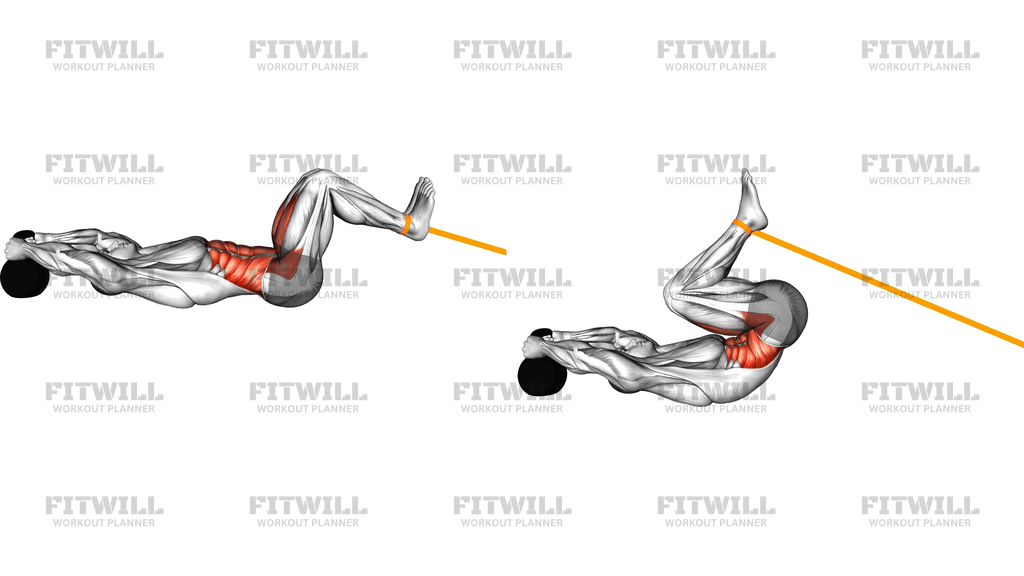
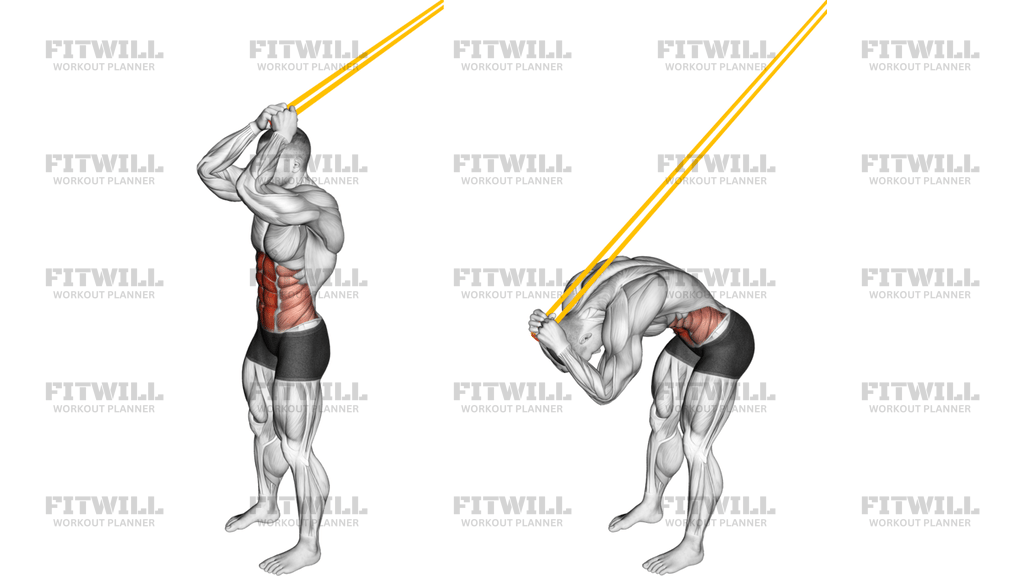
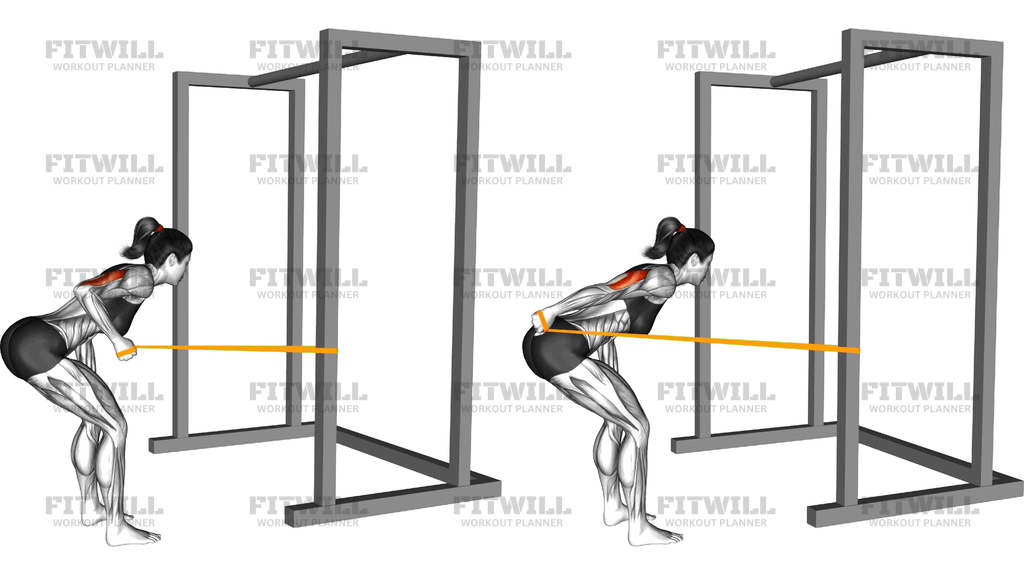
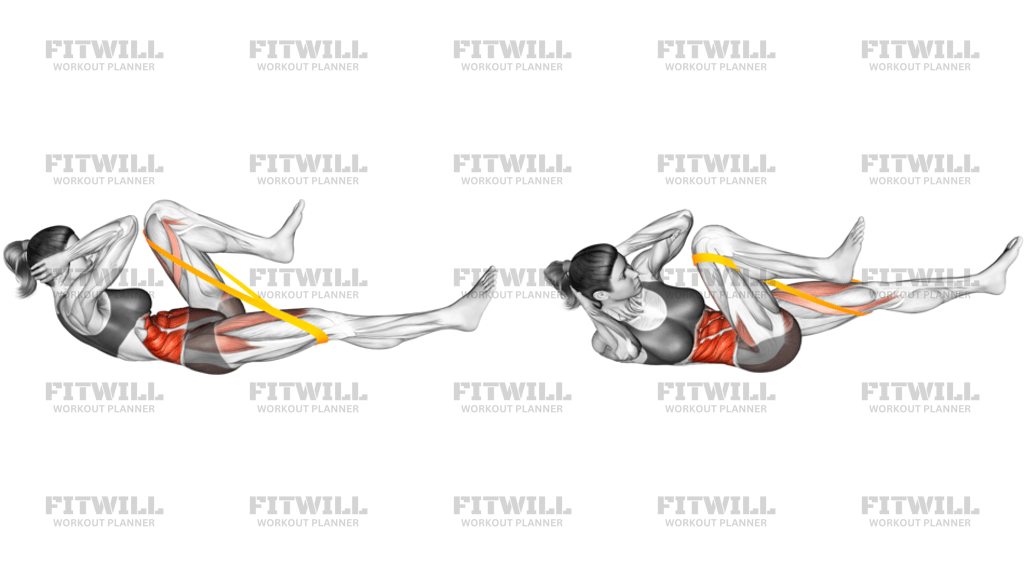
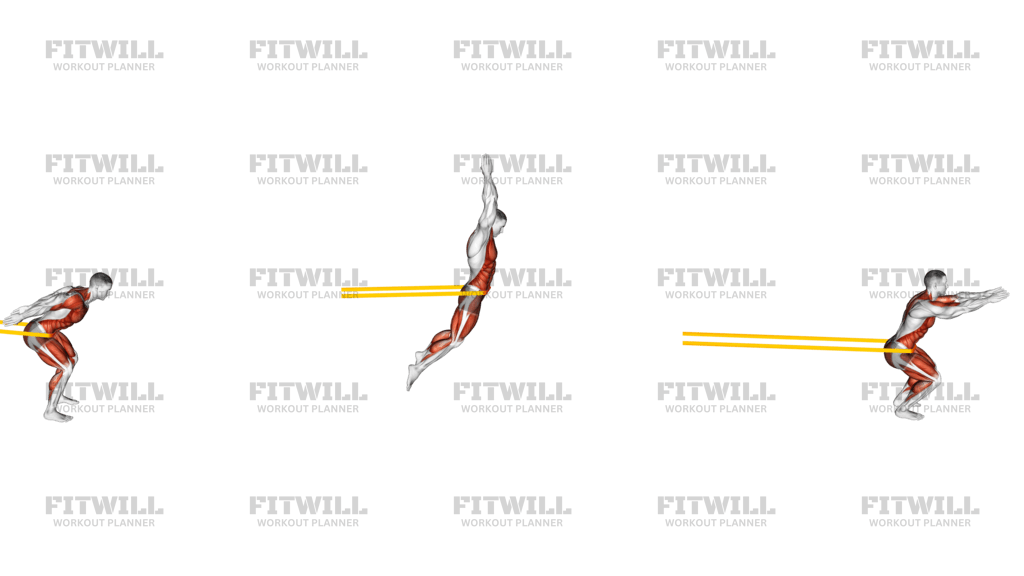
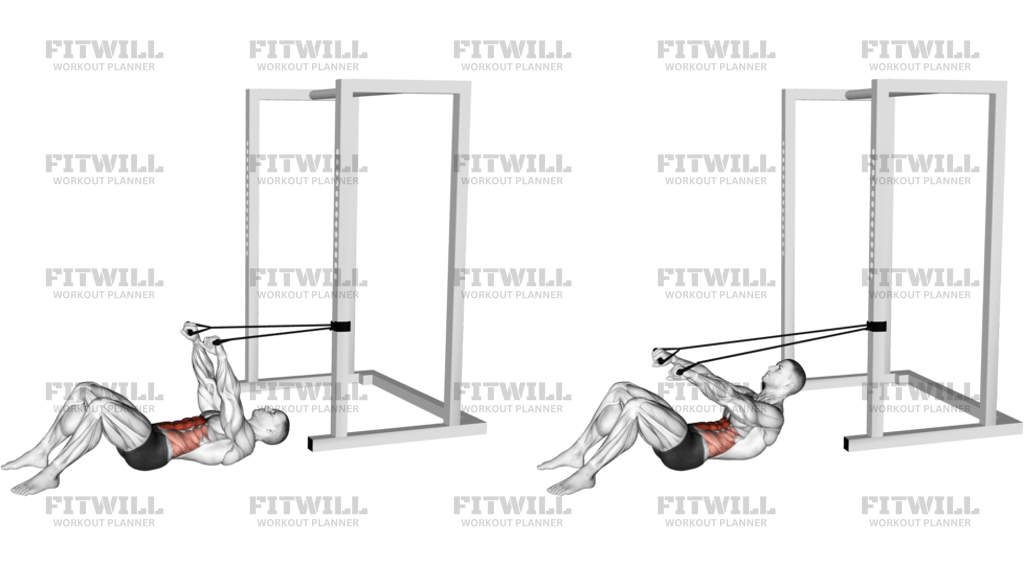
Band Upper Crunch is a floor-based abdominal crunch performed against band resistance, usually with the band anchored behind you at about chest or head height. The image shows the lifter lying on the floor with knees bent, feet planted, and the band held in both hands while the trunk curls forward. That setup matters because the band should load spinal flexion without turning the movement into a hip-driven sit-up.
This exercise primarily trains the rectus abdominis, with the obliques and deep core muscles helping keep the ribs stacked over the pelvis. In practical terms, it is a useful way to build stronger trunk flexion, better ribcage control, and a cleaner brace during core work. The resistance comes from the band pulling you back toward the floor, so every rep has to be earned with controlled abdominal shortening rather than momentum.
Good reps start before the crunch begins. Lie down so the band is taut at the start, set your shoulders flat, bend your knees, and keep your low back in a comfortable neutral-to-slightly-pressed position. From there, curl the ribs toward the pelvis and lift only as far as you can without yanking on your neck or letting the hips take over. The top position should feel like the torso is closing, not like you are throwing your chest upward.
On the way down, let the shoulders return to the floor slowly while maintaining tension on the band. The return should be controlled enough that you can stop the descent at any point without losing position. Breathing is part of the exercise: exhale as you crunch, then inhale as you lengthen back to the start. If the anchor is too low, too high, or too far away, the band angle changes and the rep stops feeling like a true upper crunch.
Band Upper Crunch fits well in core sessions, accessory blocks, or warmups when you want direct abdominal work without loading the spine the way a weighted sit-up can. It is usually friendly to beginners because the range is short and easy to scale, but only if the band tension is modest and the neck stays relaxed. Use it to train crisp trunk flexion, not to chase speed or huge range of motion.
[ Workout Log & Planner ]
Put your next workout in Fitwill
Keep your plan and training log ready when you are.


Instructions
- Lie on your back with your knees bent, feet flat, and the band anchored behind your head at chest or head height.
- Hold the band handles or ends above your chest with your elbows slightly bent and your shoulders relaxed on the floor.
- Set your ribs down and brace your midsection before each rep so the pull from the band does not yank your torso upward.
- Exhale and curl your upper back off the floor, bringing your ribs toward your pelvis instead of swinging your chest forward.
- Keep your chin tucked slightly and your neck long so the crunch comes from the abs, not from pulling with your head.
- Pause briefly at the top when your shoulder blades have lifted and your trunk has shortened under control.
- Inhale as you lower slowly until your shoulder blades return to the floor and the band is ready to tension the next rep.
- Repeat for the planned reps, resetting your rib position and breathing before every crunch if the band starts to pull you out of position.
Tips & Tricks
- Pick a band tension that lets you curl the ribs without jerking your shoulders off the floor.
- If the band is anchored too high, the pull can turn the rep into a chest pull instead of a crunch.
- Keep your feet planted and your hips quiet; the pelvis should stay mostly still while the torso curls.
- Think about sliding the ribcage toward the pelvis rather than trying to sit all the way up.
- Do not tug on the band with your arms; the handles should stay in roughly the same place as the torso flexes.
- A short pause at the top makes the set harder without needing more band tension.
- If your neck feels strained, reduce range and keep the eyes looking up instead of forward.
- Lower slowly enough that the band never snaps you back to the floor.
Frequently Asked Questions
What muscles does Band Upper Crunch train?
It mainly targets the rectus abdominis, with the obliques and deep core muscles helping stabilize the torso.
How is this different from a sit-up?
A Band Upper Crunch keeps the lower body mostly fixed and focuses on trunk flexion through the upper spine and ribs, rather than lifting the whole torso off the floor.
Where should the band be anchored?
The anchor should sit behind you at about chest or head height so the band resists the curl without forcing you into a weird pulling angle.
Should my feet stay on the floor?
Yes. Keeping the feet planted helps the hips stay quiet so the abs do the work instead of turning the rep into a hip-flexor-driven movement.
Why do I feel this in my neck?
Usually the chin is too far forward or the band is too heavy. Keep the neck long, look upward, and shorten the range if needed.
Can beginners use this exercise?
Yes, if the band is light and the curl stays small and controlled. Beginners should start with smooth reps before adding tension.
What is the most common form mistake?
The biggest mistake is yanking the torso up with momentum or the arms instead of curling the ribs toward the pelvis.
How many reps should I do?
This movement usually works well for moderate to higher reps as long as the crunch stays clean and the band does not pull you out of position.