Weighted Chin-Up
Weighted Chin-Up is a loaded vertical pulling exercise that builds strength through the lats, upper back, biceps, and forearms while also demanding a steady trunk and strong grip. The added weight increases the challenge without changing the basic chin-up pattern, so every rep still depends on clean body position, a controlled pull, and a smooth descent.
This version is usually done from a fixed overhead bar with a supinated grip and a dip belt hanging a plate between the legs. That setup matters because the extra load should stay centered under the body; if the belt swings or the torso turns, the pull becomes sloppy and the shoulders have to absorb unnecessary stress. A good Weighted Chin-Up feels powerful, but it should still look organized from the first hang to the last lowering phase.
Start each rep from a dead hang or near-dead hang with the arms straight, shoulders lightly set down, and the ribs tucked so the lower back does not overarch. From there, drive the elbows down and back as you pull the chest toward the bar. The chin should clear the bar because the upper back and arms did the work, not because the neck craned forward or the legs kicked for momentum.
The top position is brief and deliberate, with the chest high and the shoulders still controlled. Lower yourself under tension until the elbows are fully extended again, then re-set before the next rep if the plate has started to swing. This exercise is useful for strength-focused back work, weighted calisthenics progressions, and advanced pull-up programming where strict range and repeatability matter more than speed.
Use a load that lets you keep the torso quiet, the grip secure, and the shoulder blades moving smoothly. If the front of the shoulder pinches, the lower back arches hard, or the plate starts to pull you off line, the weight is too heavy for the current set. Treated well, Weighted Chin-Up is a simple but demanding strength builder that rewards clean mechanics every time you add load.
[ Workout Log & Planner ]
Put your next workout in Fitwill
Keep your plan and training log ready when you are.


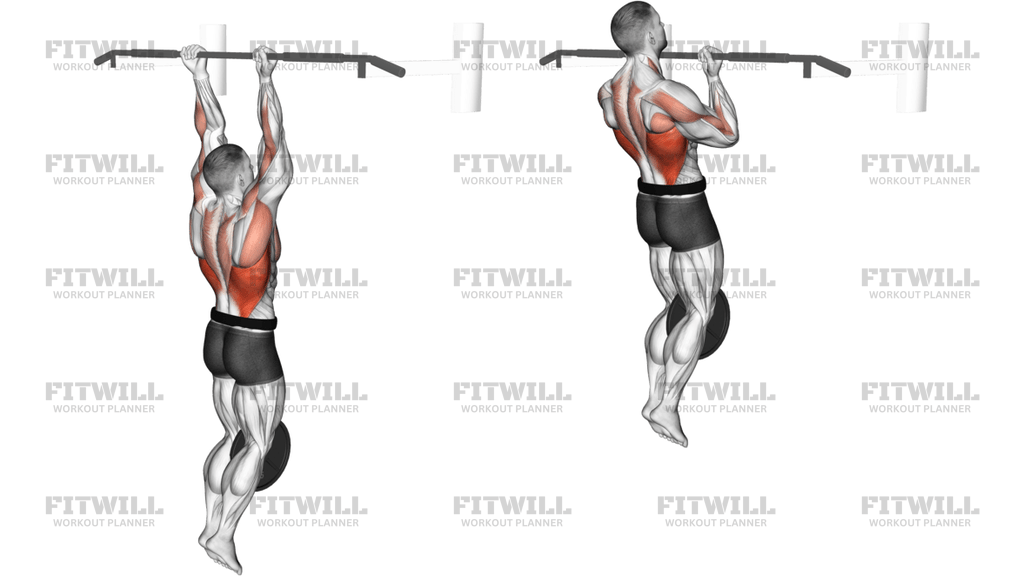
Instructions
- Loop a dip belt around your waist, hang the weight between your legs, and grip a fixed overhead bar with your palms facing you about shoulder-width apart.
- Hang with your arms straight, your chest lifted, and your feet slightly forward or crossed so the plate stays clear of the floor and does not swing.
- Set your shoulders down away from your ears and brace your ribs so your torso stays controlled before the first pull.
- Pull your elbows down toward your ribs and bring your chest toward the bar instead of reaching your chin forward.
- Keep your body from kipping or twisting as you drive up; let the back and arms finish the rep.
- Squeeze at the top with your chin over the bar and your shoulders still packed, not shrugged.
- Lower yourself slowly until your arms are straight again and the weight settles under control.
- Reset your breath and body position before the next rep, especially if the belt starts to swing.
Tips & Tricks
- Choose a belt load that lets you keep the same bar path on every rep; if your ribs flare or your feet swing, it is too heavy.
- Think about driving the elbows down rather than yanking the chin up to the bar.
- A slight lean back is fine, but do not turn the rep into a swinging pull-up.
- Keep the wrists stacked over the forearms so the grip does not collapse under the added weight.
- Lower under control for at least as long as the pull takes; the eccentric is where the extra strength work happens.
- If the plate bumps your legs or swings, cross the ankles and start the next rep from a calmer hang.
- Use chalk or a thinner grip if your forearms fail before your back does.
- Stop the set when the shoulders start shrugging at the top or the last rep turns into a half-range pull.
Frequently Asked Questions
What muscle does Weighted Chin-Up target most?
The main work goes to the lats and upper back, with the biceps and forearms doing a lot of the supporting work.
Can beginners perform this exercise?
Yes, but only after you can do clean bodyweight chin-ups first. Add a very small amount of load and keep every rep strict.
Should I use a dip belt or hold the weight between my feet?
A dip belt is better because it keeps the plate centered and lets your legs stay clear of the load. Holding a dumbbell between the feet usually makes the rep less stable.
How close should my hands be on a Weighted Chin-Up?
Use about shoulder-width with palms facing you. Too wide shortens the range and usually makes the shoulders work harder than they need to.
How heavy should I load Weighted Chin-Up?
Use a load that still lets you hit full arm extension at the bottom and a clean chin-over-bar finish for every rep.
What is the biggest mistake with Weighted Chin-Up?
Most people use too much swing and turn the rep into a body English pull. The plate should stay quiet under you.
Do I need to touch my chin to the bar?
Your chin should clear the bar, but the real goal is a strong pull with the chest high and the shoulders controlled at the top.
What if my elbows or shoulders get irritated?
Reduce the load, keep the range strict, and avoid jerking out of the bottom. If discomfort continues, switch to a bodyweight chin-up or a neutral-grip pull-up variation.
How many reps work best for Weighted Chin-Up?
Most lifters use lower rep sets, usually 3-8 reps, because the added weight makes the movement demanding fast.