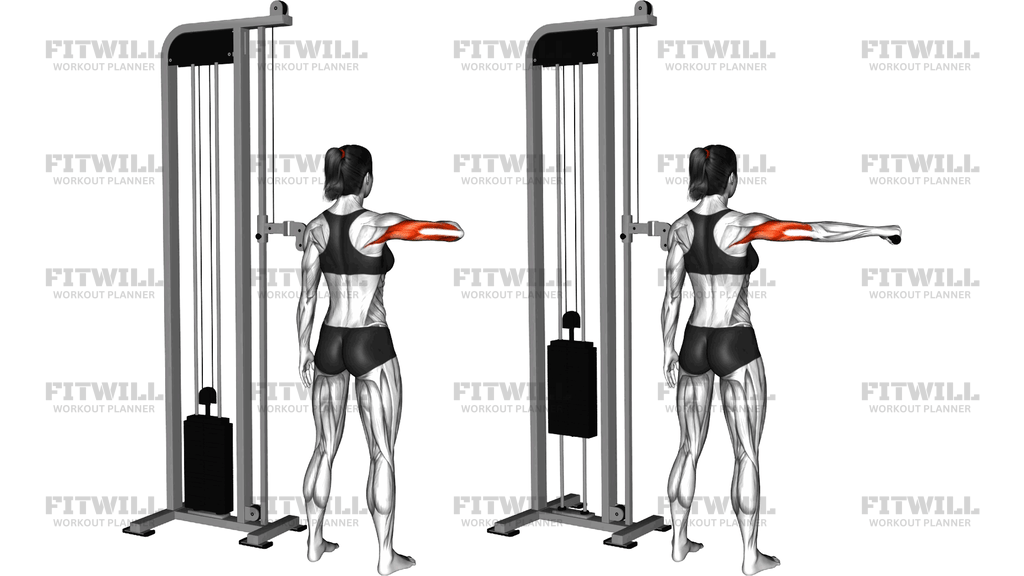
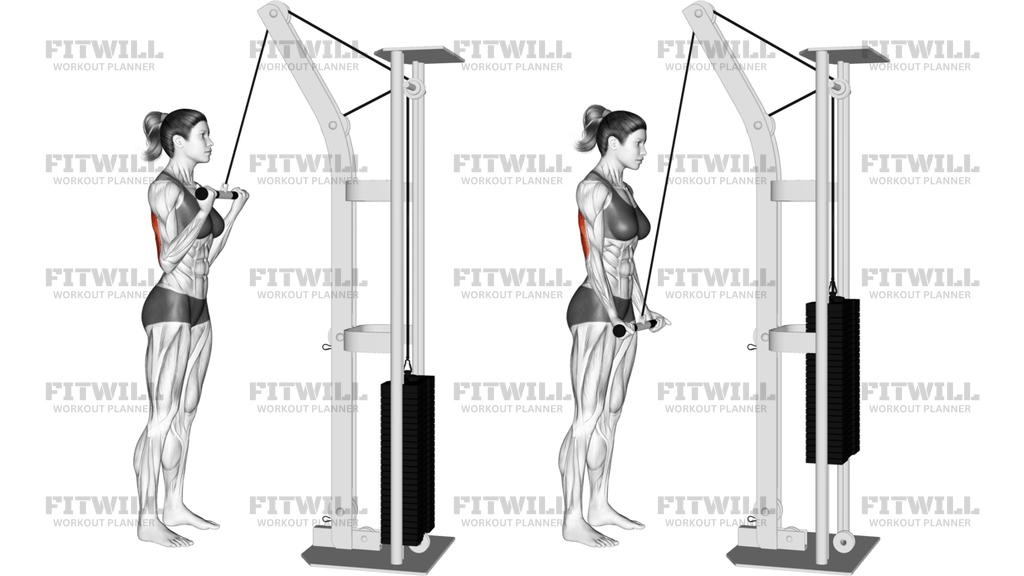
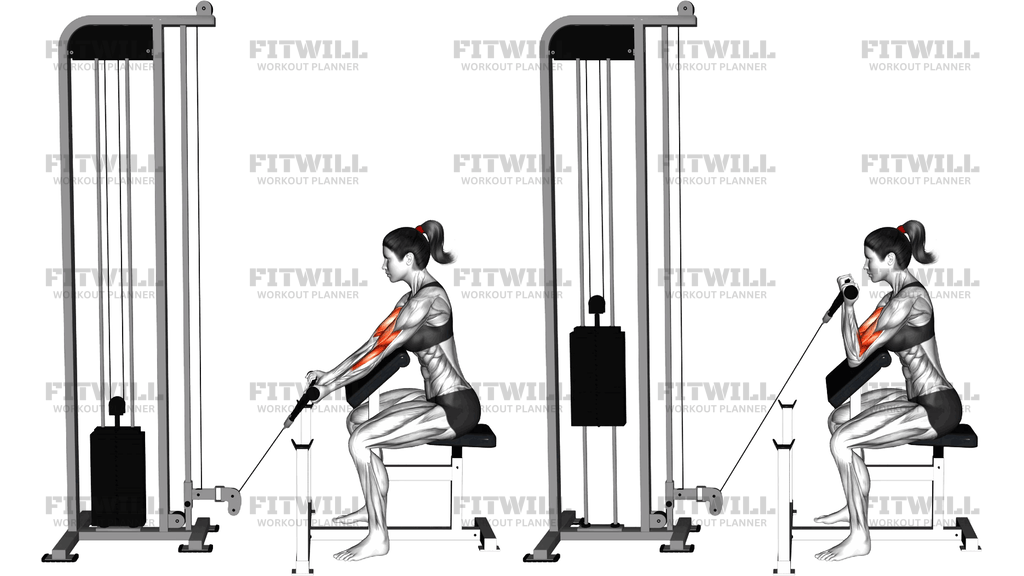
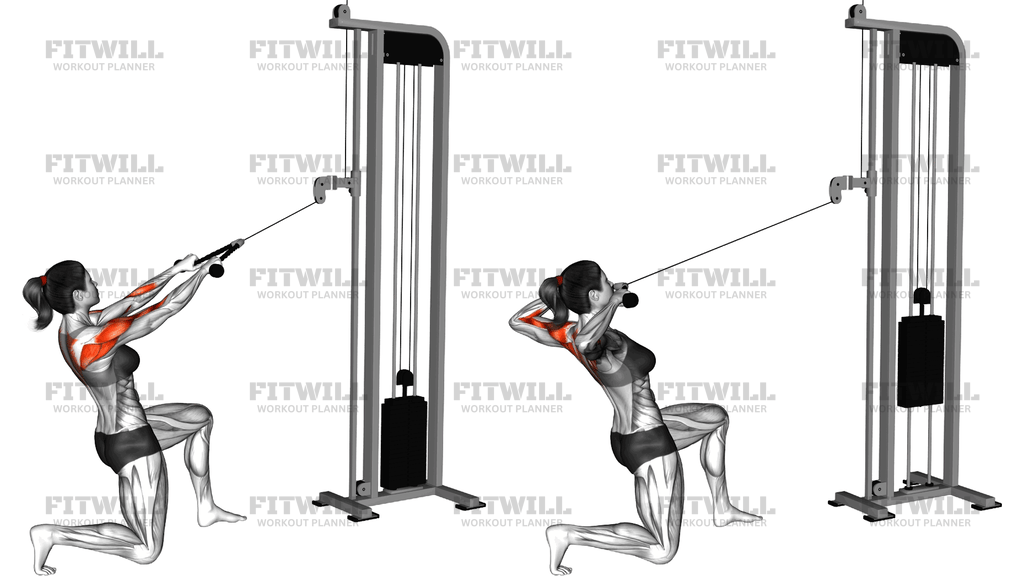
Cable Overhead Tricep Extension Straight-Bar
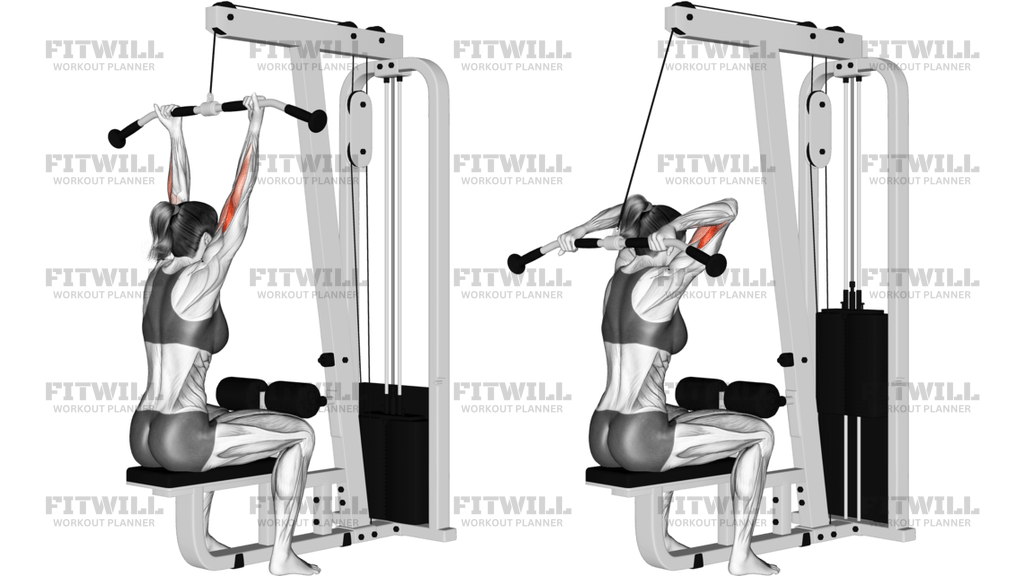
Cable Overhead Tricep Extension Straight-Bar is an overhead elbow-extension exercise that keeps constant cable tension on the triceps while you move the bar from behind the head to overhead lockout. The straight bar gives you a fixed, shoulder-width grip, so the setup matters: once the elbows, ribs, and stance are organized, each rep should feel smooth rather than forced. It is most useful when you want direct triceps work without relying on momentum, because the cable keeps the resistance active through both the stretch and the squeeze.
This movement emphasizes the triceps, especially the long head, because the arms stay overhead and the elbow joint does the main work. The shoulders and core still contribute by holding the upper arms in place and resisting the pull of the stack, but the goal is not to turn this into a standing press. A slight forward lean and a split stance can help you stay balanced while the cable pulls from behind, which is why a stable setup is more important here than a heavy load.
Start by gripping the straight bar, stepping away from the stack, and bringing the bar behind your head with the elbows high and close to your ears. From there, extend the elbows until the arms are nearly straight without locking hard, then lower the bar slowly until you feel a strong triceps stretch. The upper arms should stay mostly fixed while the forearms travel through the arc. If the ribs flare, the lower back arches, or the elbows drift wide, the set usually becomes a shoulder and torso exercise instead of a triceps exercise.
Use this exercise as accessory work after pressing, as a hypertrophy movement in an arm session, or as a controlled cable option when dumbbells or skull crushers bother the elbows. It also works well for beginners who need a guided path and lighter loading to learn overhead elbow extension. Keep the tempo controlled, choose a resistance you can lower cleanly, and stop the set if the shoulders or lower back start taking over the rep.
[ Workout Log & Planner ]
Put your next workout in Fitwill
Keep your plan and training log ready when you are.


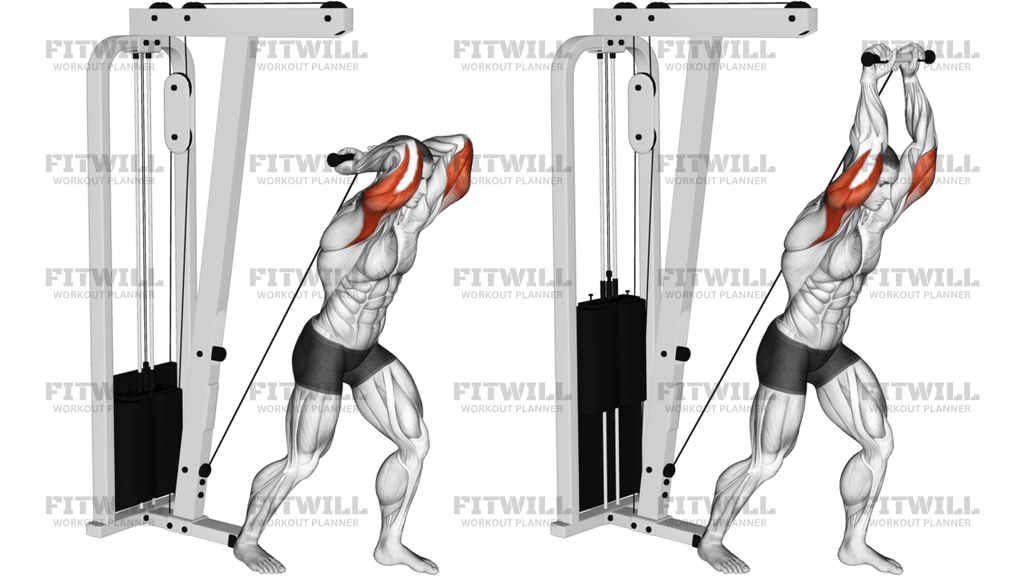
Instructions
- Clip a straight bar to the low cable pulley and step far enough from the stack that the cable stays tight when your hands are overhead.
- Face away from the machine, take the bar with a shoulder-width overhand grip, and bring it behind your head so the cable runs from low and behind you to your hands.
- Set one foot slightly in front of the other, soften both knees, and lean forward just enough to keep your balance against the pull of the stack.
- Raise your elbows beside your head and keep your upper arms mostly still, with your wrists stacked over your forearms.
- Brace your ribs down and keep your neck relaxed before you start the first rep.
- Extend your elbows to drive the bar upward and slightly forward until your arms are almost straight without forcefully locking out.
- Squeeze the triceps at the top, then lower the bar slowly back behind your head until you feel a controlled stretch.
- Keep breathing steady: exhale as you extend, inhale as you return, and repeat for the planned reps.
Tips & Tricks
- Keep the elbows pointed up and slightly forward; if they flare wide, the shoulders start stealing the rep.
- Let the cable pull from behind you, but do not turn the movement into a torso lean-back or mini press.
- A split stance usually feels steadier than feet together because it counters the backward pull of the stack.
- Use a grip just outside shoulder width; going too wide makes the shoulders work harder and can shorten the triceps path.
- Lower until you feel the triceps lengthen, not until the shoulders roll forward or the upper back loses position.
- If the lower back arches, reduce the load and bring the ribs back down before the next set.
- Keep the wrists neutral so the bar stays in line with the forearms instead of folding back.
- Choose a lighter load than you would for pushdowns; overhead extensions get harder fast in the stretched position.
- Pause briefly near the top if you want a harder triceps squeeze, but avoid snapping into lockout.
Frequently Asked Questions
What does Cable Overhead Tricep Extension Straight-Bar work most?
It mainly works the triceps, with extra emphasis on the long head because your arms stay overhead.
Why use a straight bar instead of a rope?
The straight bar gives you a fixed hand position and a very stable overhead path, which some lifters prefer for strict triceps work.
Should my elbows stay still during the rep?
Mostly yes. The upper arms should stay close to your head while the elbows open and close to move the bar.
Why is a split stance helpful here?
A staggered stance helps you resist the cable pulling you backward and makes it easier to keep the ribs stacked over the pelvis.
Where should I feel the stretch?
You should feel it along the back of the upper arm, especially near the triceps when the bar lowers behind your head.
Is this exercise beginner-friendly?
Yes, if the load is light and the setup is controlled. The fixed cable path can help beginners learn overhead triceps extension.
What is the biggest form mistake?
The most common mistake is turning it into a standing press by arching the back and letting the elbows drift wide.
When should I use this in a workout?
It works well after compound pressing or as an arm-accessory movement when you want focused triceps volume.