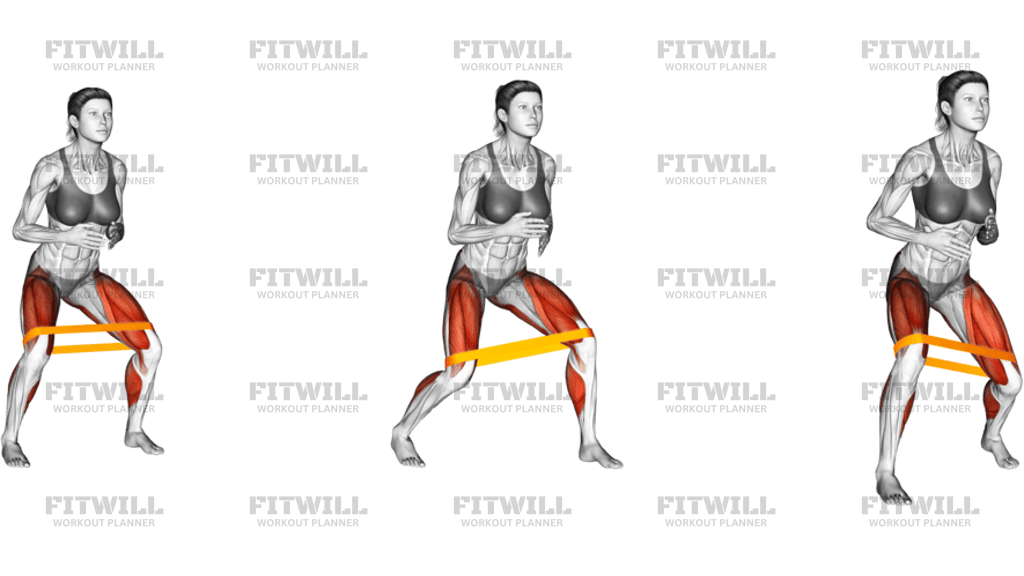
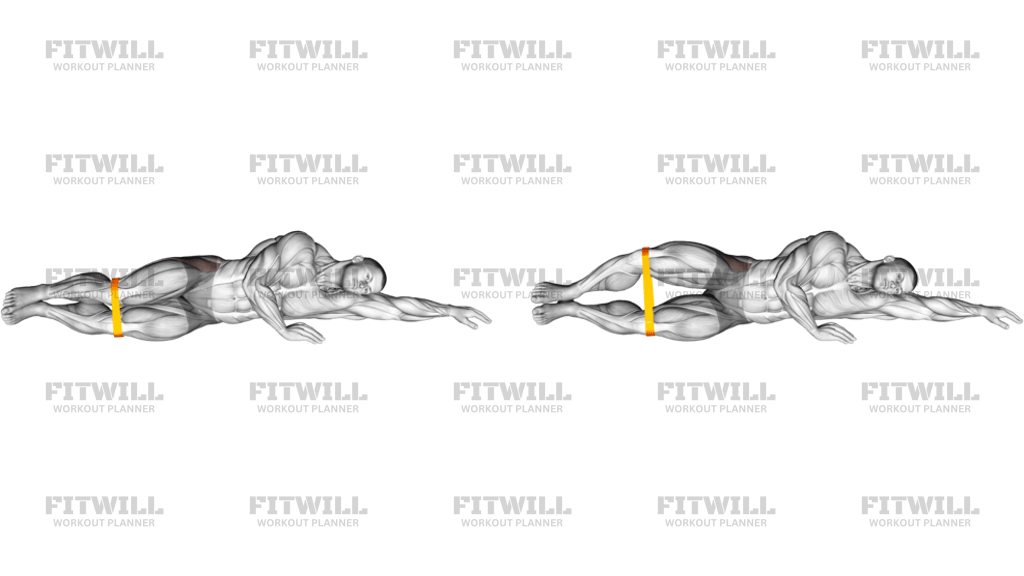
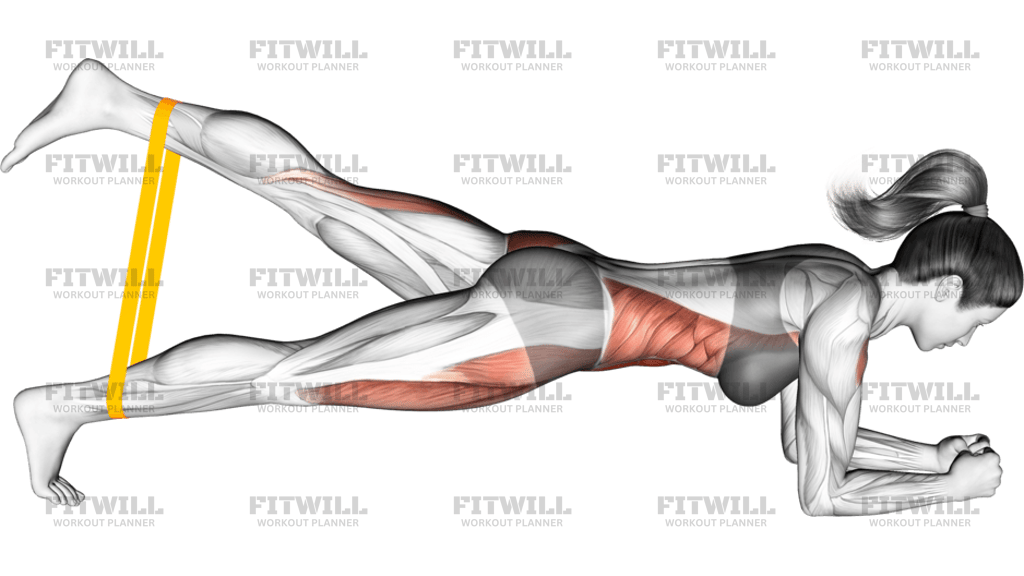
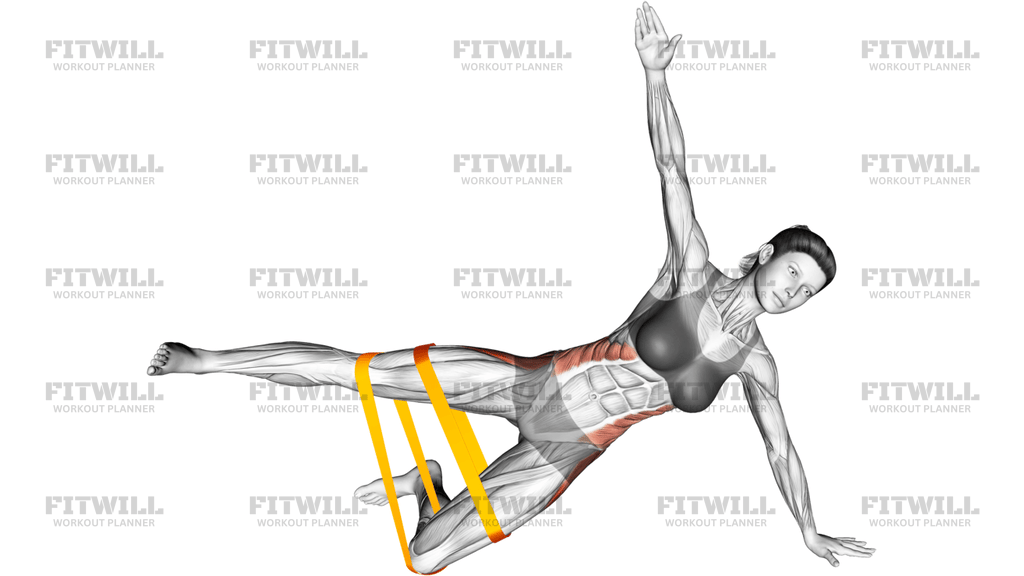
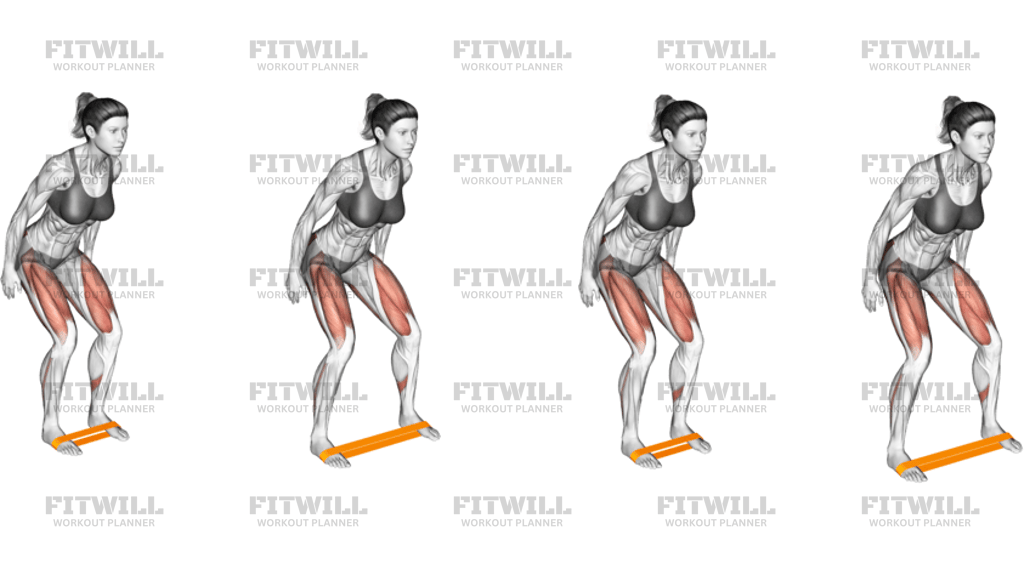
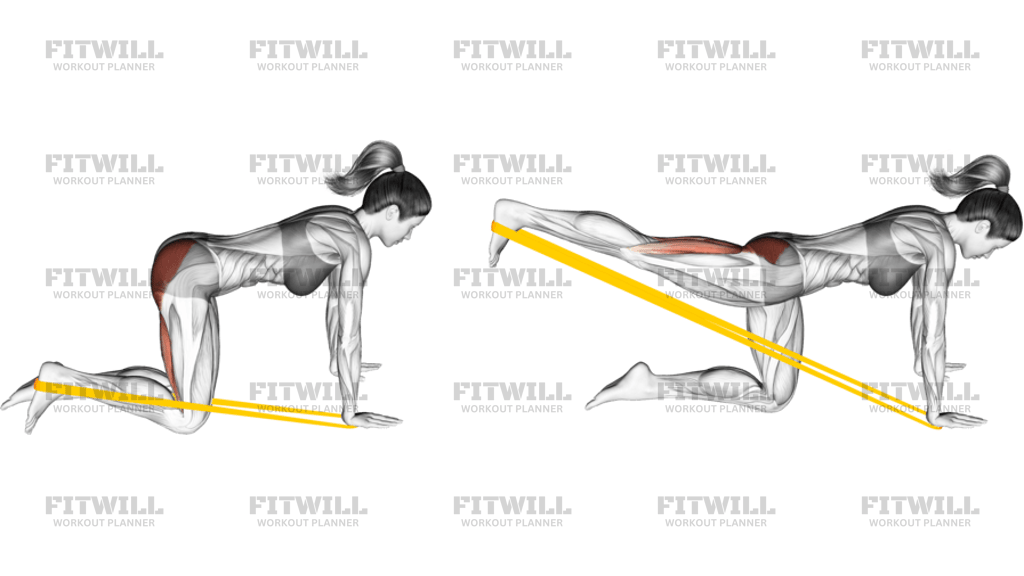
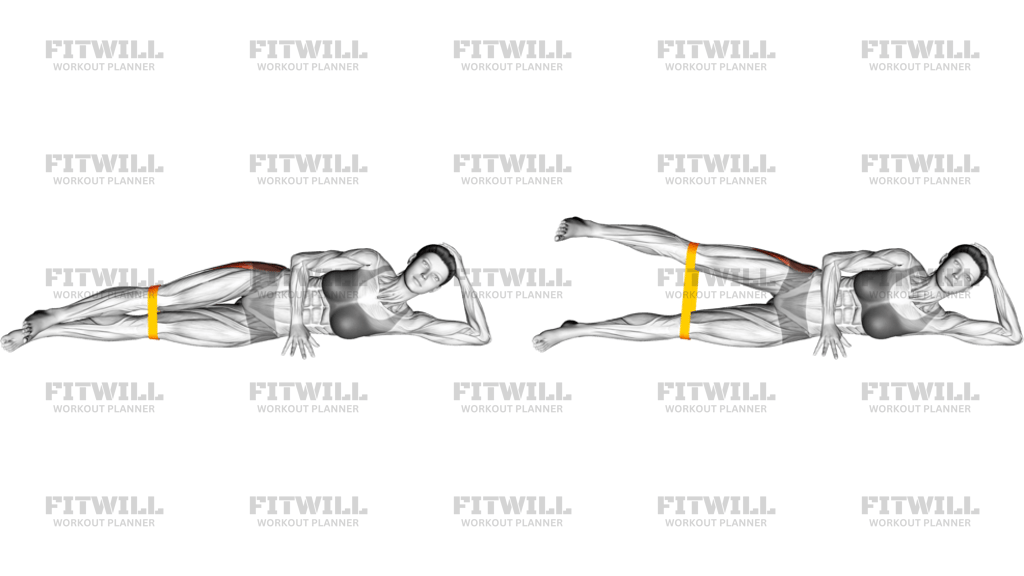
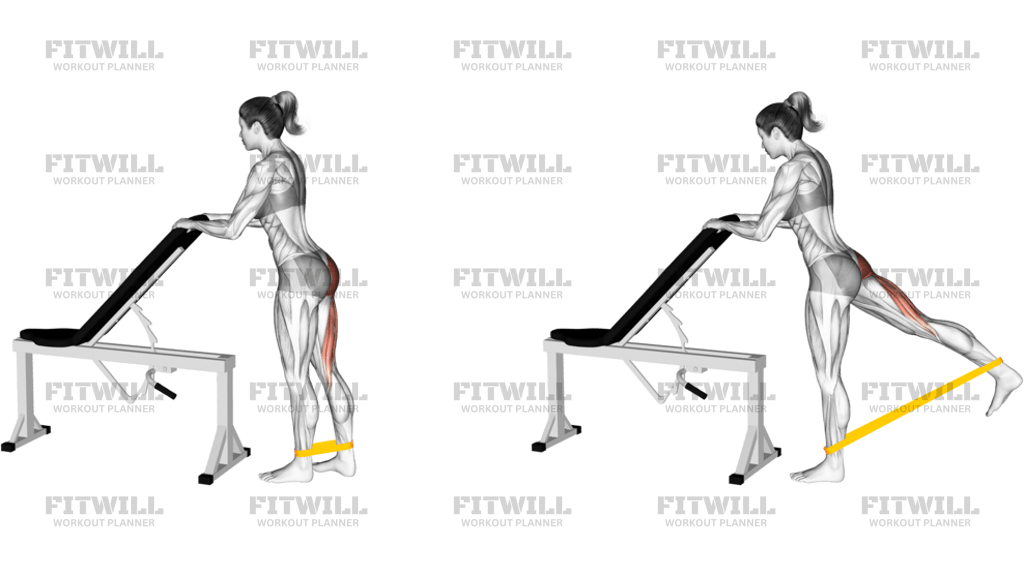
Band Cross Abduction
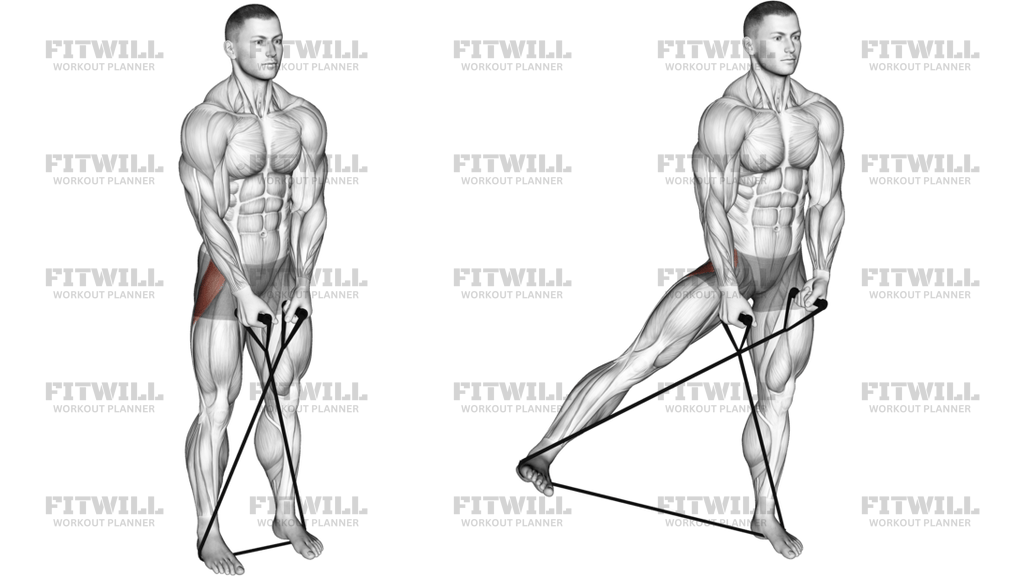
Band Cross Abduction is a standing resistance-band drill for the outer hips that asks one leg to move away from the midline while the pelvis stays level and the torso stays quiet. In the image, the band is crossed in front of the body and the working leg travels out to the side, so the exercise behaves more like a controlled hip-abduction pattern than a big lower-body lift. That makes Band Cross Abduction especially useful for learning how to keep the glutes working while the trunk and standing leg keep the body organized.
The main training effect is on the glutes, especially the hip stabilizers that keep the pelvis from tipping or rotating when one leg moves away from center. Hamstrings, core, and lower-back muscles help steady the stance, but they should not take over the motion. In anatomy terms, the primary work centers on the Gluteus maximus, with support from the Biceps femoris, Rectus abdominis, and Erector spinae. When the setup is clean, Band Cross Abduction can be a useful accessory exercise for warm-ups, glute activation, single-leg stability work, or lower-body sessions that need more hip control.
The setup matters because the band tension is what gives the movement shape. Stand tall with the band anchored under the feet and the upper portion crossed in front of the thighs or hands, then find a stance where you can feel light tension without being pulled forward. Keep your rib cage stacked over your pelvis, soften the standing knee, and let the moving leg start close to the floor before it opens out. If your hips are already twisted or you have to lean to create tension, the set is too heavy or the stance is too wide.
Each repetition should look smooth and deliberate. Exhale as the leg moves out, pause briefly when the outer hip is fully engaged, and return the leg slowly against the pull of the band. The standing foot should stay planted so the pelvis does not hike, drop, or spin. A smaller range done cleanly is more useful than swinging the leg high and letting the trunk compensate. Band Cross Abduction should feel like the glute is steering the leg, not like the body is being dragged through the rep.
Use Band Cross Abduction when you want targeted hip work without heavy spinal loading. It fits well before squats, lunges, step-ups, or any session where you want the glutes to turn on before larger lifts. Beginners can usually learn it quickly because the pattern is simple, but the challenge is in control, not in brute force. If you feel the movement mostly in the front of the hip, the low back, or the standing knee, reduce the band tension, shorten the range, and reset the stance so the outer hip can do the job.
Fitwill
Log Workouts, Track Progress & Build Strength.
Achieve more with Fitwill: explore over 9600 exercises with images and videos, access built-in and custom workouts, perfect for both gym and home sessions, and see real results.
Start your journey. Download today!




Instructions
- Stand on the band with both feet planted and the crossed band tension centered in front of your thighs.
- Hold the band ends or handles low in front of your hips and square your shoulders over your pelvis.
- Shift your weight onto the supporting leg and soften that knee without letting the pelvis tilt.
- Set your working leg close to the floor with the toes pointing mostly forward.
- Brace your trunk, then sweep the working leg out to the side on a smooth arc.
- Lift only as high as you can keep your hips level and your torso from leaning.
- Pause briefly at the top and feel the outer hip take the load.
- Lower the leg slowly against the band until you are back at the start.
- Reset your stance before the next rep, then switch sides if the set calls for it.
Tips & Tricks
- Choose a band tension that lets you keep the standing hip stacked; if the band pulls you sideways, step in closer or use less resistance.
- Keep the standing foot heavy through the heel, big toe, and little toe so the pelvis does not drift during the lift.
- A smaller outward sweep is better than a high kick if your torso starts to lean or your low back takes over.
- Let the moving toes stay mostly forward; turning the foot out too far often shifts the work away from the outer hip.
- Keep the hands low and close to the thighs so the crossed band does not tug your shoulders forward.
- Use a one-to-two-second return phase and resist the band all the way back instead of dropping the leg.
- If you feel the front of the hip doing most of the work, shorten the range and make sure the standing knee is only softly bent.
- Stop the set when the pelvis starts to hike or rotate, because that is usually the first sign the glutes are losing control.
- Breathe out as the leg opens and breathe in as it comes back so each rep stays calm and repeatable.
Frequently Asked Questions
What muscles does Band Cross Abduction train most?
Band Cross Abduction primarily targets the glutes, especially the outer-hip stabilizers that control abduction. The standing leg, core, and lower back assist by keeping the pelvis level.
Can beginners do Band Cross Abduction?
Yes. It is usually beginner-friendly if you keep the band light, the range small, and the torso quiet while the leg opens to the side.
How should the band be set up for Band Cross Abduction?
Stand on the band so there is light tension before you start, then hold the ends or handles low in front of your hips. The crossed setup should challenge the leg without pulling your shoulders or pelvis out of position.
How high should my leg go in Band Cross Abduction?
Only as high as you can keep the hips level and the torso upright. If you have to lean or hike the pelvis to get more height, the range is too large.
Why do I feel Band Cross Abduction in my lower back?
That usually means the pelvis is rotating or the trunk is leaning to create the movement. Reduce the band tension, shorten the arc, and keep the standing side stacked under your ribs.
Should my standing knee stay bent or straight?
Keep it softly bent. A locked knee makes it harder to stabilize the pelvis, while a small bend helps the standing glute control the rep.
Can I use Band Cross Abduction as a warm-up?
Yes. It works well before squats, lunges, or step-ups because it wakes up the glutes without adding heavy spinal loading.
What is the most common mistake with Band Cross Abduction?
The most common mistake is swinging the leg outward and letting the trunk sway. The rep should look controlled, with the band resisting both the lift and the return.