One Side Archer Push-Up
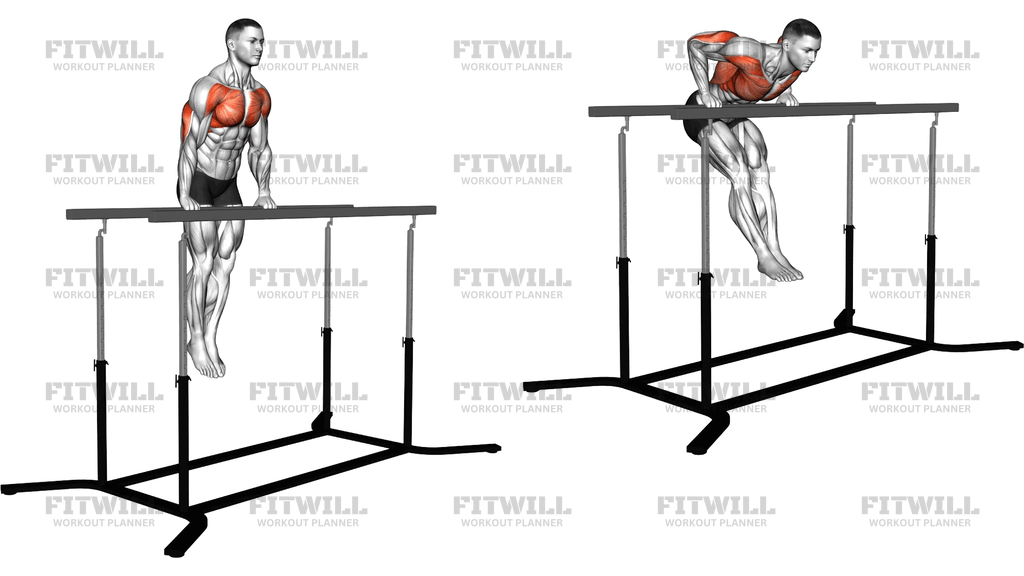
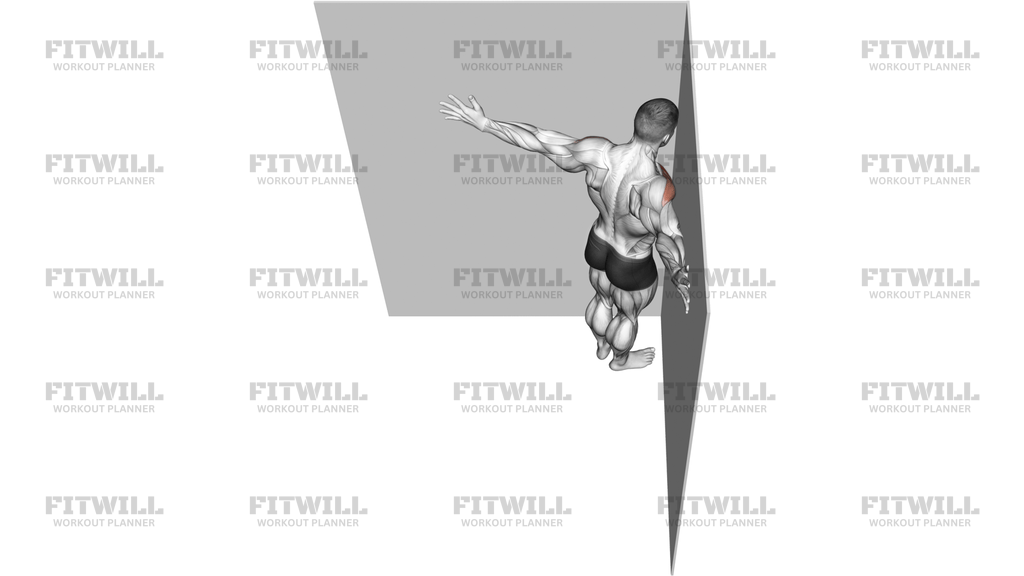
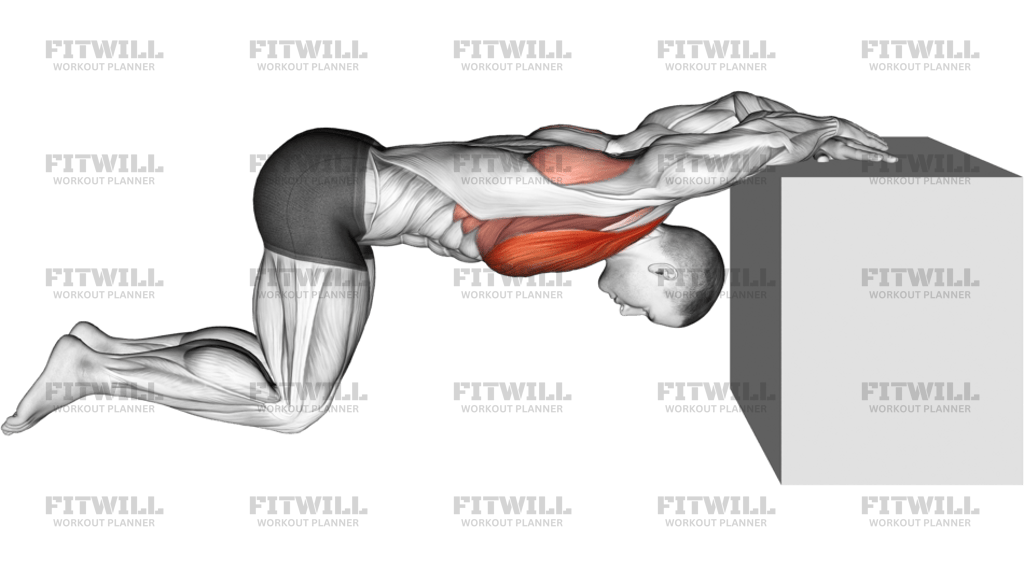
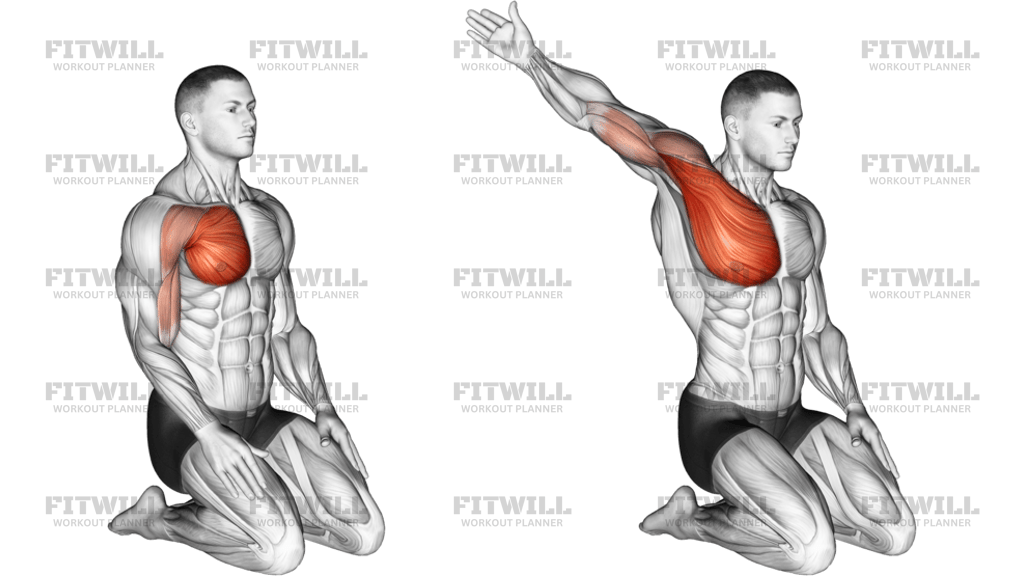
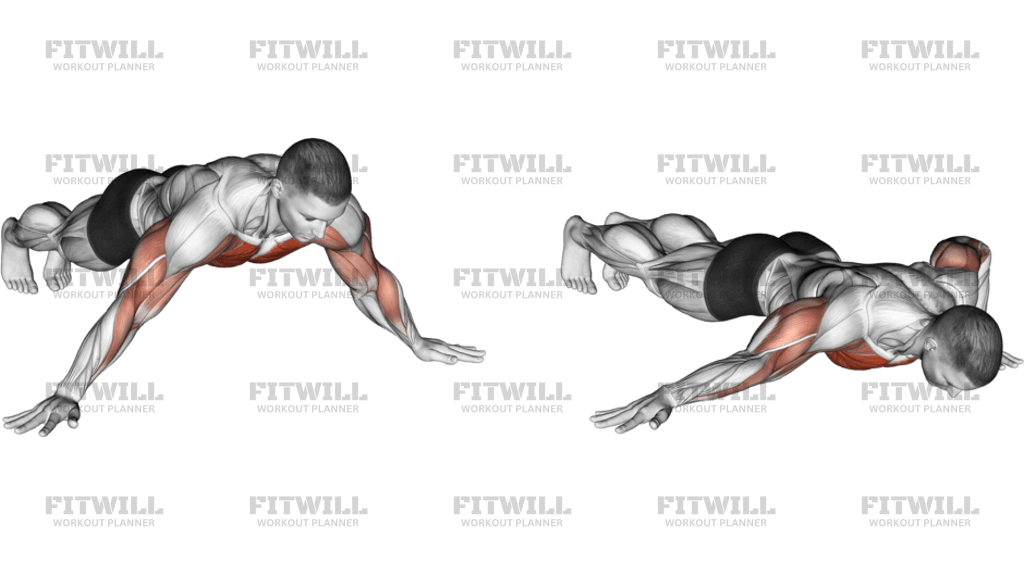
One Side Archer Push-Up is a bodyweight pressing exercise that shifts load from one side of the chest to the other while the torso stays in a strong plank. The image shows a wide push-up stance with one arm bent under the body and the other arm reaching out to the side, which is the key setup for the movement. That side-to-side pattern lets you train unilateral chest strength without losing the whole-body tension that makes push-ups useful.
The main work comes from the pectoralis major on the loaded side, with the anterior deltoid and triceps brachii helping to press the floor away. The serratus anterior and core muscles are also important because they keep the shoulder blade controlled and stop the trunk from spinning open as you shift toward the working hand. In practice, the exercise is as much about control and positioning as it is about pressing force.
The setup matters because the hand and foot width determine whether the movement feels smooth or awkward. A wider foot stance gives you a stable base, while the extended hand creates the archer shape and lets the chest travel toward one side. Keep the hips level, the ribs down, and the long arm active. If the body collapses into the floor or the shoulder rolls forward, the rep turns into a noisy compensation instead of a clean press.
Use a controlled descent so the chest moves toward the bent elbow rather than dropping straight down between the hands. The non-working arm should stay long and supported, not passive. At the bottom, pause only as long as you can keep the shoulder organized, then press back to the top without twisting out of the plank. Breathing should stay steady: inhale on the way down, exhale as you drive back up.
This variation is useful when you want a harder push-up, a unilateral chest emphasis, or a calisthenics drill that exposes left-right strength differences. It also works well as accessory work in home training, upper-body sessions, or core-focused blocks. Beginners can shorten the range or raise the hands on a bench, while more advanced lifters can slow the lowering phase or add a pause near the bottom. The goal is a smooth side-to-side press with full control and no shoulder pain.
[ Workout Log & Planner ]
Put your next workout in Fitwill
Keep your plan and training log ready when you are.


Instructions
- Start in a high plank with your feet wider than your shoulders and your hands set wider than a standard push-up.
- Reach one hand farther out to the side and turn it slightly out so the chest can shift toward the working arm.
- Keep the opposite arm long, active, and braced so it supports your body instead of collapsing.
- Tighten your abs and glutes before each rep so your ribs, hips, and head stay in one line.
- Bend the elbow on the working side and lower your chest toward that hand under control.
- Keep the working elbow at a comfortable angle and avoid letting the shoulder drift forward or shrug up.
- Pause briefly near the bottom when your chest is close to the floor and the long arm is still firmly loaded.
- Press through the working palm to return to the top, then switch sides or complete the next rep on the other side.
- Inhale as you lower and exhale as you push back to the start position.
Tips & Tricks
- A wider foot stance makes the side-to-side shift easier; if your hips twist, widen your base before adding reps.
- Keep the straight arm active instead of hanging into the shoulder joint.
- If your shoulder feels pinched, shorten the range of motion or elevate your hands on a bench or box.
- Think about sliding your chest toward the bent hand rather than dropping your head toward the floor.
- Do not let the non-working shoulder shrug toward your ear when you reach the bottom position.
- A slight outward turn of the lead hand can ease wrist strain, but do not over-rotate it.
- Use a slow lowering phase to make the chest and shoulder work harder without bouncing.
- Stop the set when your torso starts rotating or the working elbow no longer tracks cleanly.
- Treat the weaker side as the benchmark for depth and tempo so both sides stay honest.
Frequently Asked Questions
What does One Side Archer Push-Up work most?
It mainly trains the chest on the loaded side, with help from the triceps, shoulders, serratus anterior, and core.
How is this different from a regular push-up?
One arm takes most of the load while the other stays long and supportive, so the exercise demands more side-to-side control.
Should my chest lower straight down?
No. The chest should travel toward the bent elbow and loaded side so the rep keeps its archer shape.
What should the straight arm do?
It should stay long and active to help support the body, but it should not lock hard or collapse into the shoulder.
Can a beginner use this exercise?
Yes, but it is easier with elevated hands or a shorter range of motion until the shoulder and core stay stable.
Why do my hips twist during the rep?
That usually means your feet are too narrow or your core lost tension before the descent.
Can I alternate sides each rep?
Yes. Many people alternate sides each rep, but you can also finish all reps on one side before switching.
Where should I feel the exercise most?
The working-side chest should do most of the work, with the triceps and shoulder helping and the core resisting rotation.