Long Arm Crunch
Long Arm Crunch is a bodyweight floor crunch that makes the abdominal curl harder by placing the arms straight up and keeping the lever long. With the arms reaching toward the ceiling, the torso has to do more of the work to lift the shoulders and upper ribs off the floor without pulling on the neck or turning the movement into a sit-up. It is a simple but effective way to train the front of the trunk with a clearer focus on the upper portion of the abdominal wall.
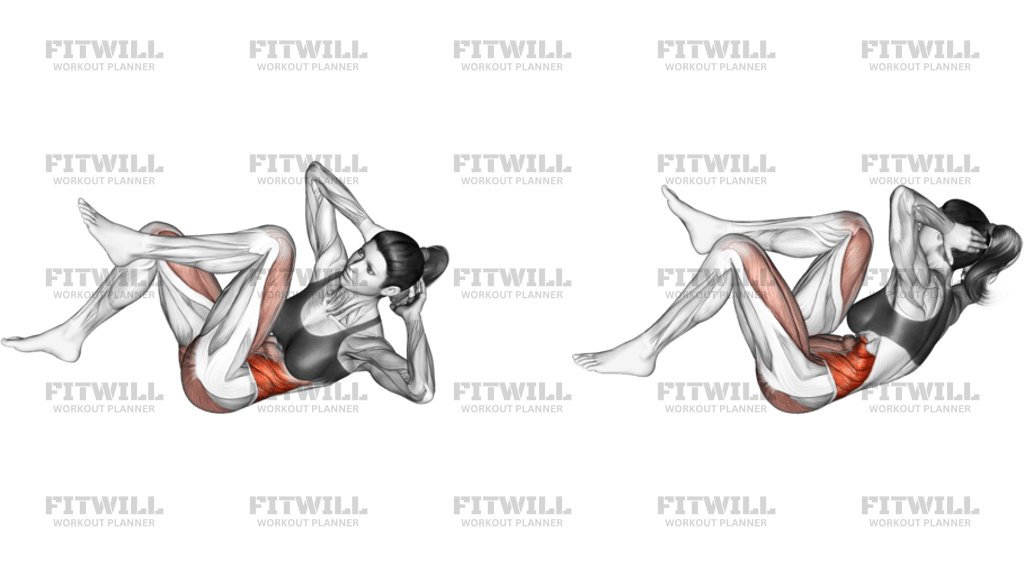
The long-arm position changes the leverage immediately. Because the hands stay extended rather than folded across the chest, the abs have to create more trunk flexion to get the shoulders off the floor. That makes this version useful when you want a crunch that feels more demanding without adding load or equipment. The image shows a bent-knee floor setup, which helps keep the pelvis steady and reduces the urge to arch the lower back as the torso curls.
Setup matters here. Lie on your back, bend the knees, plant the feet, and reach both arms straight up so the upper arms stay in line with the torso. Before each rep, set the ribs down, lightly brace the midsection, and keep the chin softly tucked so the neck stays long. The goal is not to yank the torso high; the goal is to curl the sternum and shoulder blades toward the pelvis while the lower back stays controlled.
A good repetition is short, deliberate, and clean. Exhale as you curl up, lift only as far as you can without shrugging or swinging the arms, then lower with the same control until the shoulder blades touch down again. If the hips start to tuck aggressively or the feet lift, the set is usually getting too hard or too fast. The exercise should feel concentrated in the abs, with the neck and hip flexors staying out of the driver's seat.
Long Arm Crunch fits well in core sessions, warm-ups, abdominal circuits, or finishers where you want a floor-based movement that is easy to coach and easy to scale. It is a good choice for beginners who can keep the motion small and controlled, and it also works well for more experienced lifters who want a stricter, more leverage-heavy crunch without using external resistance. Keep the reps honest and stop the set when the movement turns into momentum.
[ Workout Log & Planner ]
Put your next workout in Fitwill
Keep your plan and training log ready when you are.


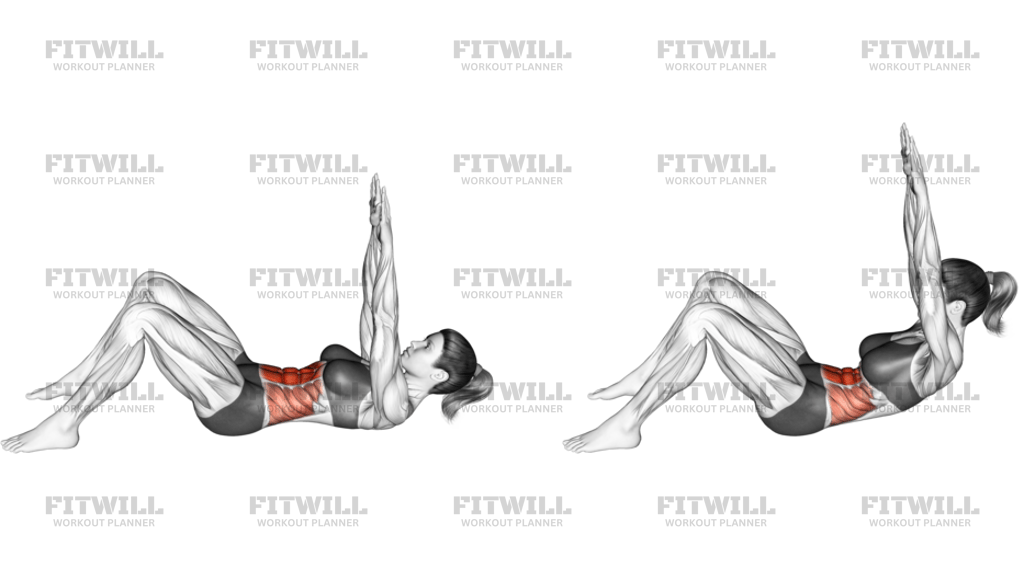
Instructions
- Lie on your back on a mat, bend your knees, and place your feet flat about hip-width apart.
- Extend both arms straight up toward the ceiling so your elbows stay locked and your hands stack over your shoulders.
- Set your ribs down, tuck your chin slightly, and keep the back of your neck long.
- Exhale and curl your head, shoulders, and upper back off the floor without pulling with your arms.
- Reach your sternum toward your pelvis while keeping your arms vertical and your lower back controlled.
- Pause briefly at the top when your shoulder blades are clear of the floor.
- Lower slowly until your shoulders and upper back return to the mat.
- Reset your brace at the bottom and repeat for the planned reps.
Tips & Tricks
- Keep the arms vertical the whole time; letting them drift behind you turns the rep into a different crunch pattern.
- Think about curling the ribs toward the pelvis, not reaching the chest toward the knees.
- If your neck feels it first, shorten the range and keep the chin gently tucked instead of forcing a bigger curl.
- Keep the feet planted and quiet so the lower body does not help drive the rep.
- Use a slow lower; the long lever makes the eccentric phase more challenging than a standard crunch.
- Stop the rep before your shoulders start to shrug or your elbows bend to cheat the range.
- Exhale as you lift so the ribs can come down and the abs can shorten cleanly.
- If the low back arches off the floor, reduce the height of the curl and re-stack the ribs before the next rep.
Frequently Asked Questions
What does the long-arm position change in this crunch?
Holding the arms straight up increases the lever arm, so your abs have to work harder to lift the shoulders off the floor.
Can beginners perform this exercise?
Yes. Beginners should keep the motion small, keep the knees bent, and focus on a slow curl instead of trying to sit all the way up.
Should my arms stay straight during the rep?
Yes. Straight arms are part of the exercise and help keep the tension on the trunk instead of letting the shoulders take over.
How high should I curl up on Long Arm Crunch?
Only curl high enough to clear the shoulder blades and feel the abs shorten. This is a crunch, not a full sit-up.
Why are the knees bent in the setup?
Bent knees help stabilize the pelvis and reduce low-back arching so the abs can do the work more cleanly.
What are the most common mistakes with the arms overhead?
Bending the elbows, swinging the arms, or letting them drift back can turn the movement into a momentum-based crunch.
Where should I feel this exercise most?
You should feel the front of the abdomen doing the main work, with the neck and hips staying relatively quiet.
How can I make Long Arm Crunch harder without weights?
Slow the lowering phase, pause at the top, or keep the arms fully vertical and strict through the whole set.