Seated In Out Leg Raise On Floor
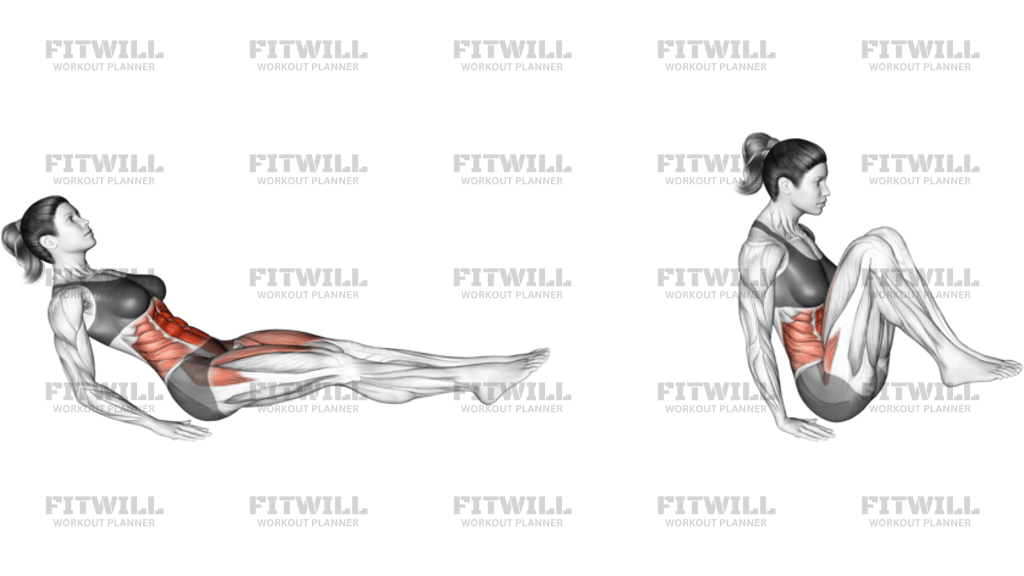
Seated In Out Leg Raise On Floor is a bodyweight core drill performed seated on the floor with your torso leaned back slightly and your hands set behind you for support. The movement opens the legs outward and then draws them back together while the feet stay lifted, so the rep is driven by the abs, hip flexors, and inner-thigh control rather than by momentum.
The exercise is useful when you want a floor-based core movement that trains control, coordination, and hip stability at the same time. It usually lights up the lower abs, hip flexors, quads, and obliques, with the shoulders and triceps helping only to keep you propped up. Because the legs are moving away from and back toward the midline, the exercise also challenges the adductors and the muscles that keep the pelvis steady.
Setup matters more here than it does in a lot of simple ab drills. Sit tall enough that your chest stays open, then lean back only as far as you need to keep your feet hovering and your low back from collapsing. Your hands should be a light support, not a way to dump all of your bodyweight into the floor. If you can only keep the legs moving cleanly with a smaller range or a slight bend in the knees, that is the correct version to use.
Each rep should feel smooth and deliberate. Open the legs under control, pause briefly if needed, then pull them back together without snapping the feet down or letting the torso rock. A steady tempo keeps tension on the core and prevents the hip flexors from taking over. Exhale as the legs open or close through the hardest part of the rep, and keep the neck relaxed so the whole trunk stays organized.
This exercise fits well in a home workout, a core circuit, or a warm-up where you want to wake up the midsection without adding equipment. It is not a maximal strength lift, so the goal is quality, not speed. If the low back arches, the shoulders start shrugging, or the feet keep touching down, shorten the range and reset the position before continuing.
[ Workout Log & Planner ]
Put your next workout in Fitwill
Keep your plan and training log ready when you are.


Instructions
- Sit on the floor with your legs extended in front of you, palms behind your hips, and your fingers turned slightly outward for support.
- Lean back just enough to keep your chest open and your feet hovering, then set your shoulders down away from your ears.
- Keep both legs together to start, with a soft bend in the knees if straight legs pull your pelvis out of position.
- Brace your midsection and lift or maintain the legs off the floor so the rep starts from a controlled hover.
- Open the legs outward in a smooth V shape without letting your torso swing backward or your lower back arch hard.
- Pause briefly at the open position if you need control, then draw the legs back together under tension.
- Keep the feet off the floor on the way back in and avoid snapping the legs shut with momentum.
- Breathe steadily through each rep, exhaling through the hardest part of the opening or closing phase.
- When the set is done, lower the feet to the floor and sit upright before repeating or moving on.
Tips & Tricks
- Use your hands only as a light brace; if you are pressing hard through the palms, lean back a little less or shorten the lever.
- A small recline is enough. If your ribs flare and your low back arches, you are leaning back too far for this variation.
- Think of the movement as opening from the hips and closing through the inner thighs, not as tossing the feet side to side.
- Keep the feet hovering at the same height instead of letting one leg drop lower than the other.
- Bending the knees slightly is a good regression when straight legs make the pelvis tip or the hip flexors cramp.
- Slow the outward phase down first; most form breaks happen when the legs swing open too quickly.
- If the neck tightens, reset your chin and look forward rather than tucking the head hard toward the chest.
- A soft pause at the widest point makes the abs and hip flexors do the work instead of the legs whipping back in.
- Stop the set if the lower back starts to round and the feet can no longer stay off the floor with control.
Frequently Asked Questions
What muscles does Seated In Out Leg Raise On Floor work?
It primarily hits the lower abs and hip flexors, with the quads, obliques, and inner thighs helping control the leg path.
How should I place my hands for this exercise?
Put your hands behind your hips on the floor and use them for balance, not for heavy support or pushing your torso upright.
Do my feet stay off the floor the whole time?
Ideally, yes. Keep the heels hovering as you open and close the legs, and shorten the range if they keep tapping down.
Can beginners do the seated in-out leg raise?
Yes. Beginners usually do better with a smaller leg range, a slight knee bend, and a lighter recline so they can keep control.
What is the most common mistake with the floor version?
The biggest mistake is rocking the torso and swinging the legs open too fast, which turns the rep into momentum instead of core work.
Why do I feel this in my hip flexors so much?
That is normal because the legs are lifted and moving away from the body. If the hip flexors dominate, reduce the range and keep the ribs down.
How can I make the movement easier?
Keep the knees slightly bent, open the legs only partway, and let your hands take a little more support while you keep the feet hovering.
How can I make it harder without adding equipment?
Slow the tempo, pause at the widest point, straighten the knees more, and keep the legs just off the floor for the entire set.
What should I do if my lower back starts to arch?
Shorten the range, lean back less, and stop the set if you cannot keep the pelvis steady and the feet under control.