Rear Deltoid Stretch
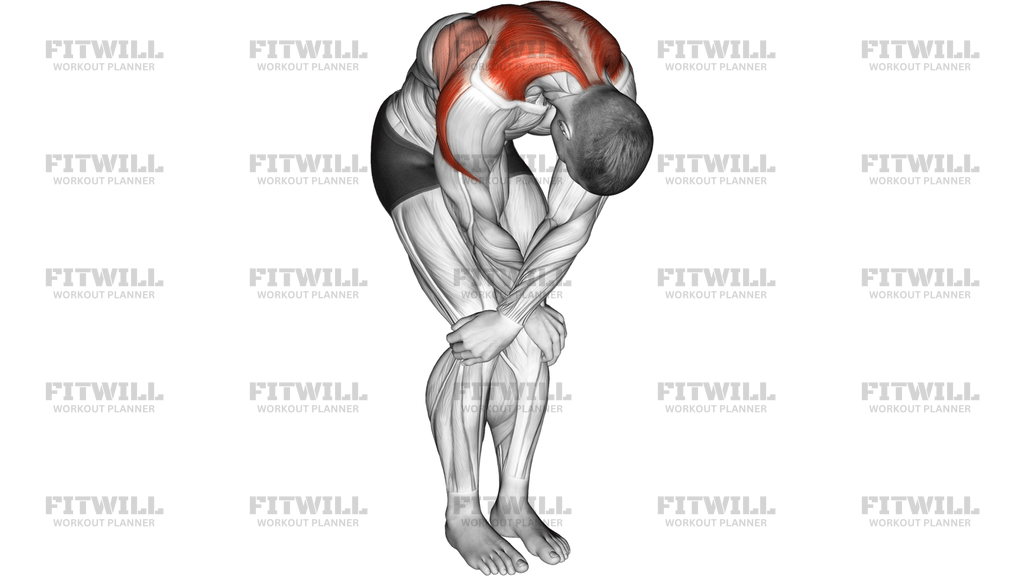
Rear Deltoid Stretch is a standing cross-body shoulder stretch that targets the back of the shoulder, especially the rear deltoid and the tissues around the posterior shoulder capsule. In the image, one arm is brought across the chest while the opposite hand pulls it closer to the body, which creates the stretch on the back side of the shoulder rather than the front. It is a simple mobility drill, but the exact arm height, torso position, and pull direction decide whether the stretch feels useful or just uncomfortable.
This stretch is often used after upper-body training, before pressing or pulling work, or any time the shoulder feels tight after repeated overhead or rowing patterns. It can also help people who sit with rounded shoulders or spend a lot of time with the arms in front of the body. The goal is not to force a huge range. The goal is to open the rear shoulder enough to restore easier motion without letting the neck, upper traps, or torso take over.
The setup matters because the rear deltoid stretch is easy to fake with body sway or a hard yank at the elbow. Keep the chest tall, the ribs stacked over the pelvis, and the shoulders level so the stretch stays isolated to the back of the crossed arm. When the opposite arm draws the elbow closer, the crossed shoulder should stay down instead of shrugging toward the ear. A small change in arm height can shift the stretch lower into the rear shoulder or higher into the upper back, so use the position that gives a clear but tolerable pull.
During the hold, breathe out slowly and let the shoulder relax into the stretch instead of pushing into pain. A mild stretch across the rear shoulder is expected; sharp pain, pinching in the front of the shoulder, or numbness is not. If the stretch feels too aggressive, reduce the pull, lower the arm slightly, or soften the elbow position. If the goal is general mobility, this exercise works well as a controlled static hold. If the goal is recovery after training, keep the stretch gentle and short enough that it eases tension without creating soreness.
Rear Deltoid Stretch is a useful option for beginners because it does not require equipment, strength, or complex coordination. It also scales well for advanced lifters who need to manage shoulder tightness between sets or after heavy pressing volume. The best results come from repeatable, relaxed holds performed on both sides with equal attention. When the posture stays clean and the breathing stays calm, the stretch becomes a practical tool for shoulder comfort and upper-body movement quality.
[ Workout Log & Planner ]
Put your next workout in Fitwill
Keep your plan and training log ready when you are.


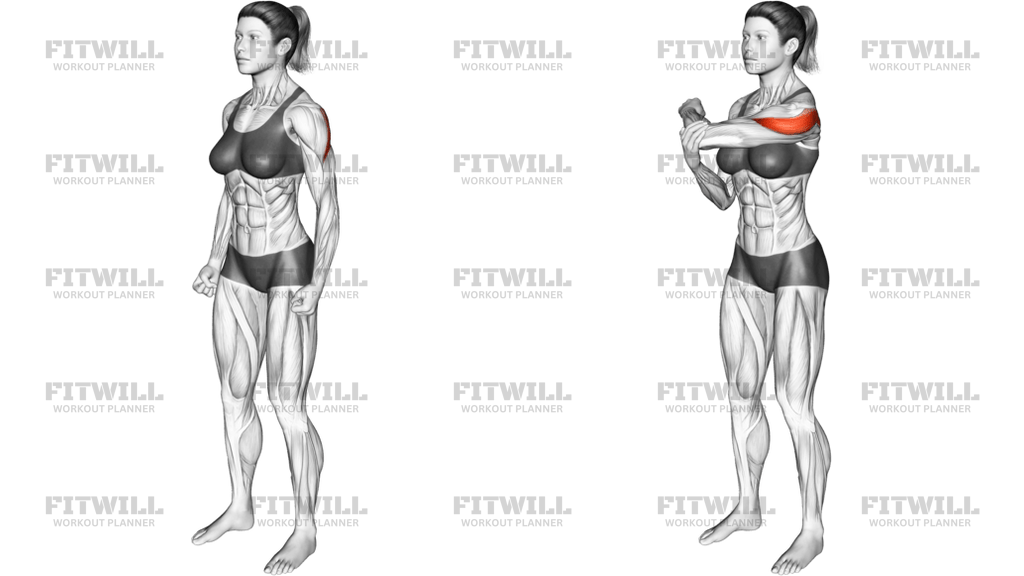
Instructions
- Stand tall on the mat or floor with your feet about hip-width apart and soften your knees.
- Bring one arm across your chest at about shoulder height with the elbow slightly bent.
- Use the opposite hand or forearm to hold the crossed arm just above the elbow or near the upper arm.
- Gently draw that arm closer to your chest until you feel the stretch in the back of the shoulder.
- Keep both shoulders level and facing forward instead of twisting the torso to get more range.
- Let the stretched shoulder stay down and away from the ear as you hold the position.
- Exhale slowly and breathe through the stretch without bouncing or yanking.
- Hold for a controlled stretch, then release the arm slowly and repeat on the other side.
Tips & Tricks
- Keep the pull on the upper arm or elbow, not on the wrist, so the shoulder stays in a safer line.
- If the shoulder creeps toward the ear, reduce the pull and reset your posture before continuing.
- A slight bend in the elbow usually makes the stretch more comfortable than locking the arm straight.
- Do not rotate the torso toward the crossed arm to fake extra range; the stretch should come from the shoulder.
- If you feel pinching in the front of the shoulder, lower the crossed arm a little and ease off the pressure.
- Exhale as you settle into the stretch because the rear shoulder usually relaxes better on the breath out.
- Hold the position still instead of pulsing, since bouncing can irritate the back of the shoulder.
- Match both sides carefully; one tighter rear shoulder often needs a slightly gentler hold than the other.
Frequently Asked Questions
What does the Rear Deltoid Stretch target most?
It mainly targets the rear deltoid and the back side of the shoulder, with some stretch through the upper back.
Should I feel this in the front or back of the shoulder?
You should feel it in the back of the shoulder or slightly into the upper back, not as a pinch in the front of the joint.
Do I need equipment for this stretch?
No equipment is required. A mat is optional if you want to stand or kneel more comfortably while holding the stretch.
Where should my pulling hand go?
The pulling hand should control the upper arm or elbow area so the shoulder can stay relaxed while you draw it across the chest.
Can I twist my torso to get a deeper stretch?
It is better to keep the torso square and only adjust the arm position. Twisting usually turns the stretch into a cheat rather than a clean shoulder stretch.
Is it okay to feel some stretch in the upper back?
Yes. The upper back can help share the stretch, but the main sensation should still stay around the rear shoulder.
How long should I hold each side?
A short, controlled hold is enough for most people. Hold long enough to settle into the stretch, then switch sides without forcing pain.
Who benefits most from this stretch?
People who press, row, throw, or sit with rounded shoulders often find it useful because it helps restore comfort in the back of the shoulder.