Assisted Lying Gluteus And Piriformis Stretch
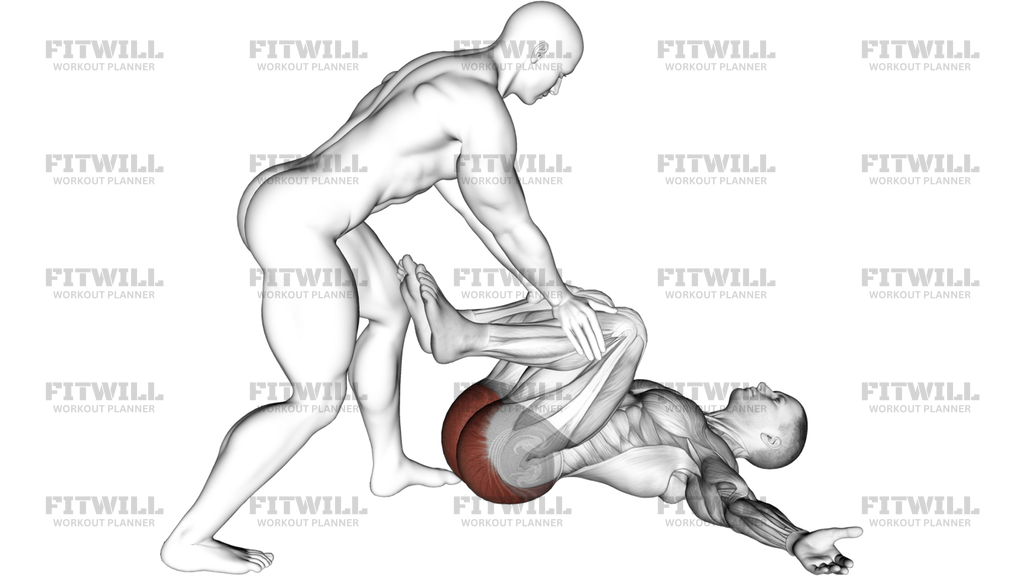
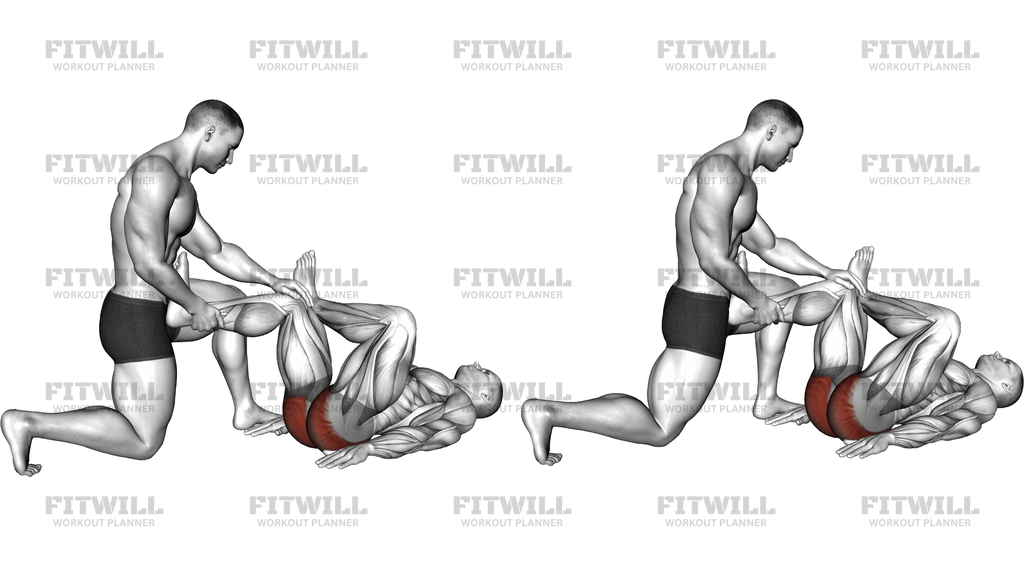
Assisted Lying Gluteus And Piriformis Stretch is a partner-assisted floor stretch for the outer hip. The lifter lies on the back on an exercise mat while the other person helps guide the crossed leg into a figure-four position. That support lets you settle into a deeper glute and piriformis stretch without forcing the knee or twisting the pelvis.
This stretch is most useful when the hips feel tight after squats, deadlifts, running, long sits, or other lower-body work. It mainly opens the gluteus maximus and piriformis on the crossed-leg side, with the surrounding hip muscles and trunk working to keep the pelvis from rolling away. The goal is a calm, controlled stretch through the outside of the hip, not a crank on the knee or low back.
The setup matters more than the depth. Lying flat with the shoulders relaxed and the pelvis heavy on the mat keeps the stretch where you want it. The assisting partner should create a slow, steady pressure on the crossed leg while the lifter keeps the ankle flexed, the breathing easy, and the ribs from flaring. If the opposite hip lifts, the low back arches, or the knee starts to pinch, the range is too aggressive.
Use a smaller angle first and build only until you feel a firm but tolerable stretch in the outer glute. A good rep feels steady and repeatable: breathe out, settle, hold, then release without bouncing. Because the movement is passive for the lifter, it works well as a cool-down, between sets on mobility days, or as part of rehab-style hip work when a controlled stretch is the priority. The assisted version is especially helpful for people who cannot comfortably reach the end range on their own.
[ Workout Log & Planner ]
Put your next workout in Fitwill
Keep your plan and training log ready when you are.


Instructions
- Lie on your back on a mat with both knees bent and your shoulders relaxed against the floor.
- Cross one ankle over the opposite thigh to make a figure-four shape, keeping the top foot flexed.
- Let your partner kneel beside your hips and support the crossed leg at the shin or thigh.
- Keep the pelvis heavy on the mat and the lower back neutral before any pressure is applied.
- Exhale and let your partner guide the crossed knee away from your chest until you feel the stretch in the outer hip.
- Hold the position without bouncing while the opposite leg stays relaxed and the rib cage stays down.
- Breathe slowly through the hold and let the glute and piriformis soften a little more on each exhale.
- Release the pressure gradually, uncross the legs, and repeat on the other side.
Tips & Tricks
- Keep the crossed foot flexed so the stretch stays in the hip instead of tugging on the knee.
- If the opposite hip pops up, reduce the angle before the partner adds more pressure.
- The best sensation is a deep outer-glute stretch, not a sharp pull in the knee or groin.
- A smaller figure-four angle often shifts the emphasis more toward the piriformis.
- Tell the partner to apply pressure slowly; this stretch should never be forced into place.
- Exhale through the hold to reduce guarding in the glute and deep rotators.
- Keep the low back neutral and avoid arching the ribs away from the mat.
- After hard lower-body training, use a lighter stretch first and let the tissues settle before going deeper.
Frequently Asked Questions
What does the figure-four position stretch in Assisted Lying Gluteus And Piriformis Stretch?
The crossed-leg setup emphasizes the gluteus maximus and piriformis on the lifted side, especially the outer hip.
Why is this stretch assisted instead of done alone?
The partner can guide the crossed thigh into position and apply steady pressure while you keep the pelvis relaxed on the mat.
Should I feel this in my knee or in my hip?
You should feel it mainly in the outer glute and deep hip. If the knee hurts, reduce the angle or flex the foot more firmly.
How far should the partner press the crossed leg?
Only far enough to create a strong but tolerable stretch. The pelvis should stay down and the pressure should never feel forced.
Can beginners use this stretch?
Yes. Beginners usually do best with a smaller figure-four angle and lighter partner pressure.
What if my low back feels tighter than my glute?
Bring the crossed shin closer to your body and keep the ribs down so the stretch stays in the hip instead of the lumbar spine.
How long should I hold each side?
A steady 20 to 40 second hold or several slow breaths per side works well for most cooldowns and mobility sessions.
When is this stretch most useful?
It fits well after lower-body training, after long sitting, or any time the outer hip feels stiff and needs a controlled reset.