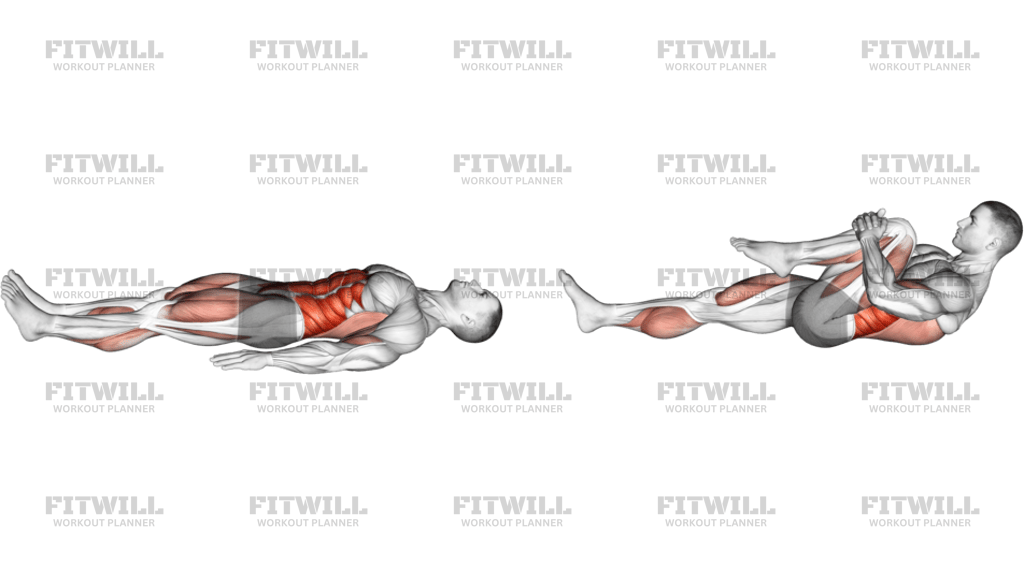
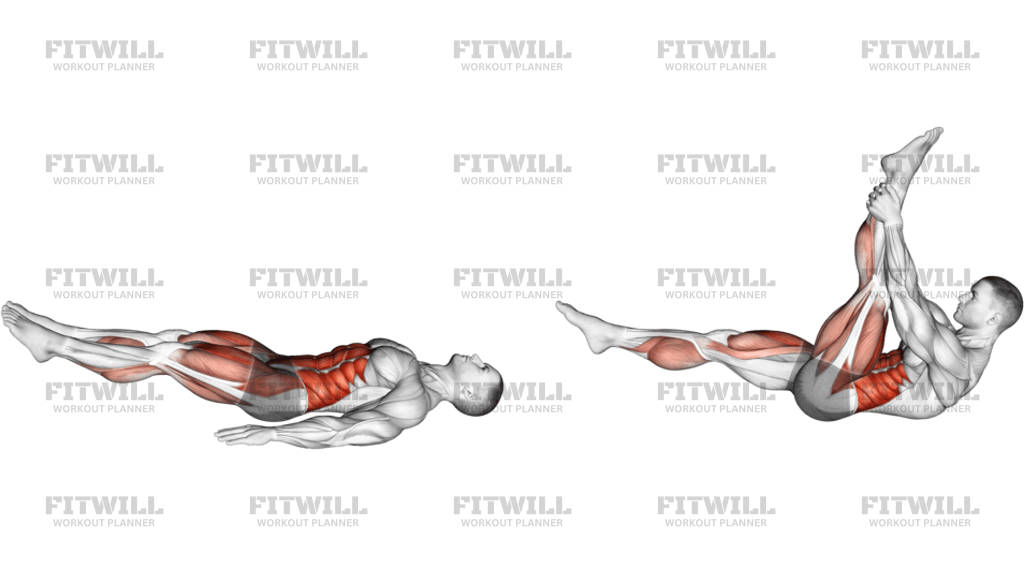
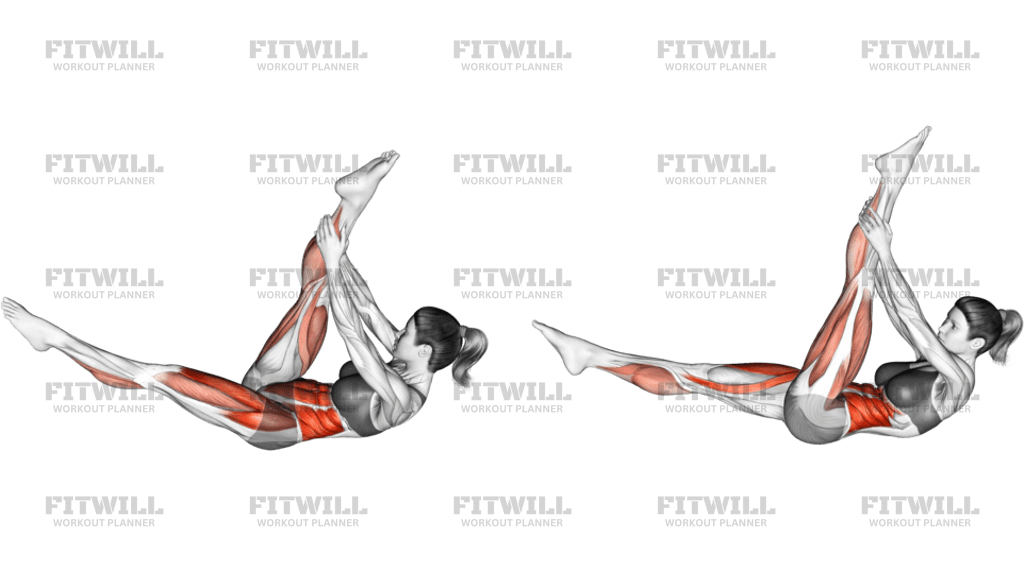
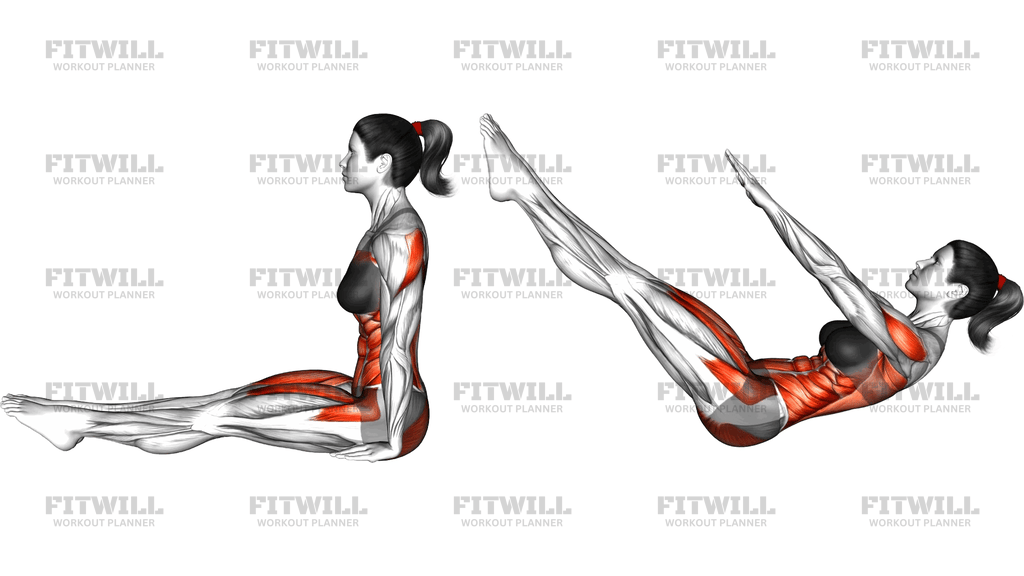
Spine Stretch Forward
Spine Stretch Forward is a classic mat Pilates mobility exercise performed sitting tall on the floor with the legs extended in front. It is designed to create controlled spinal flexion, lengthen the back line of the body, and teach you how to hinge, curl, and return without losing posture. In the image, the movement is shown as a seated forward reach that begins from an upright spine and finishes in a rounded fold over the legs.
The setup matters because this exercise is only effective when the pelvis stays organized. Sit on an exercise mat with both sit bones grounded, the legs long, and the feet flexed. Keep the torso lifted first, then let the head and rib cage follow as you round forward. If you collapse immediately from the low back or let the shoulders pull you into the fold, the stretch turns into a slump instead of a controlled spinal articulation.
This movement is less about touching the toes and more about creating length as you fold. The reach should come from the spine opening forward and the abdominals drawing back, not from yanking with the arms. Keep the shoulders relaxed, the neck long, and the weight even on both sides of the seat. A small range done with clean control is more useful than forcing a deep bend that makes the pelvis tuck or the knees lock hard.
Spine Stretch Forward is commonly used in Pilates warmups, mobility sessions, and low-load recovery work because it pairs breathing with trunk control. It can help prepare the hamstrings, calves, and mid-back while reinforcing a tall starting position and a smooth return to upright. For most people, the exercise should feel like a long, even stretch through the back of the body rather than a sharp pull in the low back.
Use a slower tempo when the hamstrings are tight or the spine is stiff, and shorten the range before the pelvis starts to roll backward. A cushion under the hips, slightly bent knees, or a lighter forward reach can make the movement cleaner. The best repetitions are calm, symmetrical, and easy to repeat, with no bouncing and no strain at the bottom position.
[ Workout Log & Planner ]
Put your next workout in Fitwill
Keep your plan and training log ready when you are.


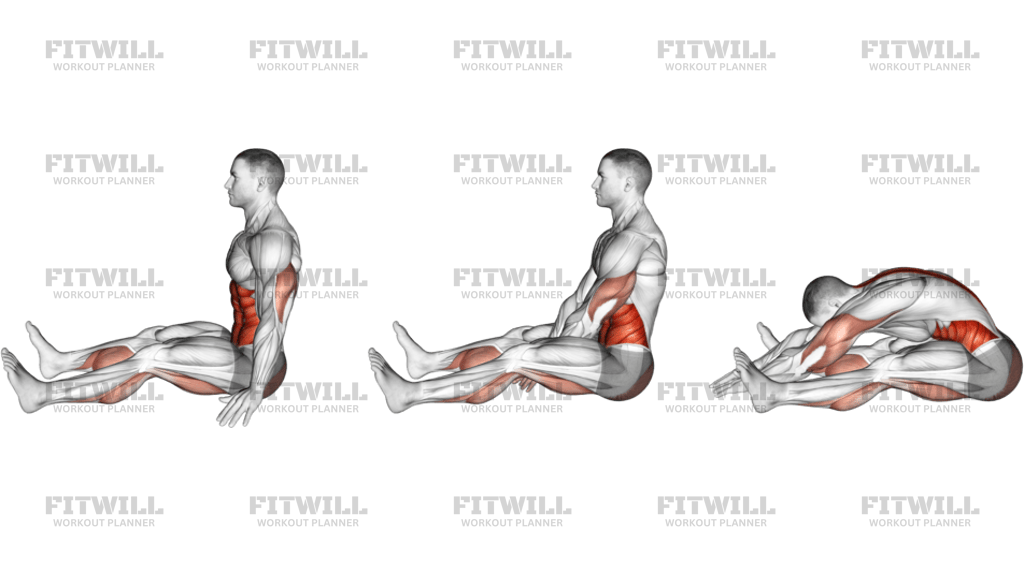
Instructions
- Sit on an exercise mat with your legs straight in front of you, feet flexed, and both sit bones grounded.
- Stack your spine tall, lift through the crown of your head, and reach your arms straight forward at shoulder height.
- Draw your ribs in gently and keep the shoulders soft so the torso starts from length, not tension.
- Inhale to prepare, then exhale and nod the chin slightly to begin curling forward.
- Roll the spine toward the floor one segment at a time, reaching past the shins while keeping the pelvis heavy.
- Keep the arms long and the reach active, but do not pull yourself deeper with the hands or shoulders.
- Fold only as far as you can while keeping the low back controlled and the neck in line with the upper spine.
- Inhale at the bottom without bouncing, then exhale to stack the spine back up to a tall seated position.
- Finish each rep upright before starting the next one, and soften the knees slightly if the hamstrings tug the pelvis backward.
Tips & Tricks
- Think of creating height first, then folding from that length so the exercise stays in the spine instead of just the shoulders.
- If your pelvis tucks under immediately, sit on a folded towel or bend the knees a little to keep the seat grounded.
- Keep both knees aimed up and the inner thighs active so the legs do not drift open as you round forward.
- Let the exhale help the ribs narrow as you curl down; do not force the range with a hard abdominal crunch.
- Reach the fingertips forward as the belly pulls back, which helps keep the motion long instead of collapsing into the chest.
- Avoid locking the knees aggressively, especially if the back of the legs feels like the limiting factor.
- Pause briefly in the deepest clean position, but do not bounce or pulse at the bottom.
- A smooth return to upright matters as much as the fold, so keep the spine organized on the way back up.
- If you feel pinching in the low back, reduce the range and make the arc smaller rather than pushing through it.
Frequently Asked Questions
What does Spine Stretch Forward train most?
It mainly trains spinal flexion control, postural length, and a long stretch through the back of the body.
Is this more of a stretch or a strength exercise?
It is mostly a mobility and stretch drill, but the controlled curl and return also challenge the deep trunk muscles.
Should my legs stay straight the whole time?
Yes, keep the legs long if you can, but soften the knees if tight hamstrings pull your pelvis under.
Where should I feel Spine Stretch Forward?
You should feel a long line of work through the hamstrings, calves, and mid-back, with no sharp pain in the low back.
Why do my sit bones want to roll backward?
That usually means you have folded farther than your hamstrings can allow. Reduce the range or sit on a small cushion to stay more upright.
Can beginners do this exercise?
Yes. Beginners should use a smaller range, a tall starting position, and a slow return to upright.
Do I need to reach all the way to my toes?
No. The goal is a clean spinal curve and controlled breathing, not forcing the hands to the feet.
How can I make the movement cleaner?
Move more slowly, keep the shoulders relaxed, and think about lengthening forward before rounding deeper.
What should I change if my hamstrings are tight?
Bend the knees slightly, sit a little higher, or shorten the forward fold so you can keep the pelvis grounded.