Side Plank Oblique Crunch
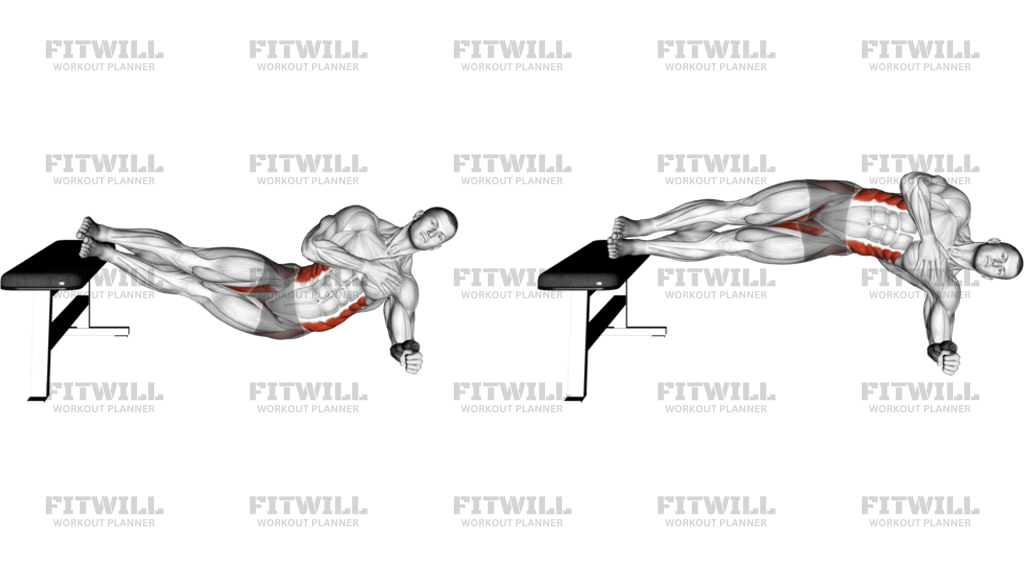
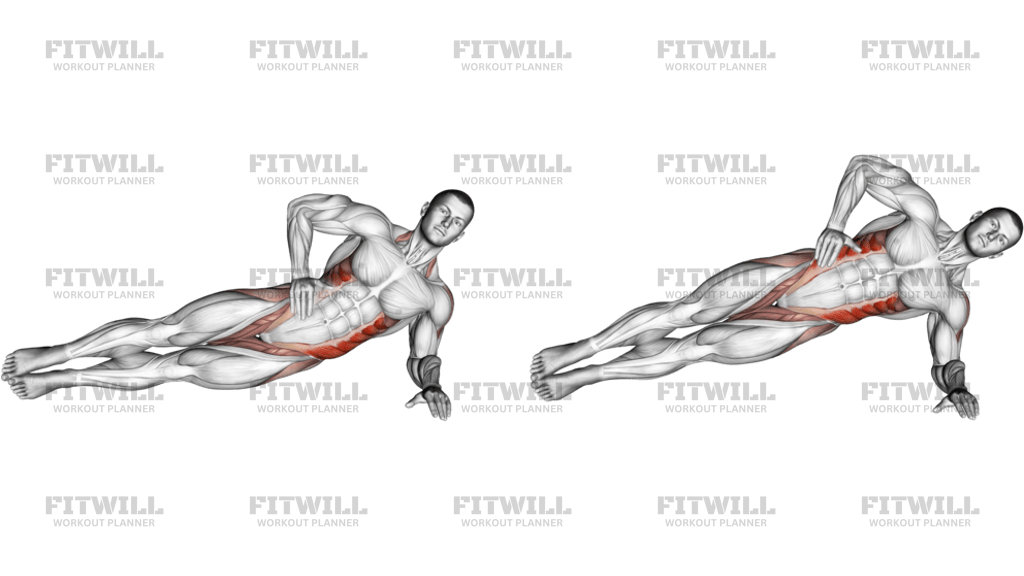
Side Plank Oblique Crunch is a bodyweight side-core exercise performed with one forearm on the floor and the feet supported on a bench. In the image, the body is set in a long side plank line and the trunk then shortens by bringing the ribs and hips toward each other. That combination makes the exercise useful for training the obliques, lateral abdominal wall, and the hip and shoulder stabilizers that keep the body from rotating or collapsing.
The elevated-feet setup changes the demand compared with a floor side plank. Because the legs are supported on the bench, the torso has to stay stacked while the working side controls the side bend and crunch. That makes setup quality important: the elbow must sit under the shoulder, the feet need to stay secure on the bench, and the pelvis should stay lifted before the first repetition starts. If the body starts twisted or sagging, the set quickly turns into a shoulder hold instead of a clean oblique movement.
A good repetition begins from a rigid side plank, then the top ribcage travels toward the top hip under control. The motion is short and deliberate, not a swing or a bounce. At the top, the side of the waist should feel shortened and compressed, then the torso returns to the long plank position without losing the lifted line through the hips. Breathing should stay organized so the trunk can stay braced while the crunch happens.
This exercise is commonly used in core blocks, accessory work, athletic conditioning, and routines that need stronger anti-lateral-flexion control. It is especially useful when you want the obliques to work through a visible shortening action instead of only holding a static plank. Because the movement is demanding on the shoulder and side trunk, it works best when the body can stay aligned from the shoulder through the heel on every rep.
For practical coaching, think of it as a side plank plus a small, controlled side crunch. Keep the support shoulder packed, keep the neck relaxed, and stop the set as soon as the hips start to drop or the torso starts to rotate forward. The best reps are smooth, stacked, and repeatable rather than large, fast, or forced.
[ Workout Log & Planner ]
Put your next workout in Fitwill
Keep your plan and training log ready when you are.


Instructions
- Place one forearm on the floor directly under the shoulder and keep the hand open or lightly clenched.
- Stack the feet on top of each other or place them together on the bench so the lower body has a stable support point.
- Lift the hips into a straight side plank line from shoulder to ankles before you start the crunch.
- Set the free hand behind the head or across the chest without pulling on the neck.
- Brace the waist and pull the ribs slightly down so the torso does not rotate forward.
- Crunch the top elbow and top knee toward each other by shortening the side of the torso.
- Pause briefly when the waist is fully compressed, then stop before the shoulder collapses.
- Return to the long side plank under control and keep the hips level as you lower.
- Reset the body position before the next rep and keep breathing steady throughout the set.
Tips & Tricks
- Keep the supporting elbow directly under the shoulder so the joint stack does not drift forward.
- Press the forearm and the outside edge of the lower shoulder into the floor to keep the ribcage lifted.
- Let the crunch come from the waist, not from yanking the elbow or knee together.
- Keep the hips square to the side instead of rolling the chest toward the floor.
- If the bench is too high or unstable, shorten the lever by bending the knees slightly before you load it heavily.
- Do not let the neck lead the rep; the hand only supports the head lightly if you choose that position.
- Use a controlled exhale as you crunch to help the obliques finish the shortening phase.
- Stop the set when the hips start to sag or the supporting shoulder begins to shrug toward the ear.
Frequently Asked Questions
What does the side plank oblique crunch train most?
It mainly trains the obliques and the side abdominal wall, with strong work from the shoulder and hip stabilizers that hold the side plank position.
Why are the feet elevated on a bench?
The bench raises the lower body and makes the side plank demand more challenging by increasing the leverage on the trunk and shoulder.
Should my top elbow and knee touch every rep?
No. Bring them toward each other under control, but only use the range you can keep clean without twisting or collapsing the hips.
Where should I feel this exercise working?
You should feel the working side of the waist shorten hard during the crunch, with the supporting shoulder and outer hip working to keep you stacked.
Can I do this with a bent-knee side plank?
Yes. Bending the knees reduces the lever and is a useful regression if the full bench-supported version is too demanding.
What is the most common mistake on this movement?
The most common mistake is letting the torso roll forward or the hips drop, which turns the rep into a sloppy side support instead of a clean oblique crunch.
Is this exercise suitable for beginners?
Beginners can use it only if they can hold a solid side plank first; otherwise they should regress to a floor side plank before adding the crunch.
How should I breathe during the rep?
Exhale as you crunch the waist closed, then inhale as you return to the long side plank without losing tension.