Cable Incline Skull Crusher
Cable Incline Skull Crusher is a cable-based triceps extension performed on an incline bench with the cable pulling from behind and below your head. The incline changes the arm angle so the triceps stay loaded through a long range of motion, especially when the elbows move from a deep bend into full extension. The cable also keeps tension on the muscle at the top of the rep, which makes this a useful option when you want steady resistance instead of the dead spots you often get with free weights.
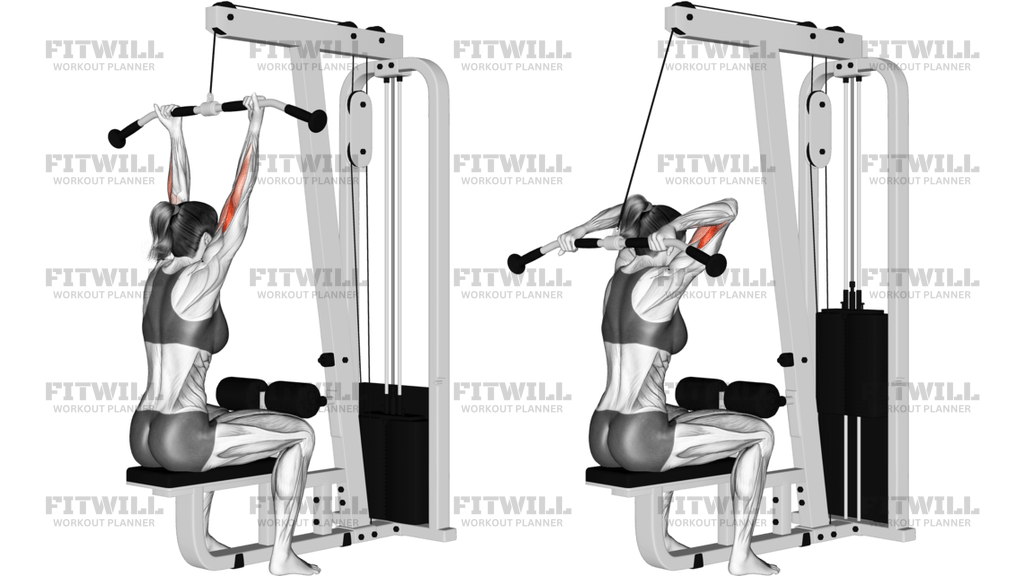
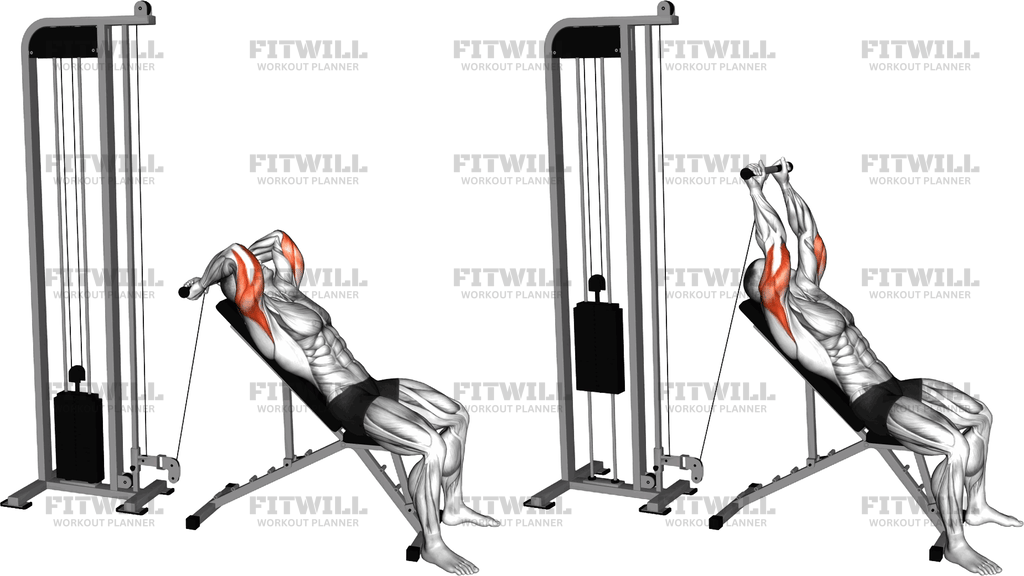
The setup matters because the bench angle, cable height, and body position all determine whether the load tracks cleanly through the elbows or drags the shoulders into the rep. In the image, the lifter reclines on the bench with the upper arms angled back and the hands traveling from just behind the forehead to a fully straightened position above the chest. That line of pull is what makes the movement feel like a skull crusher rather than a generic press. A stable bench position and a neutral wrist keep the work where it belongs: on the elbow extension pattern.
This exercise is most often used to build triceps size and pressing support, with extra emphasis on the long head because the shoulders are flexed back on the incline. It works well as an accessory after heavy presses, or as a controlled isolation movement when you want to train the triceps without as much body English. The movement should feel strict and deliberate. If your shoulders are taking over or your elbows are drifting wide, the load is probably too heavy or the bench angle is too steep.
Lower the handle slowly until your forearms move back beside your head and the elbows reach a deep but controlled bend, then extend by straightening the arms without changing the bench contact or letting the shoulders roll forward. Keep the motion smooth, keep tension through the cable, and reset each rep with the same elbow path. This is not a momentum lift. The best reps look repetitive, quiet, and well controlled from start to finish.
[ Workout Log & Planner ]
Put your next workout in Fitwill
Keep your plan and training log ready when you are.


Instructions
- Set an incline bench in front of a low cable pulley so the line of pull comes from behind your head.
- Attach the handle attachment and recline on the bench with your head near the top end and your feet planted firmly on the floor.
- Hold the handle with both hands and start with your elbows bent, hands just behind or above your forehead, and upper arms angled slightly back.
- Pin your upper arms in place and keep your wrists straight before you begin the rep.
- Exhale as you extend your elbows and drive the handle upward in a smooth arc until your arms are nearly straight.
- Squeeze the triceps briefly at the top without shrugging your shoulders or changing the bench contact.
- Inhale as you lower the handle back behind your head under control, letting the elbows bend while staying pointed generally upward.
- Stop the descent when you feel a deep triceps stretch but before your shoulders roll forward or the weight stack pulls you off position.
- Repeat for the planned reps, then guide the handle back to the start and sit up carefully before releasing it.
Tips & Tricks
- Keep the cable pulling from behind you; if the cable comes from the side, the elbow path will twist and the rep will feel less stable.
- Use a bench angle that lets your upper arms stay slightly behind your torso without forcing your ribs to flare hard off the pad.
- Let the elbows bend and straighten, not the shoulders. If the upper arms are drifting, reduce the load.
- A neutral or lightly turned-in wrist usually feels best with a handle attachment because it keeps pressure off the elbow and forearm.
- Lower under control for a full triceps stretch, but stop short of a position that makes your elbows or shoulders feel jammed.
- Keep your feet planted and your glutes lightly in contact with the bench so the torso does not rock as the weight stack moves.
- If the top half of the rep turns into a press, the load is too heavy or the starting elbow angle is too open.
- Pause for a brief squeeze at lockout to make sure the triceps finish the rep instead of momentum.
- Choose a lighter load than you would for a standing cable pushdown; the incline position makes strict control more demanding.
Frequently Asked Questions
What muscles does the Cable Incline Skull Crusher train?
It primarily trains the triceps, with the incline position putting a strong stretch on the long head while the shoulders and forearms help stabilize the rep.
Why use an incline bench for this cable skull crusher?
The incline changes the arm angle so the triceps stay loaded through a longer range, and it often gives a better stretch than a flat setup.
Where should the cable line up during the exercise?
The pulley should be low and behind your head so the handle travels from behind the forehead area to above the chest without drifting sideways.
How far should I lower the handle?
Lower until the triceps are well stretched and the elbows are deeply bent, but stop before the shoulders roll forward or the bench position breaks down.
What is the most common mistake with this movement?
Most people let the upper arms move or turn the rep into a press. The elbows should stay the main hinge while the shoulders stay quiet.
Is this easier or harder than dumbbell skull crushers?
It is often easier to control because the cable keeps tension consistent, but the incline position can make the strict setup feel more demanding.
Can beginners use the Cable Incline Skull Crusher?
Yes, but start light and learn the elbow path first. The bench angle and cable tension make sloppy reps obvious very quickly.
What if my wrists or elbows feel irritated?
Use a lighter load, keep the wrists neutral, and shorten the range slightly. If pain persists, switch to a more joint-friendly triceps option for that session.
How should I breathe during each rep?
Exhale as you extend the elbows and inhale on the controlled lower so the torso stays braced without holding tension in the neck.