Band Kneeling Lat Pulldown
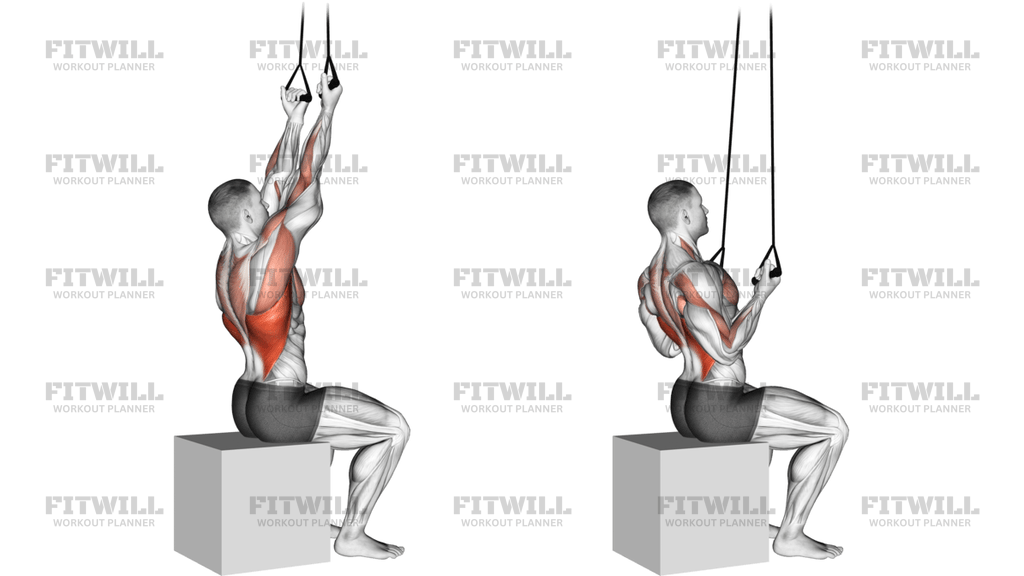
Band Kneeling Lat Pulldown is a tall-kneeling vertical pull performed with a band anchored high above you. The image shows a neutral-grip handle setup, both knees on the floor, and the torso held upright while the arms travel from overhead down toward shoulder height. The exercise is built to train the lats through a long, controlled range while teaching you to keep the ribs stacked and the shoulders out of the ears.
This movement is useful when you want lat-focused work without a heavy machine. Because the band resists hardest as it stretches, the top half of the pull often feels smoothest at the start and hardest near the finish, which makes clean positioning important. A stable kneeling base helps you keep tension on the back instead of turning the rep into a lean-back or a shrug. When the setup is right, the elbows drive down and in, the shoulder blades move with control, and the hands finish around the upper chest or chin line instead of drifting forward.
The main target is the latissimus dorsi, with the mid-back, rear shoulders, biceps, and forearms assisting. That means the exercise should feel like a back-driven pull, not an arm curl. Keep the chest tall, the neck long, and the ribs from flaring as the band comes down. If the anchor is too low, the band loses tension at the top; if it is too high or too heavy, the set turns into a shoulder and grip fight before the lats get a clean stimulus.
This is a good accessory pull for back days, upper-body circuits, or warm-up work before heavier rowing and pulldown variations. It also works well for beginners because the resistance is easy to scale, provided the kneeling position stays steady and the band path stays clean. Use it to reinforce shoulder depression, lat engagement, and controlled scapular movement without chasing momentum or a bigger range than your shoulders can comfortably own.
For best results, choose a band tension that lets you complete every rep with the same torso angle and the same finish position. The return should be slow and deliberate all the way to the overhead start so the lats stay loaded. If the shoulders start shrugging, the lower back arches, or the elbows stop tracking down and in, the set has moved past its useful range and should end or be made easier.
Fitwill
Log Workouts, Track Progress & Build Strength.
Achieve more with Fitwill: explore over 9600 exercises with images and videos, access built-in and custom workouts, perfect for both gym and home sessions, and see real results.
Start your journey. Download today!




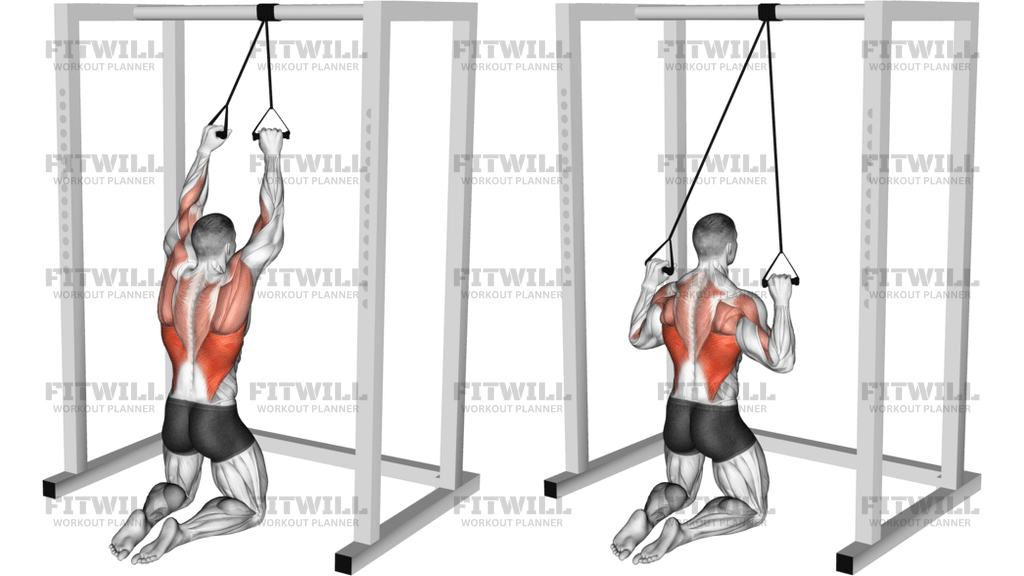
Instructions
- Anchor a band high on a rack or doorway bar and kneel on both knees beneath it with the handles in each hand.
- Hold a neutral grip with arms extended overhead, wrists straight, knees about hip-width, and your torso stacked tall.
- Set your ribs down, lightly brace your abs, and let your shoulders settle away from your ears before you start.
- Exhale and pull the elbows down and in toward your sides, driving the hands from overhead to about upper-chest or chin height.
- Keep the chest proud but do not lean back to finish the rep; the pull should come from the back, not from a body swing.
- Pause briefly at the bottom when the lats are fully shortened and the shoulder blades are controlled, not jammed together.
- Inhale as you slowly let the handles travel back overhead until the elbows are nearly straight and the band stays under tension.
- Reset your shoulders, keep the neck relaxed, and repeat for the planned reps without letting the knees or hips drift.
- If the band pulls you off balance or changes your torso position, stop and adjust the anchor distance or resistance before continuing.
Tips & Tricks
- Choose an anchor height that keeps tension on the band even when your arms are overhead; a slack top position makes the first third of the rep useless.
- Think about driving the elbows toward your front pockets instead of trying to yank the handles down with your hands.
- Keep the wrists neutral so the grip does not become the limiting factor before the lats do.
- Do not turn the rep into a mini backbend; a small lean is fine, but the ribs should not flare hard to cheat the finish.
- Let the shoulders move down as the elbows descend, and avoid shrugging at the top when the band starts to tug upward.
- Use a slower return than the pull so the lats stay loaded through the overhead stretch.
- If the forearms burn out first, the band is probably too thick or the anchor is too far away for the current set.
- Keep the knees planted and the hips quiet; any rocking usually means the band is too heavy or the rep is being rushed.
- Stop the set when you can no longer bring the handles to the same finish point without losing posture.
- This movement should feel like a controlled vertical pull, not a biceps curl with the elbows drifting forward.
Frequently Asked Questions
What muscles does Band Kneeling Lat Pulldown work most?
It mainly trains the lats. The mid-back, rear delts, biceps, and forearms assist, but they should not take over the rep.
Why kneel instead of standing?
Tall kneeling removes leg drive and makes it easier to keep the torso stacked under the overhead anchor, so the lats do the work instead of body sway.
Should the handles come all the way to my chest?
Not necessarily. Finish where your elbows can stay down and in without shrugging or forcing the shoulders forward, which is often around the chin to upper-chest line.
What is the most common mistake with this band pulldown?
People usually lean back and turn it into a full-body cheat. Keep the ribs controlled and let the elbows travel, not the whole torso.
Is this good for beginners?
Yes, because resistance is easy to scale. Start with a light band and focus on a tall kneeling position and a slow return.
What grip should I use?
The image shows a neutral grip on handles, which is a good default because it keeps the shoulders comfortable and makes the elbow path easier to control.
How far back should I lean?
Only enough to keep tension on the band if needed. If the lean keeps increasing rep to rep, the resistance is too heavy or the anchor is too far away.
How can I make this exercise harder?
Use a thicker band, step farther from the anchor, or pause longer at the bottom while keeping the same upright kneeling posture.
Can I substitute a cable pulldown for this movement?
Yes. A cable kneeling pulldown or a machine lat pulldown will give a similar vertical-pull pattern if you want more consistent resistance.
Should I feel this in my biceps?
Some biceps work is normal, but the set is working correctly when the back initiates the pull and the elbows travel down before the arms feel like they are curling.