Hip Roll Plank
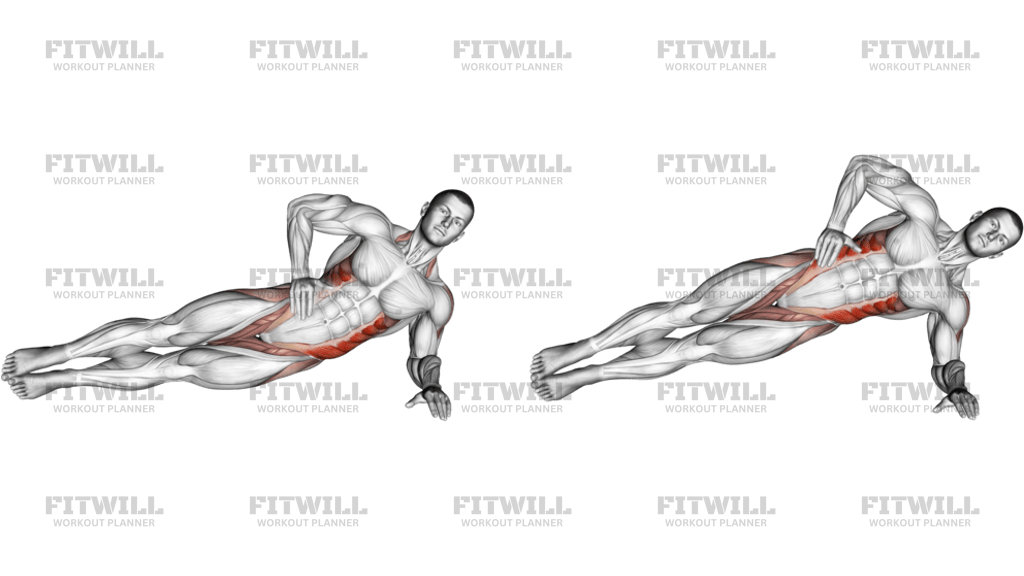
Hip Roll Plank is a bodyweight forearm-plank variation where you shift the pelvis from side to side without losing the long, braced line from shoulders to heels. The movement is small on purpose: the torso stays rigid while the hips roll and the obliques, deep abdominals, glutes, and shoulder stabilizers work to keep the trunk from collapsing.
This exercise is best thought of as anti-rotation core training with a moving pelvis. You are not trying to swing the whole body or chase a huge range. Instead, each rep asks you to transfer pressure through the forearms and feet while keeping the ribs tucked, the neck neutral, and the lower back quiet. That makes the drill useful for building control around the waist and hips, especially when you want core work that feels athletic rather than purely static.
The setup matters because a sloppy plank turns the exercise into a low-back twist. Place the elbows under the shoulders, press the forearms into the floor, and step the feet back until the body forms a firm line. From there, squeeze the glutes, brace the abdomen, and roll the hips a few inches toward one side. Return through center with control, then roll to the other side without bouncing or letting the chest sag.
Use a wider foot stance if you need more balance, and shorten the roll if your ribs flare or your low back starts to arch. The best reps feel controlled at both ends of the motion, with the shoulders steady and the pelvis doing the work. That makes the exercise a strong option for warm-ups, core blocks, or accessory training when you want trunk stiffness, oblique engagement, and better control through rotation.
Because the load is your own body weight, progress comes from cleaner body position, slower tempo, longer pauses, or a narrower stance rather than from forcing speed. Stop the set when you can no longer keep the plank organized. If you feel the motion in the shoulders or lower back more than the abs and hips, reduce the range and reset the alignment before continuing.
[ Workout Log & Planner ]
Put your next workout in Fitwill
Keep your plan and training log ready when you are.


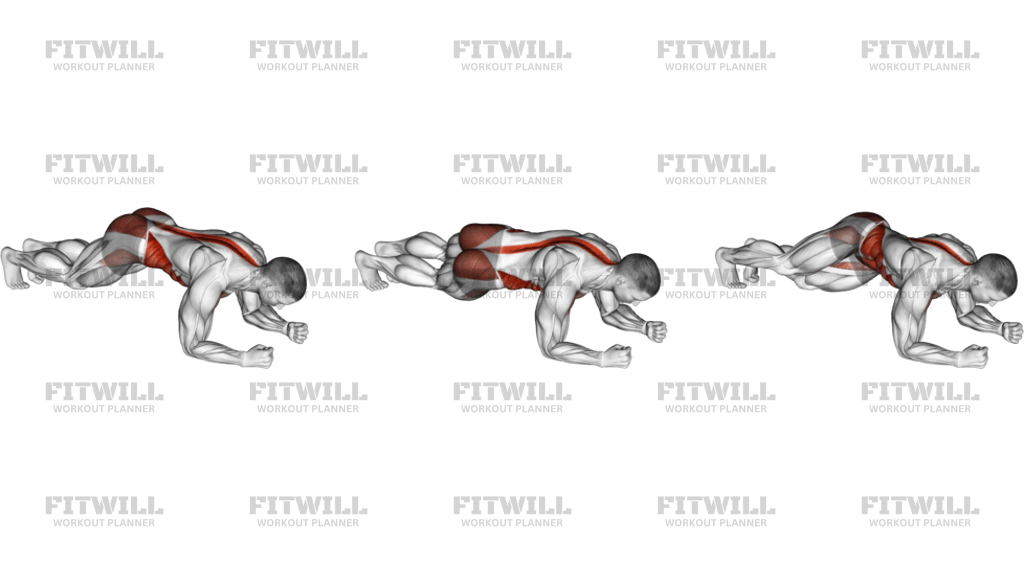
Instructions
- Place your forearms on the floor with the elbows under your shoulders and your fists or palms aligned in front of you.
- Step both legs back into a forearm plank, keeping your feet about hip-width apart for balance.
- Press the forearms down, squeeze the glutes, and tuck the ribs so your body forms one long line.
- Brace your abs, lift the knees off the floor, and hold the center plank before you begin the roll.
- Slowly roll your hips a few inches toward one side while keeping the shoulders as level as possible.
- Pause briefly at the end of the roll, then bring the hips back through center with control.
- Roll the hips to the opposite side without letting the lower back sag or the chest drop.
- Keep the neck neutral, breathe out as the hips move, and inhale as you return to center.
- Lower your knees to the floor when the set is complete or if you can no longer keep the plank rigid.
Tips & Tricks
- Start with a wider foot stance if you need more stability, then narrow it only after the roll feels controlled.
- Let the pelvis move, but keep the shoulders quiet; the exercise should not turn into a full-body twist.
- Think about drawing the front ribs toward the pelvis so the lower back does not over-arch as you roll.
- Keep the forearms active by pressing the floor away instead of sinking between the shoulders.
- Make the roll small and deliberate; a shorter range is better than a big swing that breaks plank position.
- Squeeze the glutes at the center position to help keep the hips from dumping forward or back.
- If the movement feels too hard on the toes, widen the stance or perform the drill from the knees.
- Use a steady exhale through each side roll to help keep the trunk braced and the ribs down.
- Stop the set as soon as the low back starts to take over or the hips start wobbling side to side.
Frequently Asked Questions
What does Hip Roll Plank work?
It primarily challenges the obliques, deep abdominals, glutes, and shoulder stabilizers while the body stays in a forearm plank.
Is this just a regular plank?
No. A regular plank is mostly static, while Hip Roll Plank adds controlled side-to-side pelvic rotation on top of the hold.
How far should my hips roll?
Only far enough that you can keep your ribs down and your shoulders steady. The range should stay small and controlled.
Should my feet stay together?
Usually no. A hip-width or slightly wider stance gives you more balance and makes it easier to control the roll.
Can beginners do this exercise?
Yes. Beginners can shorten the range, widen the feet, or drop to the knees until they can hold a rigid plank during the roll.
What is the most common mistake?
The most common problem is letting the shoulders twist and the lower back arch instead of keeping the plank long and braced.
Why do I feel this in my shoulders?
Some shoulder work is normal because the forearms and upper body help support the plank, but the trunk should still do most of the work.
How can I make Hip Roll Plank harder?
Slow the tempo, pause at each side, narrow the feet, or extend the set time while keeping the plank position strict.
Should I feel my lower back?
No. If the lower back takes over, reduce the range, tighten the brace, or reset with a wider stance.