Leg Extension Plank
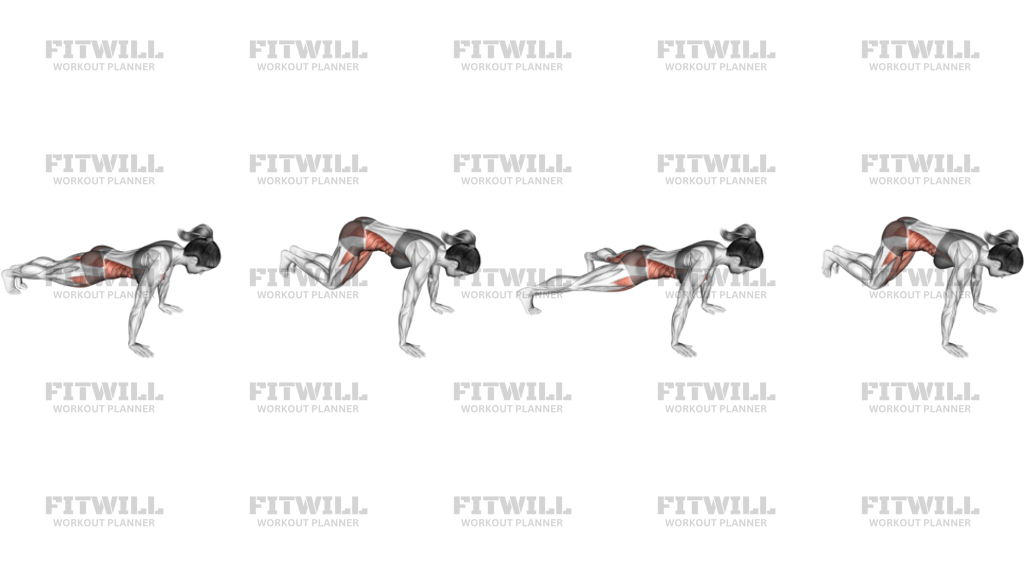
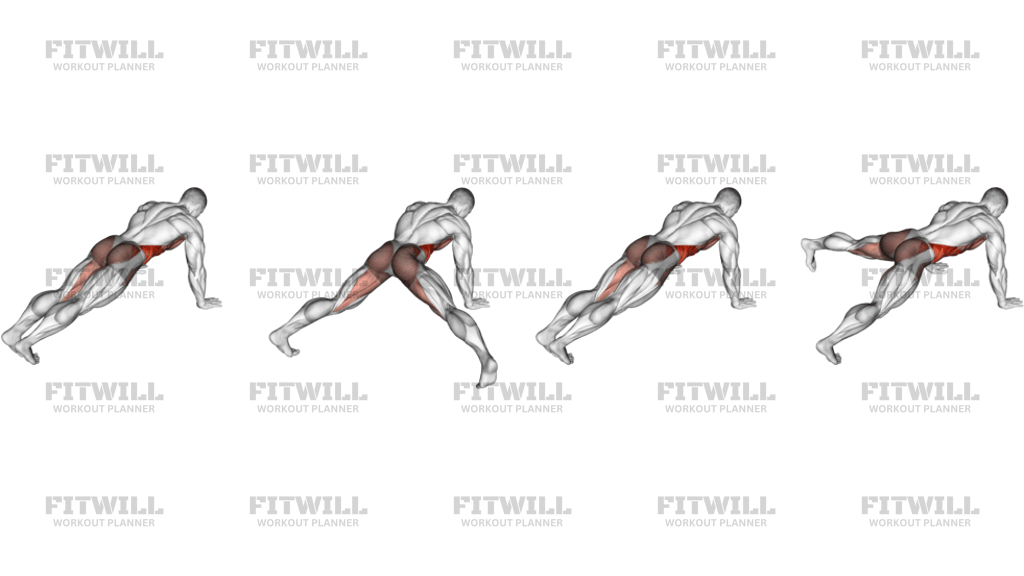
Leg Extension Plank is a bodyweight plank variation that combines a rigid high-plank hold with a deliberate one-leg extension. It is designed to challenge anti-extension and anti-rotation control through the trunk while the shoulders, glutes, and hip stabilizers keep the body from twisting or sagging. Because the movement starts from a fixed plank base, even small changes in pelvic position or shoulder pressure will noticeably change how the exercise feels.
This exercise is useful when you want core work that also asks the hips to stay organized while one leg reaches long behind the body. The working leg should feel active from the hip through the heel, but the lower back should not take over the job. The support foot, both hands, and the opposite side of the torso do most of the stabilization, so the best reps look level, steady, and controlled rather than big and fast.
Set up in a high plank with your hands under your shoulders, fingers spread, and your legs long behind you. Keep the feet hip-width or slightly wider if you need more balance. Before each rep, pull the ribs down, squeeze the glutes, and set a neutral neck so the torso stays braced before the leg moves. From there, extend one leg straight behind you and slightly up only as far as you can keep the hips square and the low back quiet.
Use a short pause at the top if you can hold the position without rocking the body. Lower the leg back to the plank with control, reset the brace, and repeat on the other side if the workout calls for alternating reps. This movement fits well in core circuits, warm-ups, and athletic accessory work where clean body control matters more than load. If the pelvis starts to rotate or the shoulders begin to shrug, shorten the range or return to a standard plank until the position stays solid.
[ Workout Log & Planner ]
Put your next workout in Fitwill
Keep your plan and training log ready when you are.


Instructions
- Place your hands under your shoulders in a high plank and walk your feet back until your body forms a straight line.
- Spread your fingers, press the floor away, and set your feet hip-width or slightly wider if you need more balance.
- Pull your ribs down, tighten your glutes, and keep your neck neutral before the first rep.
- Shift a little more weight into the supporting hand and grounded foot without letting the hips drift.
- Extend one leg straight behind you and slightly up, keeping the knee long and the toes pointed back or lightly down.
- Reach only as high as you can without arching the lower back or turning the pelvis open.
- Pause for a moment at the top if the torso stays still.
- Lower the leg under control, re-brace the plank, and alternate sides for the planned reps.
Tips & Tricks
- A slightly wider foot stance makes it easier to keep the hips level when one leg leaves the floor.
- Keep the lifted leg long; a big knee bend usually turns the rep into a hip-flick instead of a plank hold.
- Think about reaching the heel back more than kicking the foot up.
- If the low back arches, shorten the lift before you shorten the plank.
- Keep pressure through both hands so the shoulders do not collapse toward the ears.
- Exhale as the working leg lifts to help keep the ribs stacked over the pelvis.
- Pause only if the body stays square; a wobbly pause usually means the range is too large.
- Stop the set when the supporting side starts to shake so badly that you cannot keep the pelvis steady.
Frequently Asked Questions
What muscle does Leg Extension Plank target most?
It mainly trains the core to resist extension and rotation, with strong work from the glutes, shoulders, and hip stabilizers.
Can beginners perform this exercise?
Yes, if they can hold a solid high plank. Beginners should use a wider stance and a smaller leg lift to keep the hips from twisting.
How high should I lift the leg in the plank?
Only high enough to feel the glute work while the pelvis stays square. If the lower back arches, the leg is too high.
Where should I feel this exercise?
You should feel the support-side shoulder, abs, glutes, and the back of the moving leg working together to keep the plank steady.
Why do my hips rotate when I lift one leg?
Usually the feet are too narrow, the lift is too high, or the core brace is not set before the leg moves. A wider stance and a smaller range usually fix it.
Can I do this on my knees instead?
Yes. A knee-supported plank with a leg extension is a useful regression if a full high plank causes the shoulders or low back to lose position.
What is the biggest mistake with Leg Extension Plank?
The most common error is turning it into a low-back arch or a bouncing kick instead of a controlled plank with a long leg reach.
How should I breathe during the set?
Keep a steady brace and exhale as the leg lifts. Hold enough tension to stay stable, but do not let the breath disappear completely.
Can I use this in a workout with other core exercises?
Yes. It works well next to planks, dead bugs, and anti-rotation drills because it rewards the same kind of trunk control.