Power Sled Push
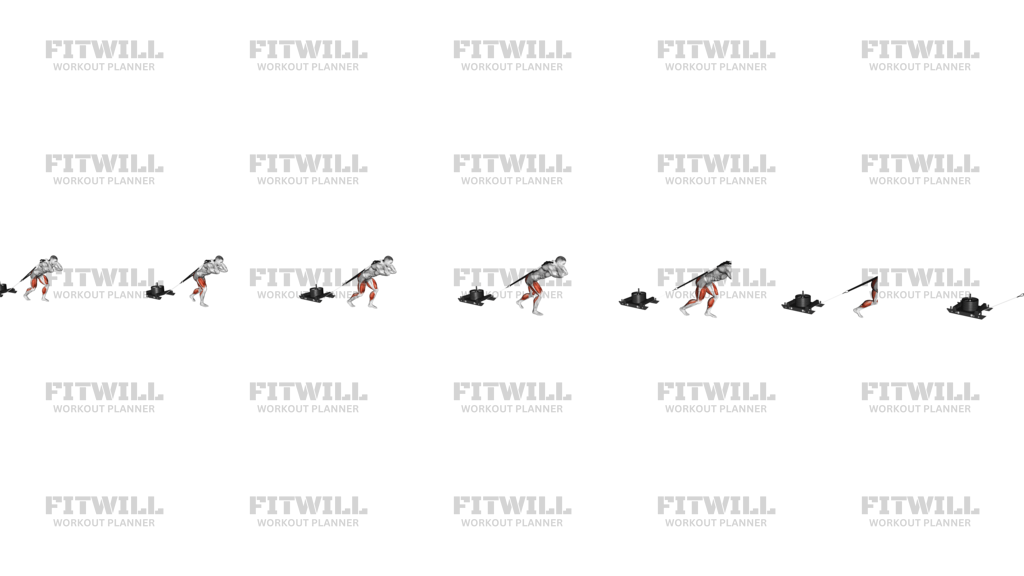
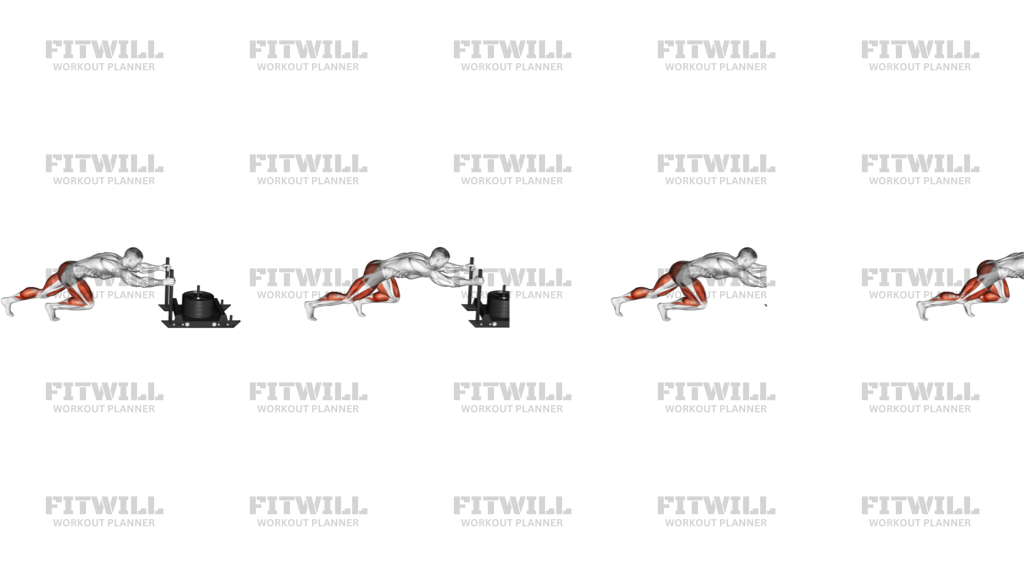
Power Sled Push is a forward-drive conditioning and strength exercise performed by loading a sled and pushing it across the floor with a long, forceful body angle. The setup matters because the sled rewards clean force transfer: your torso stays braced, your shoulders stay packed, and your legs do most of the work while the upper body keeps the handles stable. It is a simple-looking drill, but the value comes from how well you can maintain posture, rhythm, and continuous drive under load.
This movement is especially useful for building leg drive, trunk stiffness, and work capacity. The quads and glutes provide the main push, the calves help with each step, and the hamstrings, core, upper back, and shoulders work hard to hold the forward lean without collapsing. That combination makes the sled push a strong option for conditioning blocks, athletic preparation, finishers, and any session where you want demanding lower-body work without a lot of impact.
Good reps start with a stable push position. Your feet should be set so you can lean into the handles without rounding your back or rising too upright too soon. From there, you drive the floor back with short, fast steps instead of reaching out in front of the sled. The sled should keep moving under steady pressure, not surge and stall. Breathing should stay controlled enough that your brace does not disappear as the run gets harder.
Because the sled is external resistance, load selection changes the exercise quickly. Too much weight turns it into a grinding march that breaks posture and overloads the low back; too little weight removes the useful force demand. Use a load that lets you keep the body angle, take crisp steps, and finish the distance with the same mechanics you started with. That is what makes the Power Sled Push useful for both beginners and advanced lifters: the resistance can be scaled while the movement pattern stays the same.
[ Workout Log & Planner ]
Put your next workout in Fitwill
Keep your plan and training log ready when you are.


Instructions
- Load the sled and stand behind the handles on a clear path, with one foot slightly behind the other for a strong forward lean.
- Hinge forward from the ankles and hips, place your hands on the handles, and keep your arms mostly straight as you set the body angle.
- Pull your ribs down, brace your midsection, and keep your spine long before the sled moves.
- Drive the floor away with a strong first step to break the sled loose from the ground.
- Keep pushing with short, quick steps so the sled keeps gliding instead of stalling between strides.
- Hold your shoulders down and your wrists neutral while the arms act as stable extensions of the torso.
- Keep your hips from shooting up and your back from rounding as the run gets harder.
- Breathe in a controlled rhythm as you move, then slow the sled to a stop before resetting for the next effort.
Tips & Tricks
- If the sled needs a big jerk to start, the load is too heavy for a quality push.
- Short steps are more effective than long reaches because overstriding stalls the sled and pulls you out of position.
- Keep the torso angle consistent from start to finish; standing up early turns the drill into a weak march.
- Treat the handles as fixed supports, not something to pull with the arms.
- Flat, stable shoes usually work better than soft running shoes because you want a solid drive into the floor.
- If the sled drifts or veers, check that both hands are applying even pressure and both legs are driving evenly.
- A lighter sled with faster steps is usually better than a heavy sled that stops every stride.
- Stop the set when your shoulders shrug, your stride gets choppy, or your hips rise faster than the sled moves.
Frequently Asked Questions
What muscles does the Power Sled Push work?
It mainly targets the quads and glutes, with the calves, hamstrings, core, upper back, and shoulders working to keep the sled moving and your torso fixed.
Is this more of a leg exercise or a conditioning drill?
It is both. The legs create the drive, but the repeated pushing makes it especially useful for conditioning and work capacity.
Should my arms be bending and pressing the handles?
No. Keep the arms mostly straight and let the legs drive the sled while the handles stay steady in your hands.
How heavy should the sled be?
Heavy enough to feel demanding, but light enough that you can keep short, quick steps and the same body angle from start to finish.
What is the most common form mistake?
Standing up too soon or taking long reaching steps. Both make the sled stall and shift stress away from the intended push pattern.
Can a beginner do this exercise?
Yes. Start with a light sled, short distances, and a focus on posture and continuous movement instead of speed.
Where should I feel the work most?
You should feel it most in the thighs and glutes, with the core and upper body working hard to keep the push position stable.
What is a useful variation or companion exercise?
Backward sled drags pair well with this movement because they train the legs hard with a different loading angle and less forward lean.