Power Sled Drag
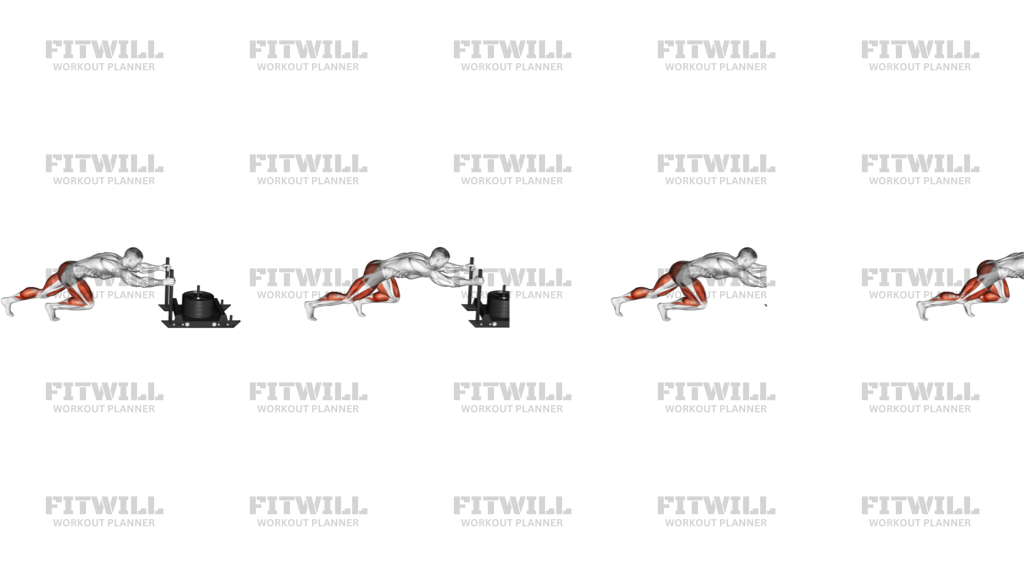
Power Sled Drag is a forward locomotion drill built around a loaded sled, tight straps or handles, and steady body angles. Instead of trying to produce a big range of motion, the exercise asks you to keep the sled moving with short, forceful steps while your torso stays pitched forward and organized. That makes it useful for lower-body drive, trunk stiffness, and work capacity without the joint impact you get from jumping or running.
The movement is simple in concept but very sensitive to setup. If the line to the sled is too high, your shoulders will take over; if you stand too tall, the sled will stall and the work shifts away from the legs. Power Sled Drag usually feels best when the feet stay under control, the ribs stay stacked over the pelvis, and the sled tracks in a straight line with no jerking.
Because the resistance is external and constant, Power Sled Drag rewards posture more than speed. A good rep starts with the first step already braced, then continues with smooth, repeated driving steps that keep tension through the glutes, quads, calves, and core. The arms should guide the straps or handles, not rip the sled forward with the shoulders or an aggressive yank.
This exercise fits well in conditioning blocks, lower-body finishers, athletic warmups, and strength circuits where you want demanding work without heavy spinal loading. It can also be a practical option when you want hard output but need to limit impact or keep the torso angle more controlled than a sprint drill. The best versions look calm and repeatable: the sled stays moving, the steps stay short, and the upper body stays locked in place instead of bobbing around.
Use a load that lets you keep the sled moving without losing your forward lean or taking exaggerated steps. If the sled stops every few feet, the weight is too heavy or the surface is too sticky. Power Sled Drag should feel like powerful marching pressure through the floor, not a wrestling match with the straps.
[ Workout Log & Planner ]
Put your next workout in Fitwill
Keep your plan and training log ready when you are.


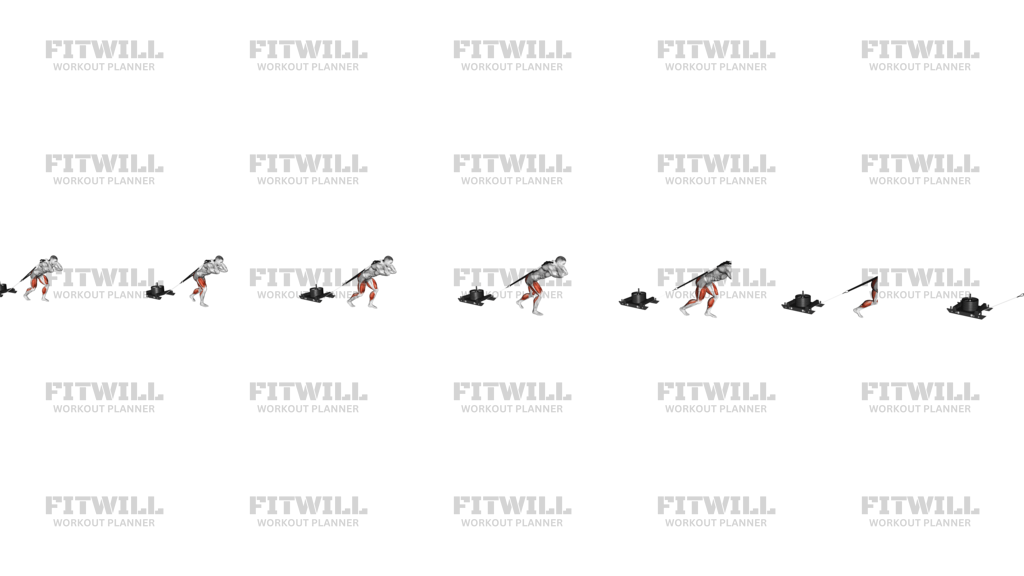
Instructions
- Load the sled lightly, attach the straps or handles securely, and clear a straight path on turf or another low-friction surface.
- Stand facing away from the sled, hold the straps or handles with both hands, and walk forward until the line is taut.
- Hinge slightly at the hips so your torso is leaned forward, keep your spine long, and look a few feet ahead of you.
- Set your ribs down, brace your midsection, and keep your shoulders low before the first step.
- Drive one foot into the floor and take short, quick steps to start moving the sled forward.
- Keep your arms quiet and let the legs create the force instead of yanking with the shoulders.
- Maintain the same forward body angle as you move and keep the sled tracking straight without bouncing side to side.
- Continue for the planned distance or time, then slow the steps, stand tall, and reset the sled before your next round.
Tips & Tricks
- If the sled stalls every few steps, reduce the load before you start taking longer, sloppier strides.
- Keep the straps or handles low and centered; high hand position usually turns the drill into an upper-body pull.
- Think about pushing the floor away behind you instead of reaching forward with the foot.
- Short steps usually work better than long reaches on this movement, especially on sticky turf.
- A steady forward lean should come from the hips, not from rounding the upper back.
- Keep your elbows soft but not busy; the arms should stabilize the line, not row the sled.
- If your feet start crossing or wobbling, your stance is too narrow or the load is too heavy.
- Use breathing that matches your steps, such as a short exhale every few drives, so you do not lose trunk tension.
Frequently Asked Questions
What Does Power Sled Drag Train?
Power Sled Drag trains lower-body drive, trunk stiffness, and conditioning. The glutes, quads, calves, and core do most of the work, while the upper body mostly holds position and guides the straps.
Should I Stay Leaned Forward During Power Sled Drag?
Yes. Keep a forward torso angle from the hips so the sled stays moving and the legs keep producing force. Standing up too early usually makes the sled slow down.
Do I Pull The Power Sled Drag With My Arms?
No. Your hands only keep the straps or handles organized. The real work should come from the legs driving the floor back with each short step.
How Heavy Should The Sled Be For Power Sled Drag?
Use a load that lets the sled keep moving without grinding to a stop. If your steps turn into lunges or you have to yank the straps, the load is too heavy.
Can Beginners Do Power Sled Drag?
Yes. Begin with a light sled and focus on posture, short steps, and a smooth line of travel before adding weight or distance.
What Is The Most Common Power Sled Drag Mistake?
The most common mistake is standing too tall and reaching with the legs. That usually shifts work away from the lower body and makes the sled feel heavy and jerky.
Is Power Sled Drag Better For Conditioning Or Strength?
It can serve both goals. Heavier, shorter drags are better for strength-oriented work, while lighter loads over longer distances are better for conditioning.
What Should I Feel In The Sled Drag Setup?
You should feel pressure through the feet, steady tension in the trunk, and a controlled pull through the straps or handles. If your shoulders burn first, the setup is probably too high or too aggressive.