Band Bent-Over Wide-Grip Row
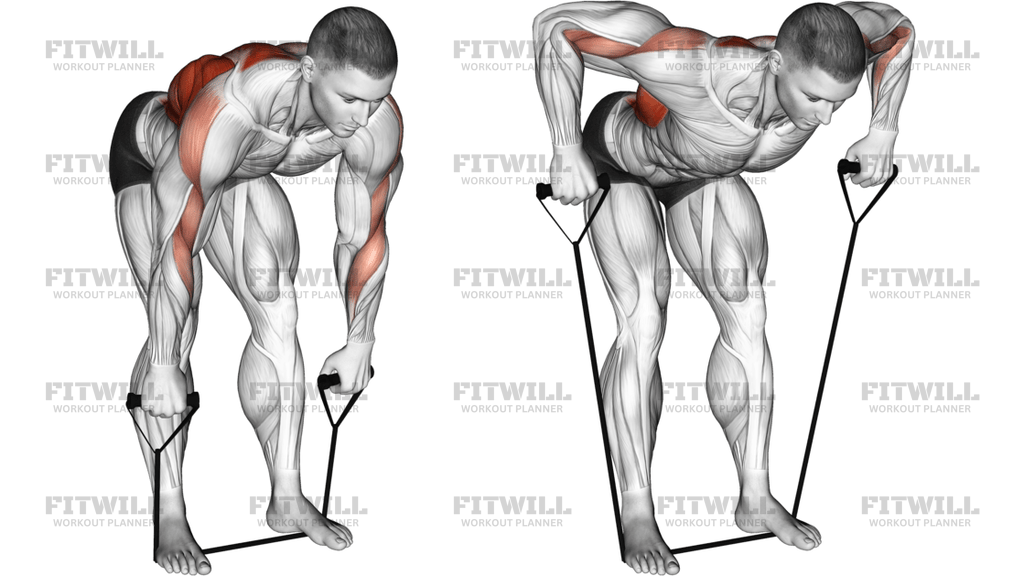
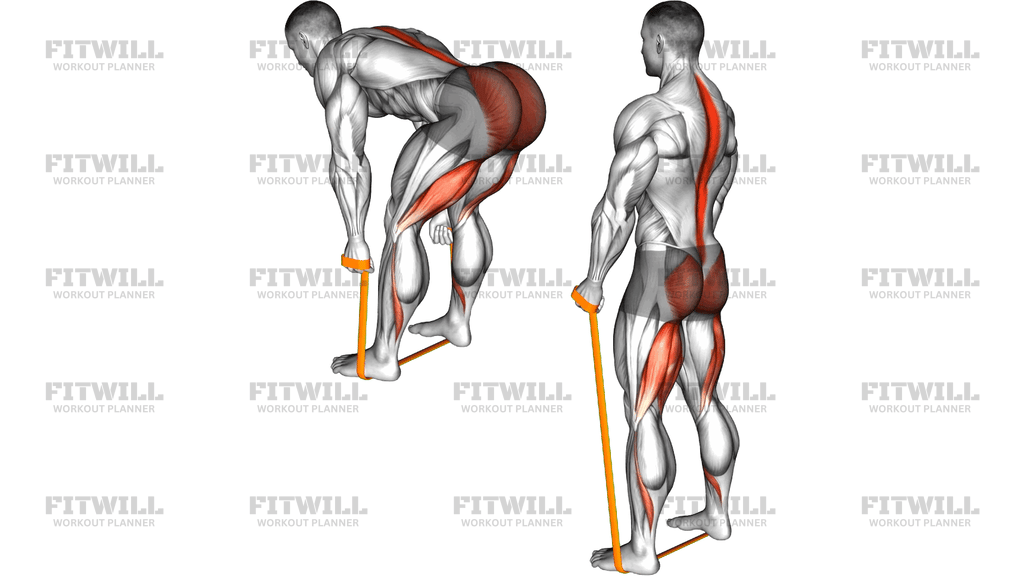
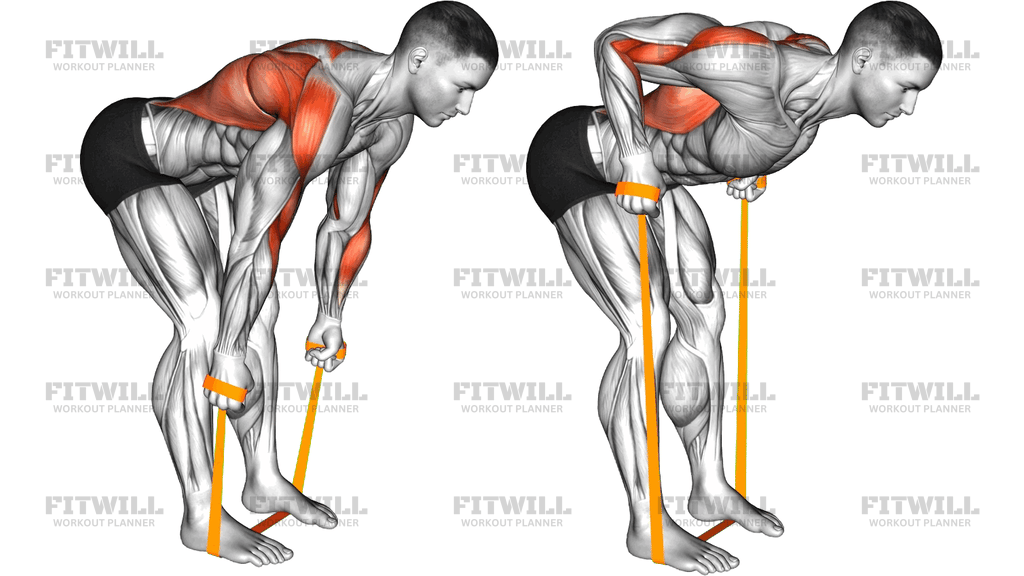
Band Bent-Over Wide-Grip Row is a bent-over pulling exercise that uses a resistance band anchored under both feet to train the upper back through a long, controlled row. The wide elbow path shifts the emphasis toward the lats, rhomboids, rear delts, and mid traps while still asking the biceps and forearms to hold the line. Because the band gets harder as it stretches, the setup matters: the amount of tension at the bottom determines whether the row feels smooth and useful or jerky and overpowered by momentum.
This version of the row is best thought of as a hinge-based back builder. You stay folded at the hips, keep the chest long, and pull the handles from below the knees toward the lower ribs or upper waist. The torso angle and the width of the grip are what make it a wide-grip row rather than a straight, tucked-elbow lat row. When the elbows travel a little farther out from the body, the upper-back muscles have to contribute more to the top of each rep.
The band also changes the training feel compared with a cable or machine. Tension is lighter at the start and heaviest near the finish, so you need to own the position at the top instead of snapping into it. A clean repetition finishes with the shoulder blades moving together and down, the neck staying long, and the ribs not flaring forward. If the low back starts doing the work, the hinge has usually been lost and the load is drifting away from the back muscles you actually want.
Use this exercise for home workouts, accessory back work, warmups before heavier pulling, or higher-rep strength and posture training. It is a practical choice when you want a simple setup without a bench or machine, but it still rewards crisp technique and a deliberate tempo. Light bands are fine for beginners, provided the hinge stays stable and the row path is controlled from the first rep to the last.
Keep the motion pain-free and repeatable. The goal is not to stand taller every rep or to turn the movement into a shrug; it is to keep the hips fixed, pull the elbows back with intent, and return the band under control so the back stays loaded throughout the set.
Fitwill
Log Workouts, Track Progress & Build Strength.
Achieve more with Fitwill: explore over 9600 exercises with images and videos, access built-in and custom workouts, perfect for both gym and home sessions, and see real results.
Start your journey. Download today!




Instructions
- Stand on the middle of the band with feet about hip- to shoulder-width apart and hold one handle in each hand.
- Hinge your hips back until your torso is roughly 30-45 degrees forward, keep a soft bend in the knees, and let your arms hang just outside your legs.
- Set your shoulders down and long, brace your midsection, and keep a neutral neck before you start the first pull.
- Pull the handles toward your lower ribs or upper waist by driving the elbows back and slightly out to the sides.
- Squeeze the shoulder blades together near the top without leaning back or shrugging the shoulders toward your ears.
- Pause for a moment at the top while keeping the chest braced and the torso angle fixed.
- Lower the handles slowly until the elbows are almost straight and the band is still under control.
- Reset the hinge if your back starts to round or your torso rises, then continue for the planned reps.
Tips & Tricks
- Step wide enough on the band that the bottom position has tension, but not so wide that the handles pull your shoulders forward.
- Keep the elbows slightly flared rather than pinning them to your ribs if you want the wide-grip upper-back emphasis shown here.
- Think about pulling to the lower ribs or upper waist, not to the chest, so the row stays in the bent-over groove.
- Do not stand up taller on each rep; the torso angle should stay almost fixed while only the arms and shoulder blades move.
- Let the band stretch smoothly on the way down instead of dropping the handles and losing tension at the bottom.
- If the low back feels more worked than the upper back, shorten the range and reduce the band tension before adding reps.
- Keep the wrists stacked and neutral so the forearms do not become the weak link before the back finishes the set.
- Use a brief top pause and a slow return to make a lighter band feel meaningful without turning the set into a swing.
Frequently Asked Questions
What muscles does Band Bent-Over Wide-Grip Row work?
It mainly targets the lats and upper back, especially the rhomboids and mid traps, with rear delts, biceps, and forearms assisting.
Why is the grip and elbow path wider than a standard band row?
A wider elbow path shifts more work to the upper back and rear delts while still training the lats through the row.
How bent over should I be during this row?
Most people do well with a torso angle around 30-45 degrees forward, as long as the hips stay hinged and the spine stays neutral.
Where should the handles travel on each rep?
Pull them toward the lower ribs or upper waist, then lower them under control until the arms are nearly straight.
What is the biggest mistake with this exercise?
Common mistakes are standing up during the pull, shrugging at the top, or yanking the band so the hips and low back take over.
Can beginners use this bent-over band row?
Yes, beginners can use a light band as long as they can hold the hinge, keep the neck relaxed, and row without twisting.
How do I make the band row harder without changing the exercise?
Step wider on the band, use a thicker band, add a pause at the top, or slow the lowering phase.
Should I feel this in my lower back?
You may feel some low-back isometric work from holding the hinge, but the main burn should stay in the upper back and pulling muscles.