Band One-Arm Standing Wide-Grip Low Row
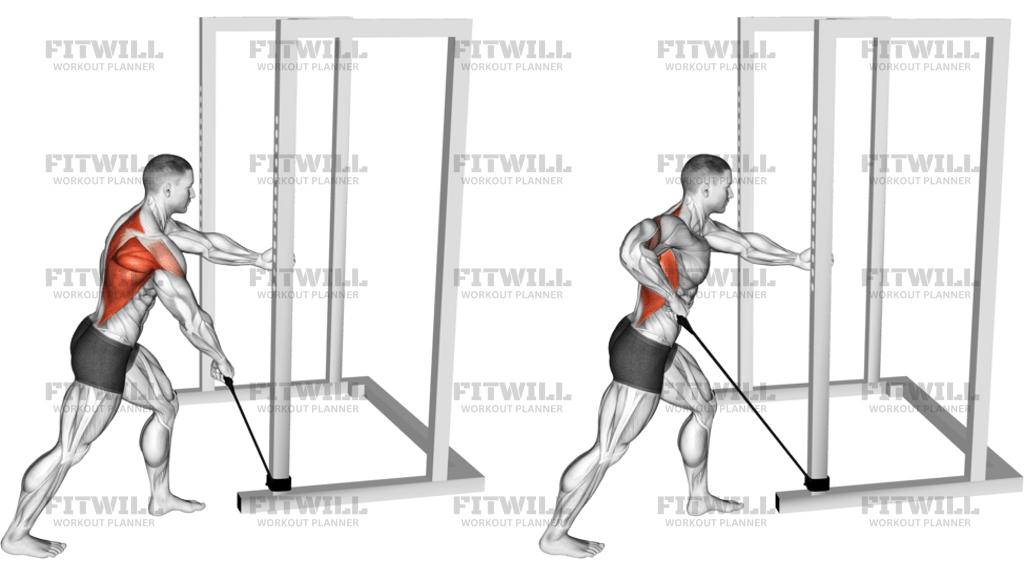
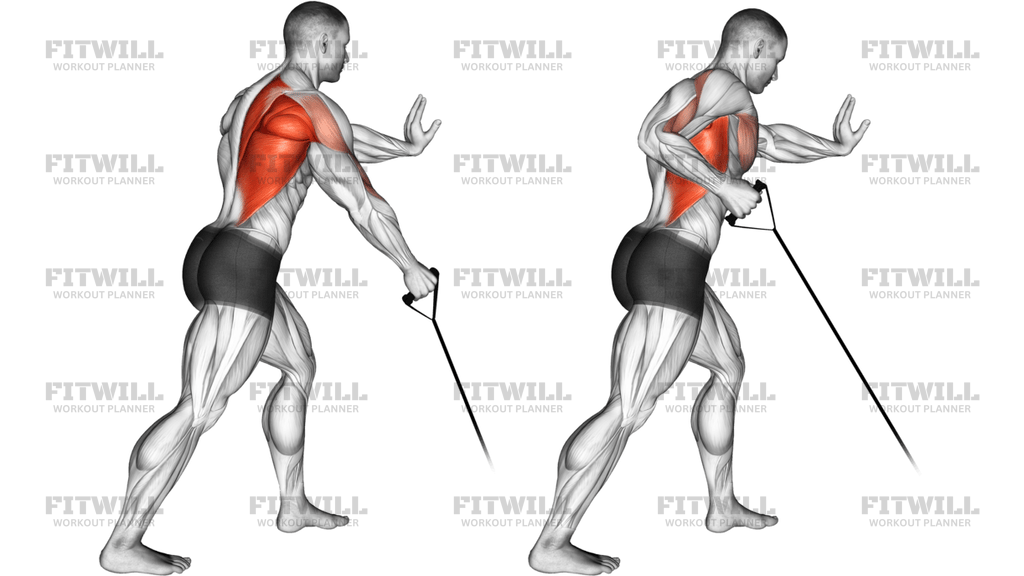
Band One-Arm Standing Wide-Grip Low Row is a single-arm band row performed from a low anchor with a split stance and a support hand on the rack or upright. The line of pull starts near the floor and travels back and slightly out, so the exercise trains the lats, upper back, biceps, and grip while also asking the torso to resist rotation. The wide elbow path makes it feel different from a tucked row: you still want the back to do the work, but the shoulder blade has to move cleanly and the trunk has to stay square.
The setup matters because the band changes tension fast. Stand far enough from the anchor that the band is already loaded at the start, then hinge slightly so your chest is long, ribs are stacked, and the working shoulder can reach forward without dumping your posture. In the image, the nonworking hand is braced on the upright for balance; that support should steady you, not turn the rep into a twist. Keep the stance staggered, with the front leg doing most of the bracing and the hips staying level.
Each repetition should begin with a long arm and a controlled reach toward the anchor, then a strong pull of the elbow back and a little out toward the lower ribs or side seam. Think about sliding the shoulder blade back and down while the wrist stays neutral and the elbow finishes behind the torso. The band should stay under tension the whole time, and the return should be slow enough that you can feel the back lengthen without letting the shoulder roll forward or the torso drift.
This version of the row is useful when you want unilateral back work without a bench or heavy machine. It fits well in accessory work, corrective pulling, warmups for scapular control, or home sessions where a band is the main tool. Because the exercise is standing, it also exposes side-to-side differences in balance and rib control, which makes it a good choice when you want to clean up rotation or asymmetry.
Keep the set honest: if you have to lean, shrug, or yank the band to finish the rep, the resistance is too high or the stance is too short. A cleaner set usually comes from a lighter band, a slightly longer setup, and a pause at the squeezed position rather than from chasing a bigger range. Done well, the row should feel like a strong back contraction with the trunk staying quiet from start to finish.
[ Workout Log & Planner ]
Put your next workout in Fitwill
Keep your plan and training log ready when you are.


Instructions
- Anchor the band low and stand in a staggered stance with the working-side foot slightly back.
- Grip the band with the working hand and place the free hand on the upright or rack for balance.
- Hinge slightly at the hips so your chest stays long and your torso is angled forward.
- Keep your hips square, shoulders level, and neck relaxed before you start the pull.
- Let the working arm reach forward and down until you feel a stretch through the lat and upper back.
- Drive the elbow back and slightly out, pulling the band toward the outside of your lower ribs.
- Finish with the shoulder blade back and down, without shrugging or twisting the torso.
- Pause for a beat, then lower the band slowly until the arm is long again.
- Keep tension on the band through the return and repeat for the planned reps before switching sides.
Tips & Tricks
- Set your feet far enough from the anchor that the band is already taut at the start of the rep.
- If your torso rotates toward the pulling arm, shorten the range or use less tension.
- Aim the elbow toward the lower ribs, not straight behind the shoulder, to keep the wide row pattern.
- Keep the support hand light; it should help balance you, not help you finish the rep.
- Do not let the shoulder ride up toward the ear at the top of the pull.
- Lower the band under control so the shoulder does not roll forward at the bottom.
- A brief squeeze at the finish usually works better than chasing a heavier band.
- If the setup feels awkward, step a little farther from the anchor and re-check your hinge before loading the next set.
Frequently Asked Questions
What does the wide-grip low row train most?
It primarily hits the lats, with strong help from the upper back, biceps, and forearms.
Why is one hand on the rack or upright?
The support hand helps you keep your torso steady so the row comes from the back instead of from body swing.
Where should the band be anchored?
Use a low anchor near the floor so the pull travels back and slightly out toward the lower ribs.
Can beginners do this row?
Yes. Start with a light band and a short, controlled range so you can keep the hips and ribs square.
What is the most common form mistake?
Leaning back or twisting the torso to fake the last few inches of the pull is the biggest one.
How is this different from a tucked one-arm row?
This version keeps the elbow a little wider, which shifts more demand to the upper back and rear shoulder while still training the lats.
Can I use a cable instead of a band?
Yes. A low cable with a single handle works well if you keep the same split stance and row path.
What should I do if I feel it in my low back or shoulder joint?
Reduce the resistance, shorten the reach, and keep the ribs stacked; if the joint pain remains, stop the set.