Side Bridge With Bent Leg
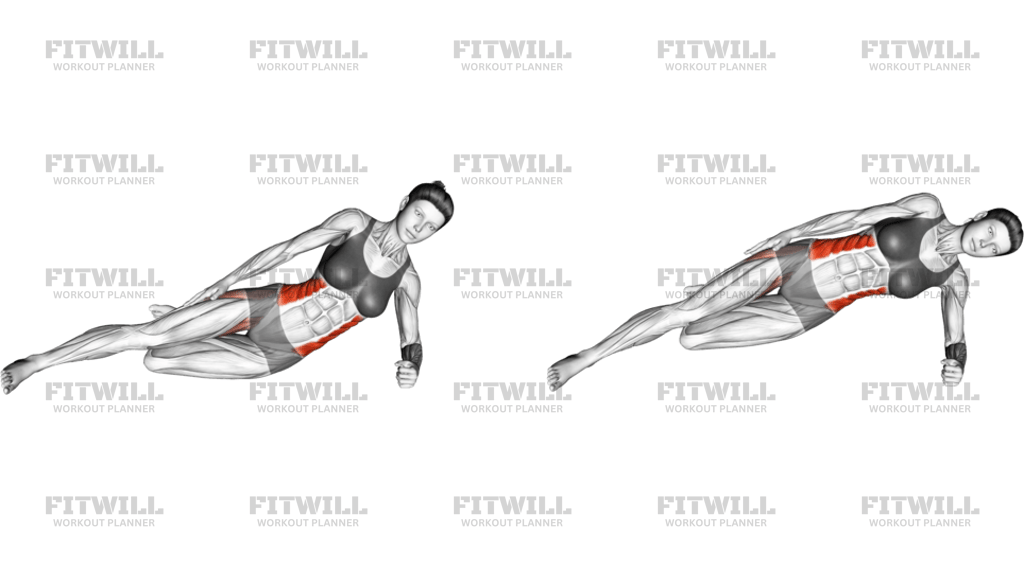
Side Bridge With Bent Leg is a bodyweight side-plank variation that trains the waist, hips, and shoulder to hold a strong side-supported position. The bent lower leg shortens the lever arm, which makes this version more approachable than a full side bridge while still demanding real work from the obliques and the small stabilizers around the pelvis.
This movement is useful when you want side-core strength without needing equipment. It teaches you how to keep the ribs stacked over the pelvis, resist rotation, and hold the trunk steady while the body is supported on one forearm and one bent leg. That makes it a practical choice for core circuits, warmups, and accessory work that builds control as much as strength.
The setup matters because a side bridge falls apart quickly if the elbow is too far from the shoulder or if the hips start twisted toward the floor. Lie on your side with the lower forearm planted firmly, the elbow under the shoulder, and the bottom leg bent for support. Keep the top leg long and active, then organize the torso before you lift so the waist, not the shoulder, does most of the work.
At the top of the rep, the goal is to make the body look long and quiet from the shoulder through the hips while the lower support stays solid. Press the floor away, lift the hips, and keep the pelvis level instead of hiking or rolling backward. Breathe in short controlled breaths behind the brace, then lower slowly enough to keep tension in the side of the trunk instead of collapsing onto the floor.
Side Bridge With Bent Leg is a smart option for beginners who need a shorter lever and for experienced lifters who want clean side-core volume without heavy loading. It also works well as a regression for longer side planks, as long as the shoulder and elbow stay comfortable and the neck stays relaxed. If the supporting shoulder pinches or the lower back takes over, shorten the hold, reset the stack, or use a thicker mat under the elbow and knee.
Fitwill
Log Workouts, Track Progress & Build Strength.
Achieve more with Fitwill: explore over 9600 exercises with images and videos, access built-in and custom workouts, perfect for both gym and home sessions, and see real results.
Start your journey. Download today!




Instructions
- Lie on your side on a mat with your lower forearm on the floor, your elbow stacked under your shoulder, and your bottom knee bent for support.
- Straighten your top leg along the floor, keep the foot lightly active, and line up your shoulders and hips before you lift.
- Press the forearm and the bent lower leg into the floor, then set your top hand on your hip or along your side for balance.
- Brace your obliques and glutes, then lift your hips until your torso is long and your waist is no longer sagging toward the floor.
- Keep your ribs tucked and your pelvis level so your body does not roll forward or drift backward.
- Hold the top position briefly while breathing in short controlled breaths behind the brace.
- Lower your hips slowly until they almost touch down, keeping tension in the side of the trunk instead of dropping suddenly.
- Reset your shoulder, elbow, and bent-knee support before the next rep, then finish the set and switch sides.
Tips & Tricks
- Keep the elbow directly under the shoulder so the supporting arm stays stacked instead of drifting forward.
- Push through the forearm and the bent lower leg together; if the shoulder takes over, you are hanging on the joint instead of the side body.
- Keep the top leg long and active so the hips stay stacked and the torso does not twist open.
- A small pause at the top makes this exercise more effective than rushing through repeated hip lifts.
- If the lower back arches, lower the hips slightly and re-brace the ribs before lifting again.
- Use a folded mat or towel under the elbow and bent knee if the floor feels too sharp.
- Think about lifting the waist away from the floor rather than throwing the hips upward.
- Stop the set when the pelvis starts to sag or the body rotates toward the floor, even if the hold time is not finished.
Frequently Asked Questions
What muscle does Side Bridge With Bent Leg target most?
The obliques do most of the work, with the hips, deep core, and shoulder stabilizers helping you keep the side bridge stacked.
Can beginners perform this exercise?
Yes. The bent-leg support shortens the lever and makes Side Bridge With Bent Leg easier to learn than a straight-leg side plank.
Where should my elbow be in Side Bridge With Bent Leg?
Stack the elbow directly under the shoulder. That keeps pressure out of the joint and makes it easier to hold the torso steady.
What should my top leg do during Side Bridge With Bent Leg?
Keep the top leg long and active instead of letting it drift forward or swing behind you. That helps the pelvis stay square and the waist stay engaged.
Why do my hips keep dropping in this side bridge?
Usually the side of the trunk is tiring before the hold is over. Shorten the hold, lift only as high as you can control, and reset the ribcage over the pelvis.
Should I feel Side Bridge With Bent Leg in my lower back?
Not much. The effort should stay mostly in the side waist and supporting hip; if the lower back dominates, lower the hips and re-stack the torso.
How can I make Side Bridge With Bent Leg harder?
Hold the top position longer, lower more slowly, or progress to a straight-leg side plank once you can keep this version perfectly stacked.
Can I use a mat or pad for Side Bridge With Bent Leg?
Yes. Padding under the elbow and bent knee can make the floor contact more comfortable without changing the exercise pattern.