Cable Bent-Over Neutral Grip Kickback With Rope Attachment
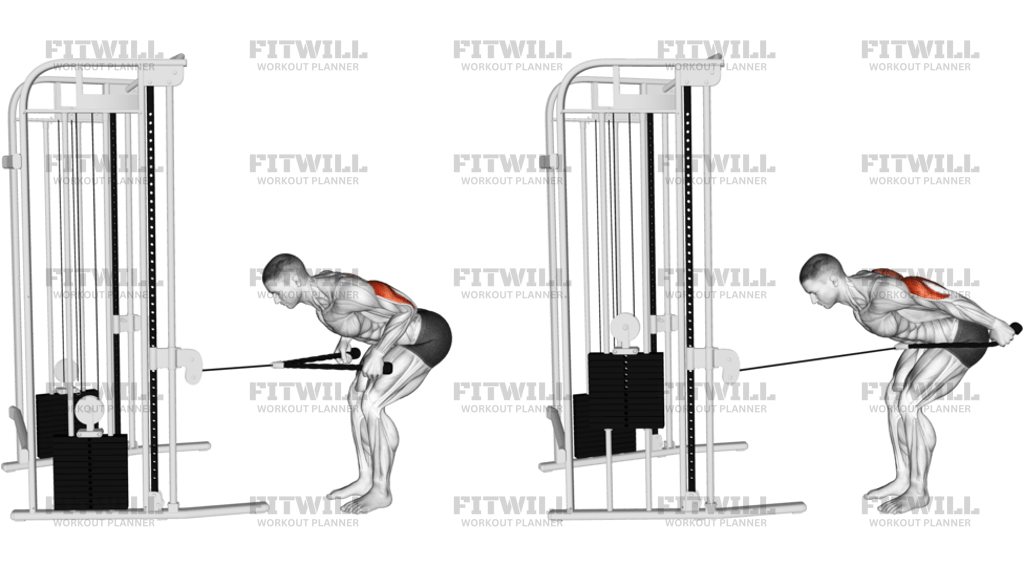
Cable Bent-Over Neutral Grip Kickback With Rope Attachment is a bent-over triceps isolation exercise performed on a cable machine with a rope attachment. The torso stays hinged forward while the upper arms remain close to the ribs, so the elbows can extend against constant cable tension instead of turning the rep into a full-body swing. That fixed hinge is what makes the movement useful: it keeps the resistance on the back of the upper arms through the whole range instead of letting momentum do the work.
This exercise is mainly used to load the triceps with a clean, controlled path. The bent-over body position also asks the shoulders, upper back, forearms, and trunk to keep the line of pull steady while the elbows open and close. If the torso rises, the elbows drift forward, or the wrists collapse, the cable stops training the triceps as directly and the set turns into a posture fight.
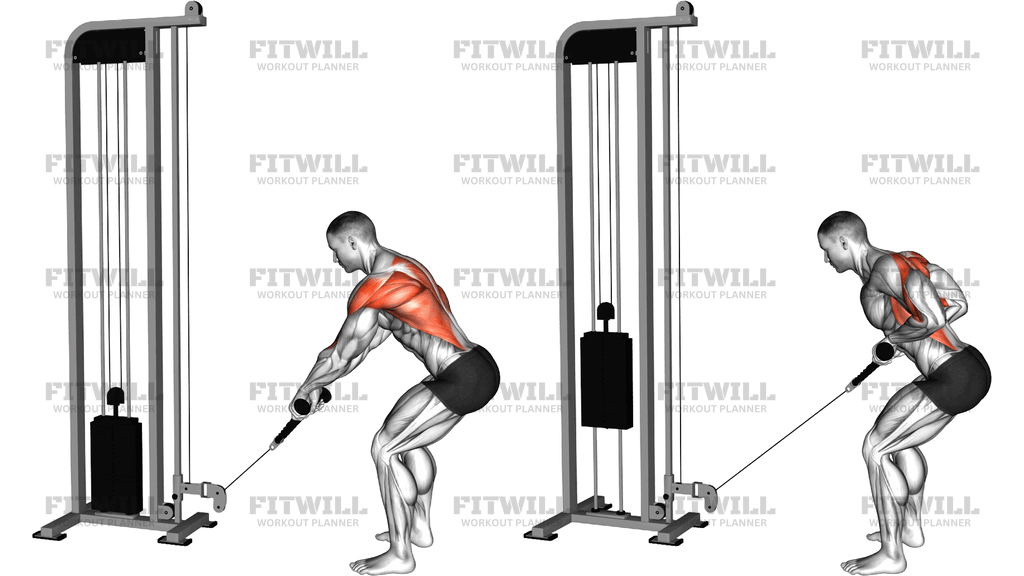
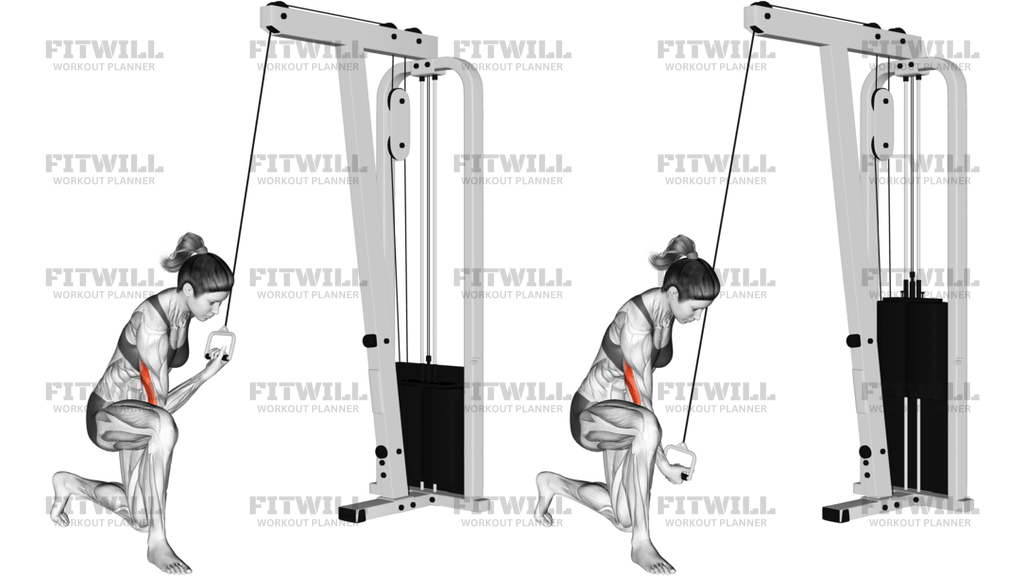
Setup matters because the line of pull should match the kickback path. Stand facing the machine, hinge at the hips, and keep a soft bend in the knees so the torso stays nearly parallel to the floor. Hold the rope with a neutral grip, keep the upper arms pinned near the sides, and start each rep with the elbows bent and the cable slightly loaded. From there, extend the elbows until the hands travel back beside the hips and the triceps fully contract.
Each repetition should feel crisp at the finish and quiet on the way back. Lock the upper arm in place, exhale as you extend, and return the rope under control until the forearms fold back to the start without the shoulders rolling forward. The goal is not a big range from the shoulder; it is a repeatable elbow extension driven by the triceps while the torso stays braced and still.
Use this movement as accessory work when you want direct triceps volume with low skill demand and minimal joint noise. It fits well near the end of an upper-body session, after pressing work, or in a higher-rep arm block. Choose a load that lets you keep the hinge, the elbow position, and the rope path consistent from the first rep to the last.
[ Workout Log & Planner ]
Put your next workout in Fitwill
Keep your plan and training log ready when you are.


Instructions
- Set the cable pulley low and attach a rope handle so you can face the stack with enough room to hinge forward.
- Stand with your feet about hip-width apart, bend your knees slightly, and hinge until your torso is nearly parallel to the floor.
- Grasp the rope with a neutral grip, keep your wrists straight, and bring your elbows close to your ribs.
- Start with the elbows bent and the cable already lightly tensioned so the first rep is smooth, not jerky.
- Brace your trunk and keep your chest pointed toward the floor while the upper arms stay fixed in place.
- Extend the elbows by driving the rope back until your hands travel behind your hips and the triceps fully contract.
- Pause briefly at the end of the kickback without shrugging or arching your lower back.
- Return the rope forward slowly until the forearms fold back to the start position and the cable remains under control.
- Repeat for the planned reps, breathing out on the extension and breathing in on the return.
Tips & Tricks
- Keep the upper arms pinned to your sides; if they swing behind you, the shoulders start stealing tension from the triceps.
- Use a light to moderate load so the rope moves cleanly and the torso does not rise as fatigue builds.
- Think about moving only at the elbows; the shoulders should stay quiet except for holding the hinge.
- Finish each rep by squeezing the rope apart slightly, which helps you lock out the triceps without snapping the elbows.
- Keep your neck long and your gaze down so you do not crane upward when the set gets hard.
- Do not let the wrists bend backward; a straight wrist keeps the rope line solid and reduces forearm strain.
- Slow the lowering phase so the cable does not pull your elbows forward between reps.
- If your lower back starts taking over, reduce the load or shorten the set rather than standing taller to cheat the motion.
Frequently Asked Questions
What does Cable Bent-Over Neutral Grip Kickback With Rope Attachment train most?
It mainly trains the triceps, especially the elbow-extension portion of the movement.
Why do I need to stay bent over during the set?
The bent-over hinge keeps the rope aligned with the kickback path and stops the movement from turning into a standing cable pushdown.
Should my elbows move during the rep?
They should stay tucked close to your ribs with only a small amount of natural motion. The main action is elbow extension, not shoulder swing.
How far back should the rope travel?
Extend until your hands are beside or slightly behind your hips and the triceps are fully contracted, but do not force the shoulders to move back with it.
Can beginners use this exercise?
Yes. It is beginner-friendly if the load is light enough to keep the hinge, elbow position, and return phase controlled.
What is the most common form mistake?
People usually stand up too much, let the elbows drift forward, or use momentum to snap the rope back.
Where does the rope attachment help compared with a straight handle?
The rope lets your hands separate slightly at the finish, which can make the triceps contraction feel more natural and complete.
When is the best place to program this exercise?
It works well after pressing movements or as a higher-rep arm accessory when you want direct triceps volume without a lot of joint stress.