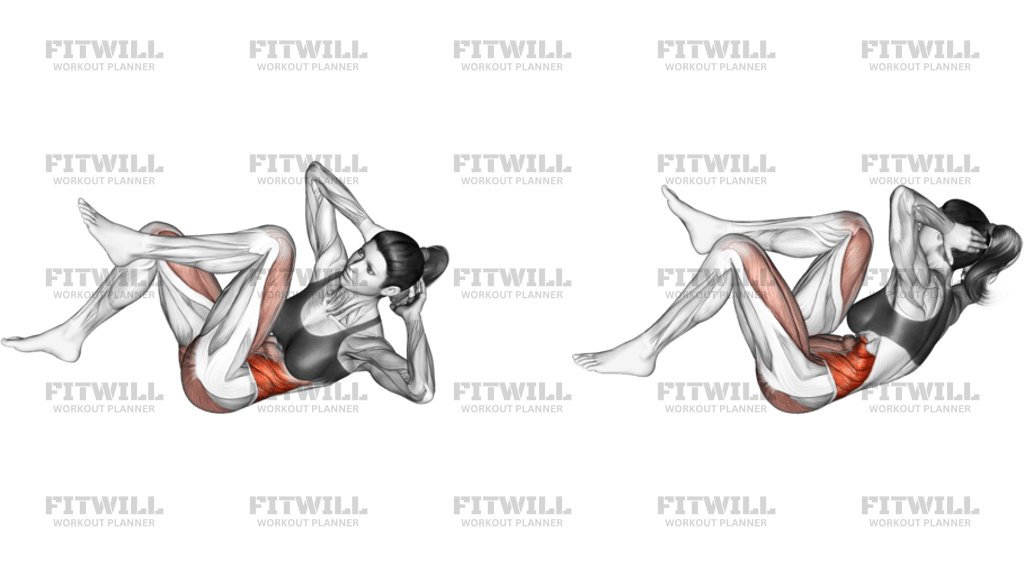
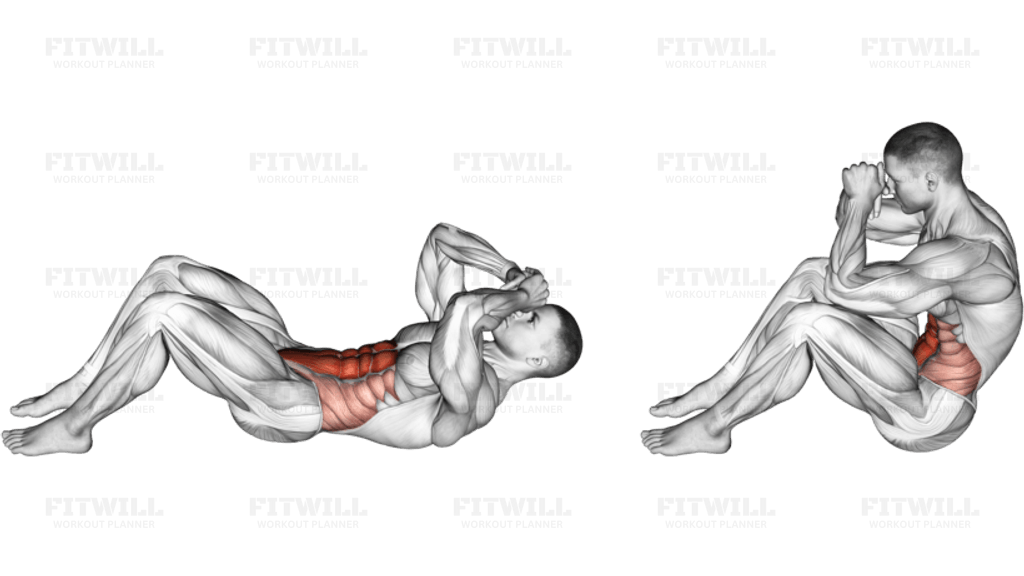
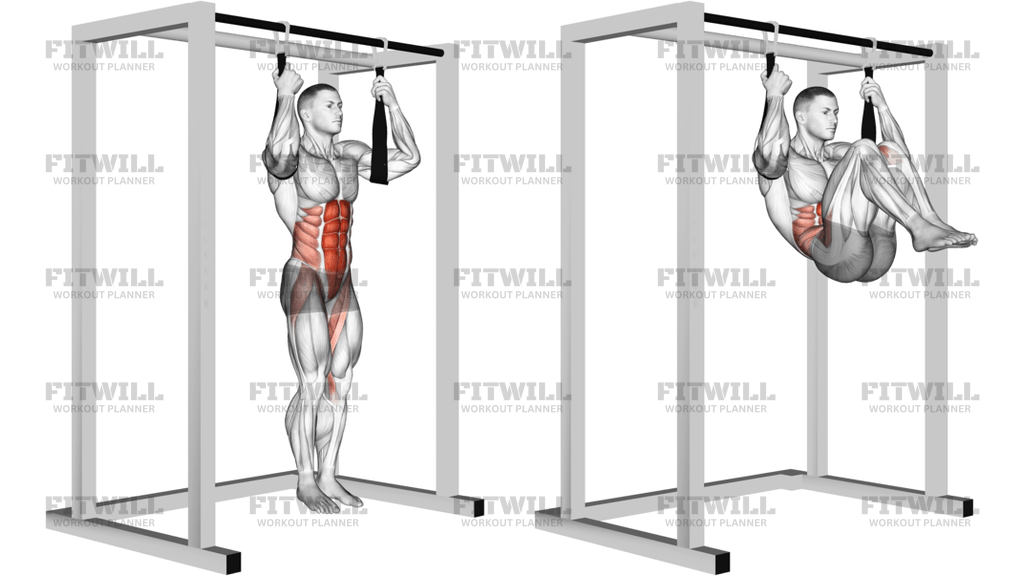
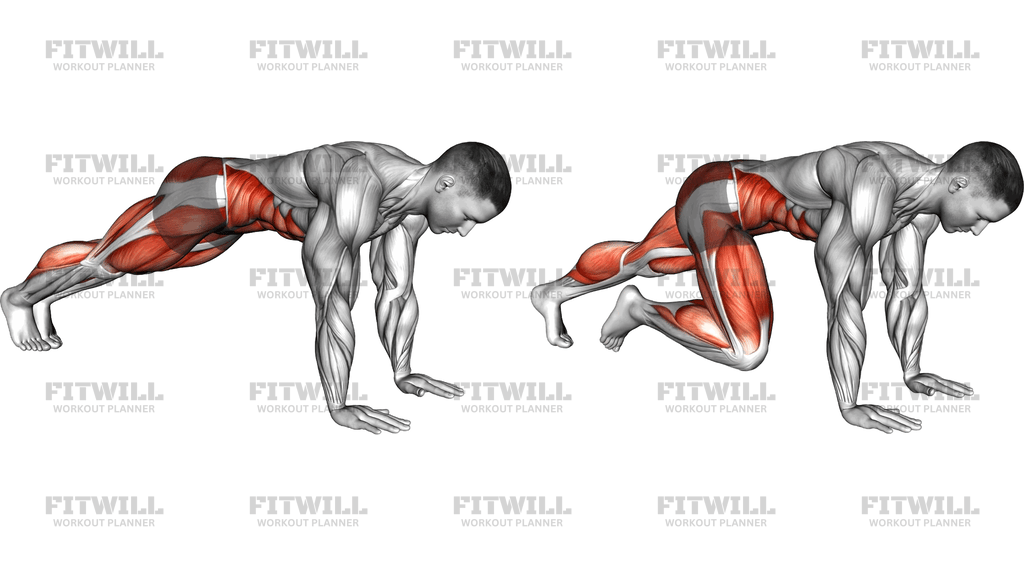
Flutter Kicks
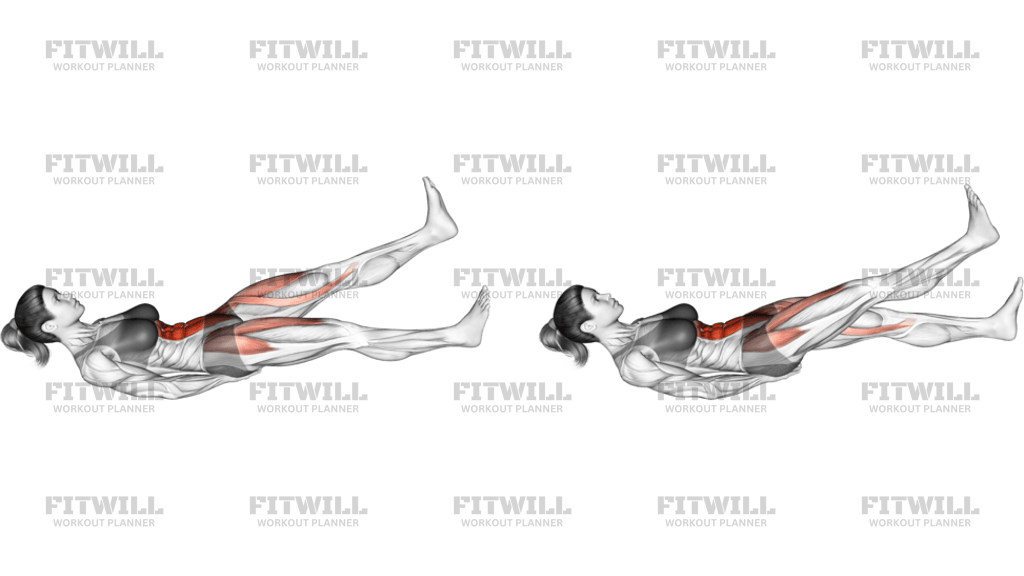
Flutter Kicks is a bodyweight floor exercise that challenges your core to stay quiet while the legs alternate in a controlled scissor pattern. The movement looks simple, but the real goal is to keep the pelvis steady and the lower back anchored while one leg rises and the other lowers. That makes it a useful drill for core endurance, abdominal control, and cleaner hip position.
The main work comes from the rectus abdominis, with the obliques and deep core helping keep the rib cage down and the pelvis from tipping forward. The hip flexors assist each leg change, but they should not take over the set. If they do, the movement usually turns into a fast leg swing with the low back arched off the floor instead of a controlled trunk exercise.
Lie on a mat with your arms long by your sides and your palms pressed into the floor. Keep your head relaxed, your gaze up, and your legs straight or only slightly bent if that helps you hold position. Before you start, exhale, draw the ribs down, and flatten the lower back enough that you can keep the torso still when the legs begin moving.
From there, lift both heels a few inches off the ground and start alternating the legs in a small, smooth scissor pattern. One leg lifts while the other lowers, and you switch before either heel rests on the floor. The best version of Flutter Kicks uses a tight range and steady rhythm, not a huge swing, so the abs keep tension instead of momentum taking over the set.
Flutter Kicks fit well in core finishers, conditioning circuits, warmups for bracing work, or any session where you want bodyweight abdominal endurance without equipment. They are also a good teaching tool for beginners learning how to hold the torso stable while the hips move. If the low back starts to lift, shorten the range, bend the knees slightly, or pause the set and reset before the next rep.
Control matters more than speed here. A clean set should feel focused in the abs and hip flexors, with the shoulders relaxed and the neck quiet throughout. When you can keep the pelvis steady from the first switch to the last, Flutter Kicks become a simple but demanding way to train lower-ab control and body position.
[ Workout Log & Planner ]
Put your next workout in Fitwill
Keep your plan and training log ready when you are.


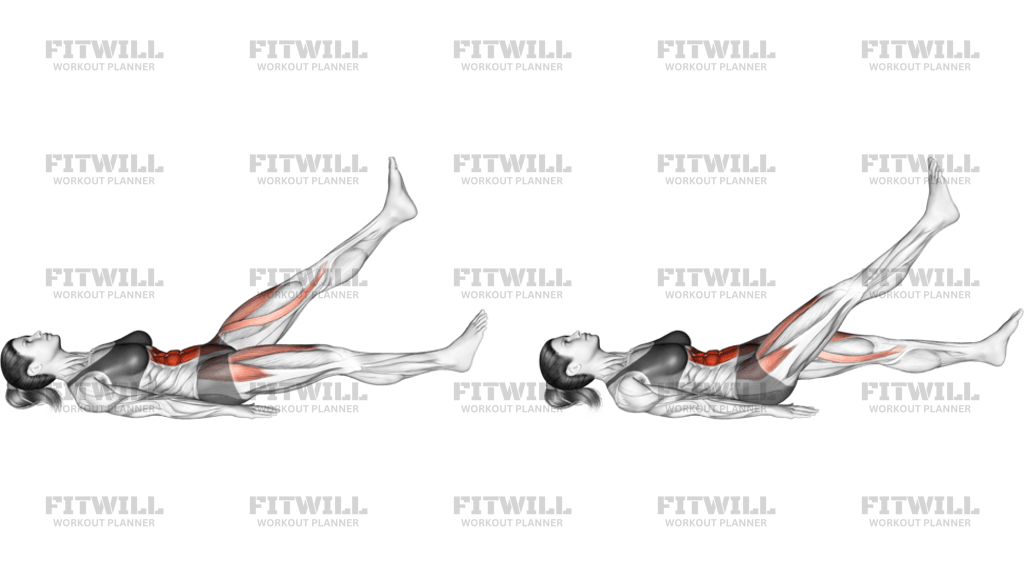
Instructions
- Lie on a mat with your arms long by your sides, palms down, and your legs extended straight in front of you.
- Press your shoulders and upper back into the floor, then lightly tuck your ribs down so your lower back stays close to the mat.
- Lift both legs a few inches off the ground and keep your feet off the floor before the first switch.
- Brace your abs, keep your chin neutral, and look up instead of curling your neck forward.
- Raise one leg as the other lowers, switching sides in a small scissor motion without letting either heel touch down.
- Keep the movement smooth and short so the legs hover instead of swinging from the hips.
- Exhale as you switch legs and keep the torso steady while the hips alternate.
- Continue for the planned time or reps, then lower both legs to the floor with control and rest.
Tips & Tricks
- Keep the kicks low and small; big leg swings usually mean the abs have stopped controlling the movement.
- If your lower back arches, lift the legs slightly higher and shorten the kick range instead of forcing the feet closer to the floor.
- Press your palms into the mat to stop your shoulders from creeping up toward your ears.
- Keep the knees mostly straight, but add a small bend if straight legs make your hip flexors cramp too quickly.
- Switch legs before the bottom heel fully drops so tension stays on the core instead of resting on the floor.
- Use a slower rhythm if the motion turns into momentum rather than alternating control.
- Stop the set when your ribs start to flare or your pelvis starts rocking side to side.
- Keep your neck long and relaxed; looking down at your feet usually pulls the head forward and adds strain.
Frequently Asked Questions
What muscles do Flutter Kicks work most?
Flutter Kicks mainly train the rectus abdominis, with the obliques, deep core, and hip flexors helping control the alternating leg motion.
Should my lower back stay on the floor during Flutter Kicks?
Yes. If your low back lifts, the set is usually too long or the legs are too low, so shorten the range or bend the knees slightly.
How high should my legs be in Flutter Kicks?
Keep them only a few inches off the floor, high enough to hold your lower back down but low enough to keep constant abdominal tension.
Are Flutter Kicks supposed to burn in the hip flexors?
Some hip flexor work is normal, but the abs should control the pelvis. If the front of the hips take over completely, reduce the range and slow the switches.
Can beginners do Flutter Kicks safely?
Yes, as long as they keep the legs higher, move slowly, and stop when the torso starts to arch or rock.
What is the best way to breathe during Flutter Kicks?
Exhale on each leg switch or every other switch, and keep the breaths short enough that your ribs stay down against the floor.
How can I make Flutter Kicks harder without adding equipment?
Slow the tempo, lower the legs a little while keeping the back flat, or extend the set time while preserving the same small scissor pattern.
What should I do if Flutter Kicks hurt my neck?
Keep your head resting on the floor, look straight up, and avoid curling the chin toward the chest. If needed, place a small folded towel under the head.