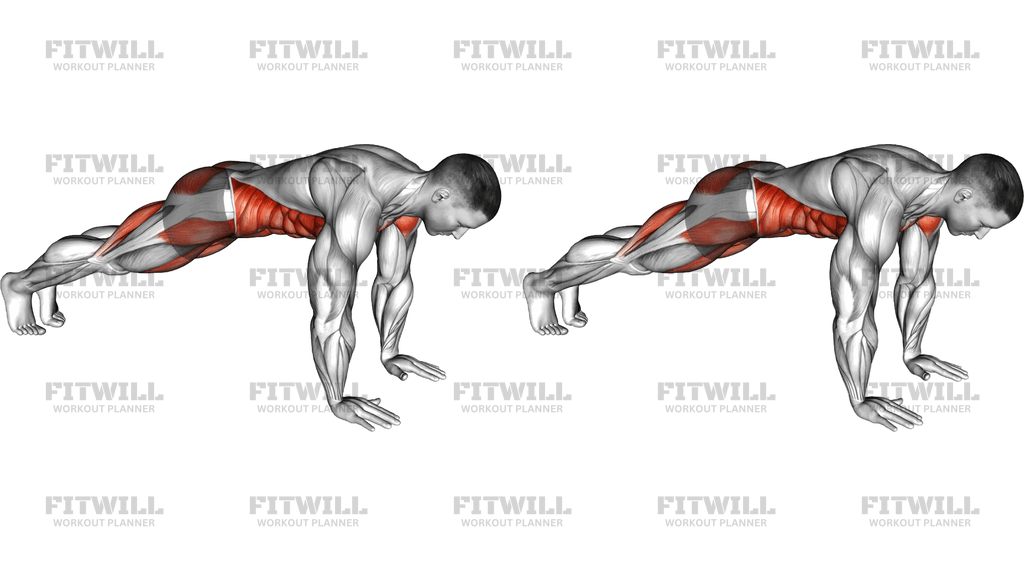
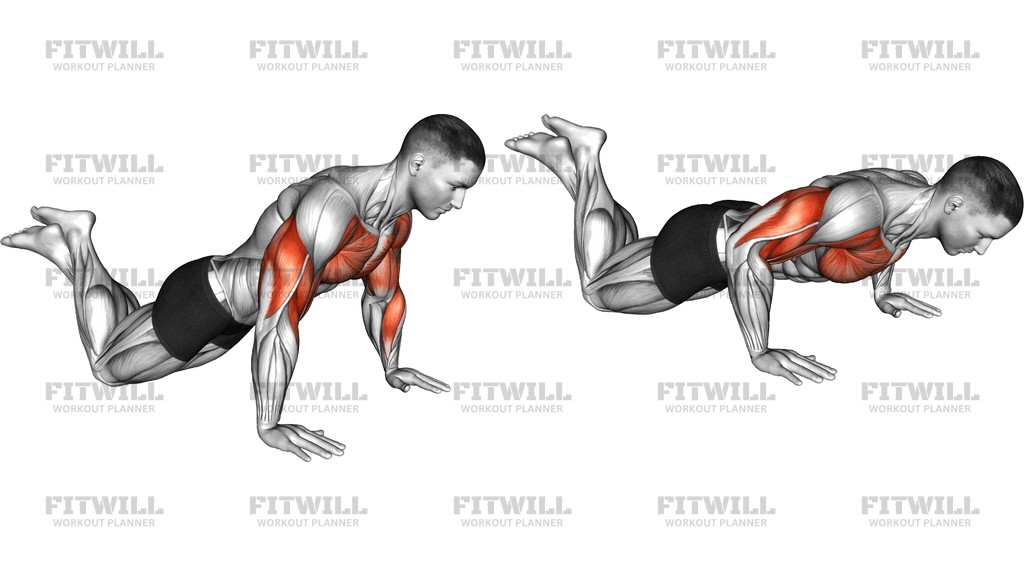
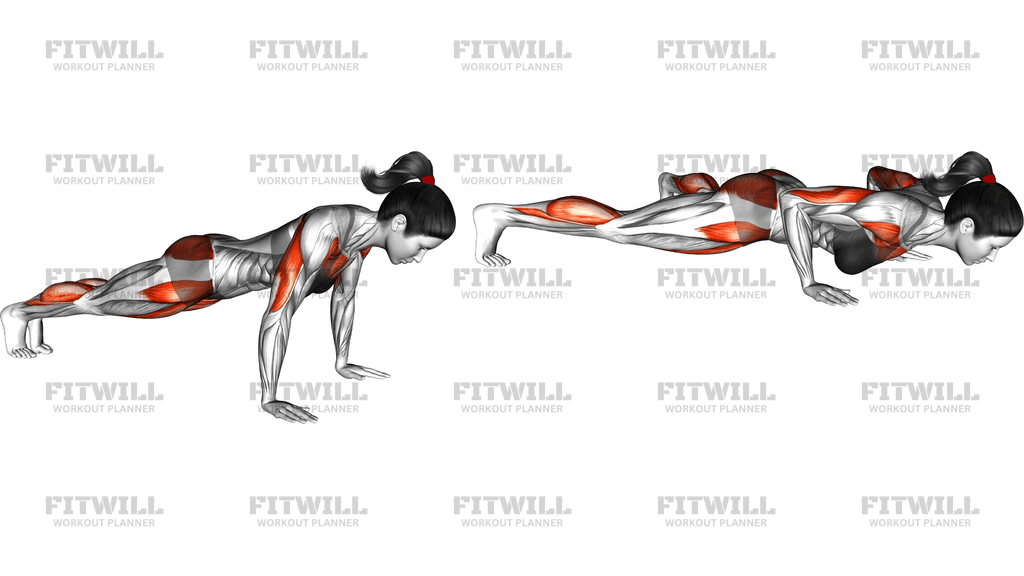
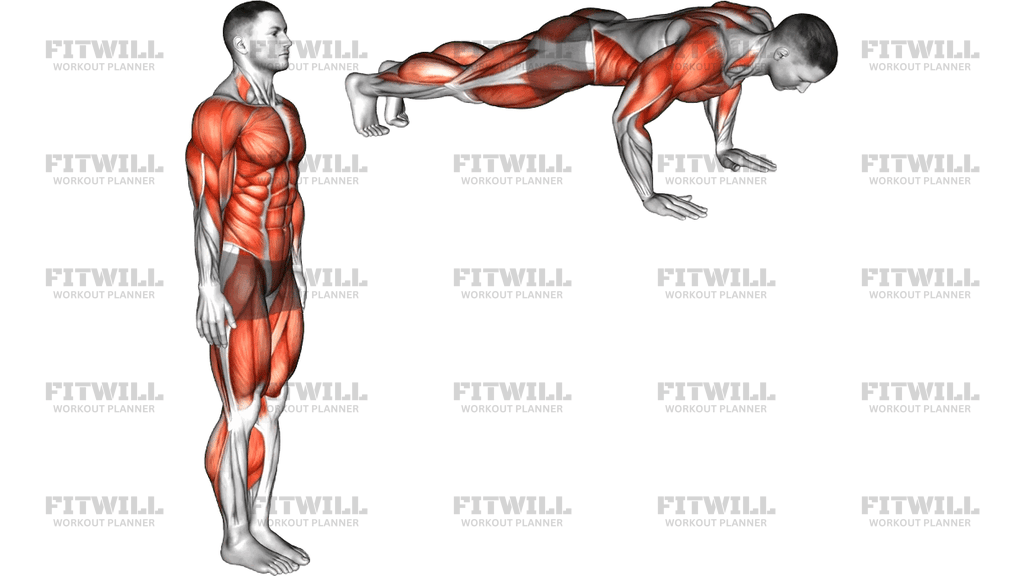
Kneeling Shoulder Tap Push-Up
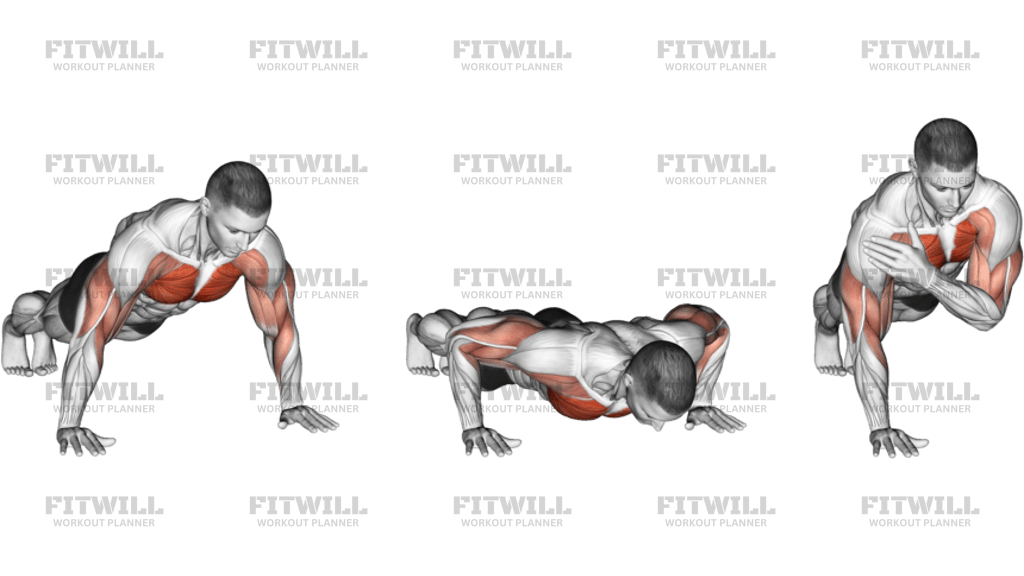
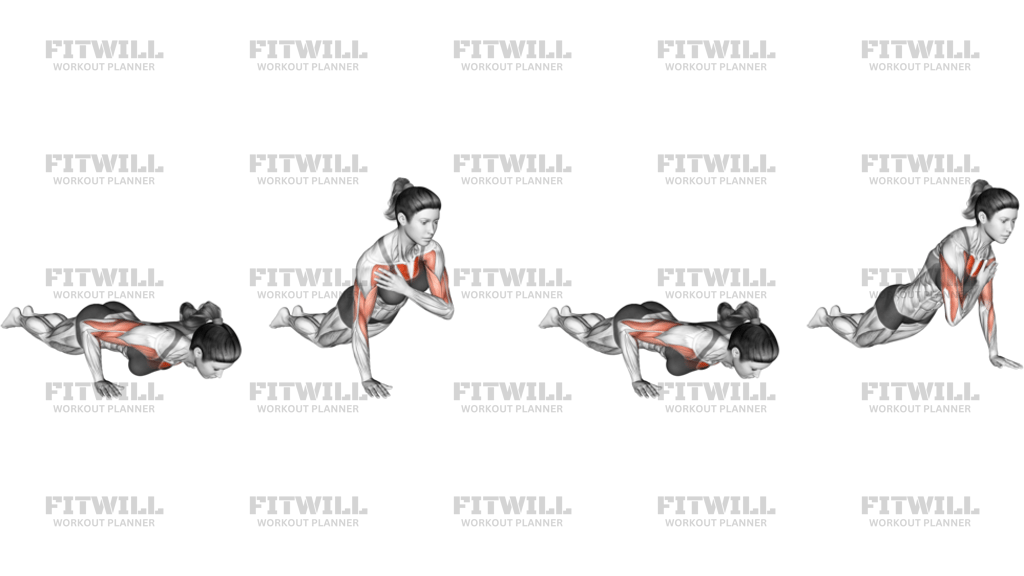
Kneeling Shoulder Tap Push-Up is a bodyweight pressing variation that combines a kneeling push-up with an alternating shoulder tap at the top. The knees stay on the floor, which lowers the load enough to practice solid pressing mechanics while still demanding control from the chest, shoulders, triceps, and trunk. It is a useful option when you want push-up work that is challenging but still lets you keep the rep honest from start to finish.
The main pressing action comes from the pectoralis major, with the anterior deltoids and triceps assisting as you lower and press. The shoulder tap adds an anti-rotation challenge, so the abs and obliques have to stop the torso from twisting when one hand leaves the floor. That makes setup important: if the hands are too far forward, the elbows flare, or the hips drift, the shoulder tap turns into a sloppy reach instead of a controlled stability drill.
Set the hands slightly wider than shoulder width, keep the shoulders stacked over the wrists, and stay tall through the chest while the knees rest on the mat. From there, lower under control until the chest is close to the floor, then press back up to a firm top position. The tap should happen only after the elbows are straight and the body is steady, with the free hand reaching across to the opposite shoulder without shifting the hips or letting the supporting shoulder collapse.
This exercise works well as a regression from a full push-up, a warm-up for upper-body pressing, or a core-and-chest accessory in circuits where clean repetitions matter more than load. Because one arm must support the body while the other hand moves, tempo matters more than speed. Smooth reps teach better shoulder positioning, better trunk control, and cleaner pressing mechanics than rushing through the tap.
Use a pad under the knees if the floor is hard, and shorten the range if the lower back starts to sag or the shoulders lose position. The goal is not to chase fatigue by grinding through ugly reps. It is to keep the torso quiet, the push smooth, and the shoulder tap crisp enough that each repetition looks the same from the first rep to the last.
[ Workout Log & Planner ]
Put your next workout in Fitwill
Keep your plan and training log ready when you are.


Instructions
- Kneel on a mat with your hands on the floor slightly wider than shoulder width and your shoulders stacked over your wrists.
- Extend your body into a straight line from head to knees, with the feet lifted or lightly crossed behind you.
- Brace your abs and keep your ribs down so your lower back does not arch before the first rep.
- Bend your elbows and lower your chest between your hands until your upper arms are near parallel to the floor.
- Press through both palms to return to the top position without letting your hips rock side to side.
- At the top, shift your weight into one hand and tap the opposite shoulder with the free hand.
- Place that hand back under the shoulder, re-establish your balance, and repeat the push-up before the next tap.
- Alternate shoulder taps from side to side for the planned repetitions while keeping the movement smooth and controlled.
- Inhale on the lower, exhale as you press and tap, and stop the set if you can no longer keep the torso steady.
Tips & Tricks
- Keep your hands just outside shoulder width so the press stays stable and the tap does not force the shoulders to drift too far forward.
- Think of the shoulder tap as a short balance check, not a big reach across your body.
- Squeeze your glutes lightly and keep the hips square so the torso does not rotate when one hand leaves the floor.
- Lower with the elbows angled about 30 to 45 degrees from the ribs instead of flaring them straight out.
- If the lower back starts to sag, shorten the rep depth before you try to add more taps.
- Use a mat or folded towel under the knees if the kneeling position bothers your kneecaps.
- Keep the neck long and look slightly ahead of your hands instead of craning the chin forward.
- Make the press slower than the tap so the chest and triceps do the work instead of momentum.
Frequently Asked Questions
What muscles does Kneeling Shoulder Tap Push-Up work most?
The chest is the main driver, with the shoulders, triceps, and core helping control the press and the shoulder tap.
Why add the shoulder tap after the push-up?
The tap forces you to resist torso rotation, so the exercise trains pressing strength and anti-rotation control at the same time.
Where should my hands be on the floor?
Set them slightly wider than shoulder width with the wrists under the shoulders so the kneeling push-up stays balanced.
Should my hips move when I tap my shoulder?
No. A small shift is normal, but the hips should stay mostly square and quiet while the supporting arm holds your body steady.
Is this easier than a full push-up?
Yes. Keeping the knees down reduces the load, which makes it a good regression or technique-focused version of a push-up.
Can I do the taps every rep?
Yes, but only if you can keep the top position stable. If the torso twists too much, reduce the tap frequency or remove the tap for a set.
What is a common mistake with this exercise?
Letting the elbows flare and the lower back sag is the most common problem. That usually means the set is too hard or the tempo is too fast.
How can I make it harder without changing the exercise?
Slow the lowering phase, pause at the bottom, or hold the top position a moment before each shoulder tap.