Shoulder Tap Push-Up
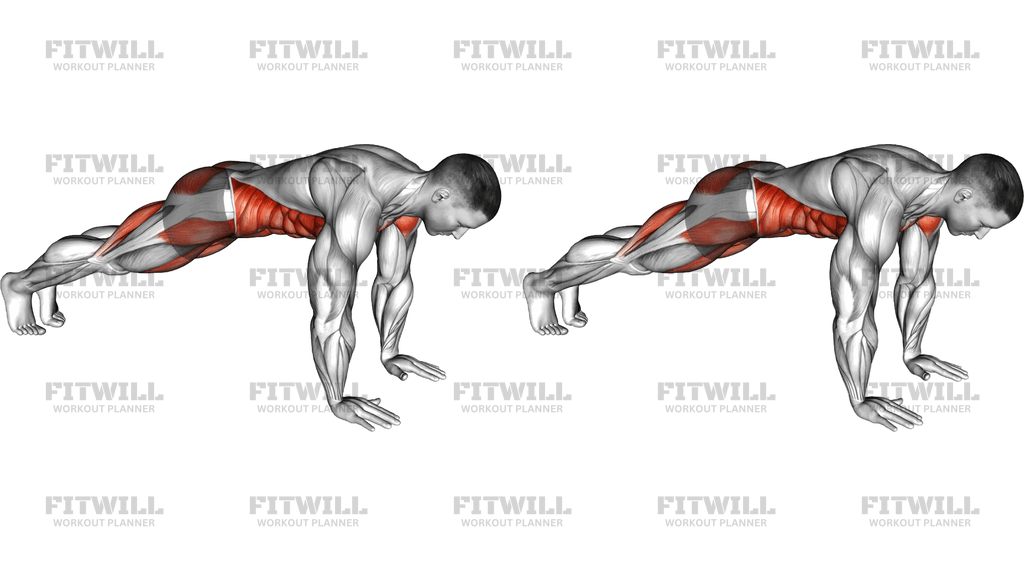
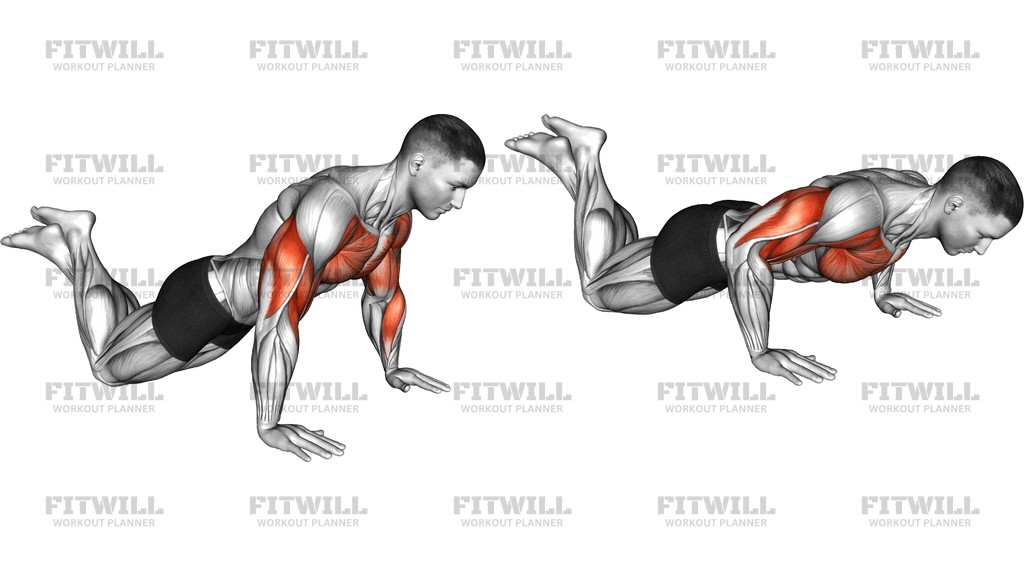
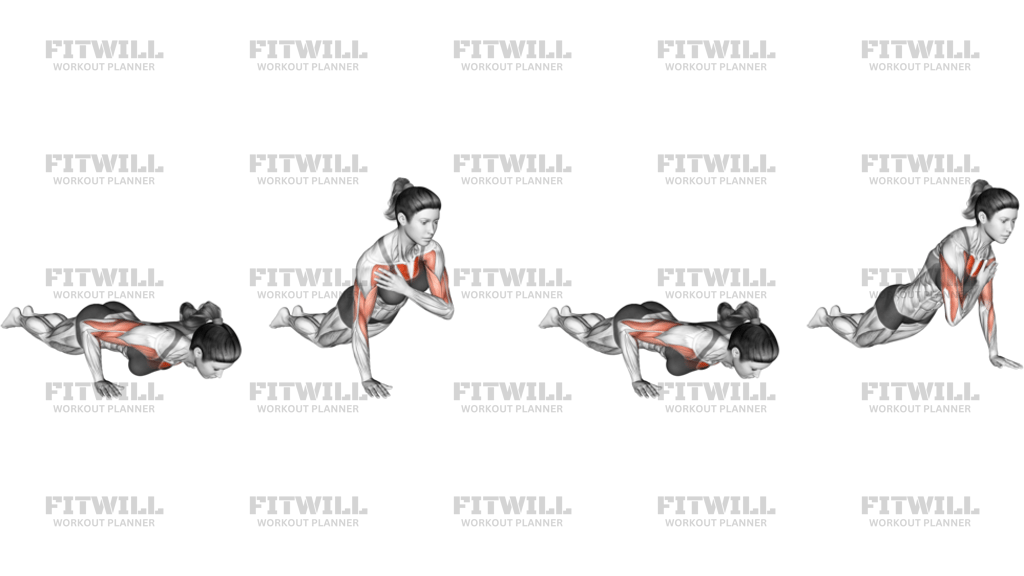
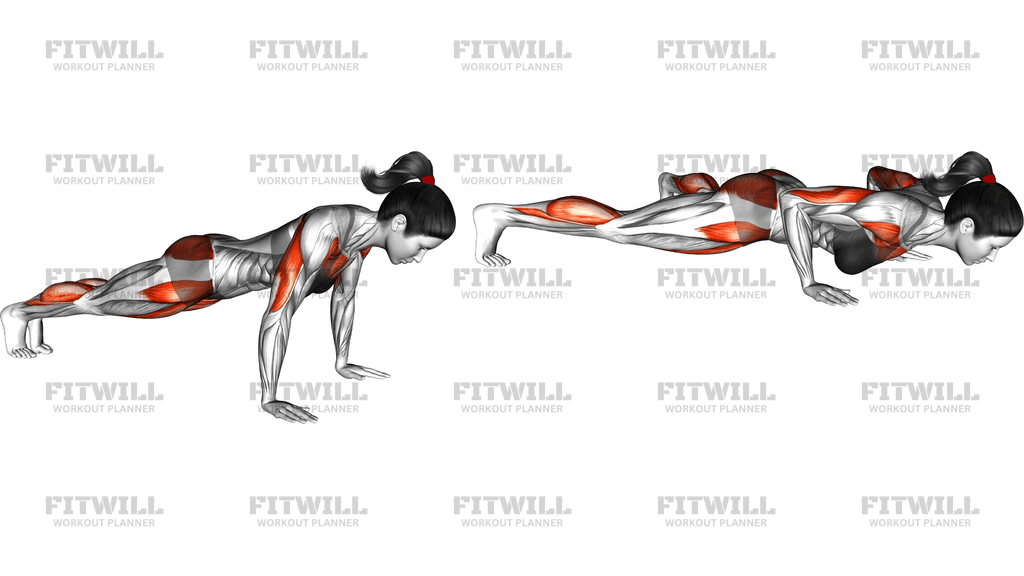
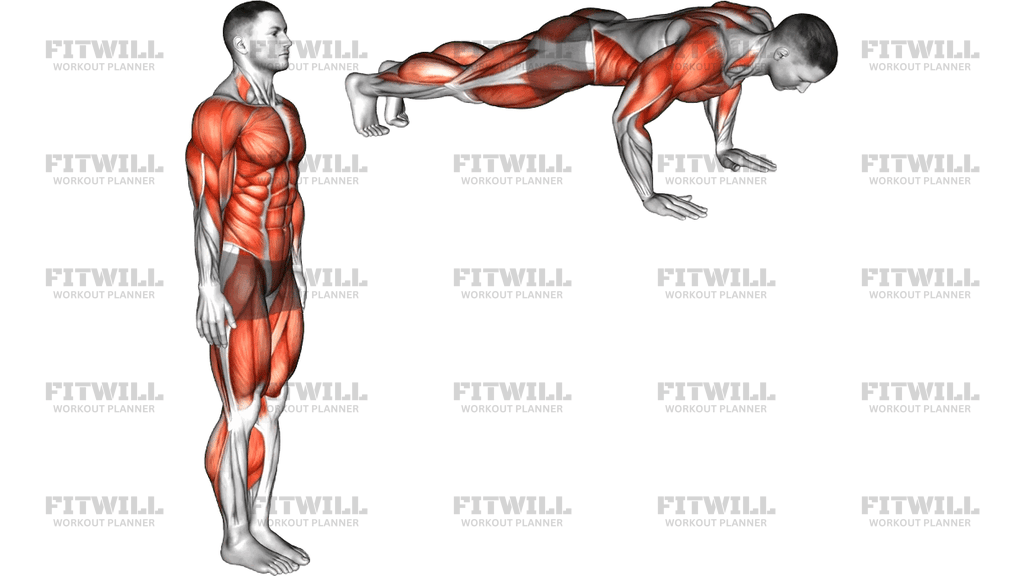
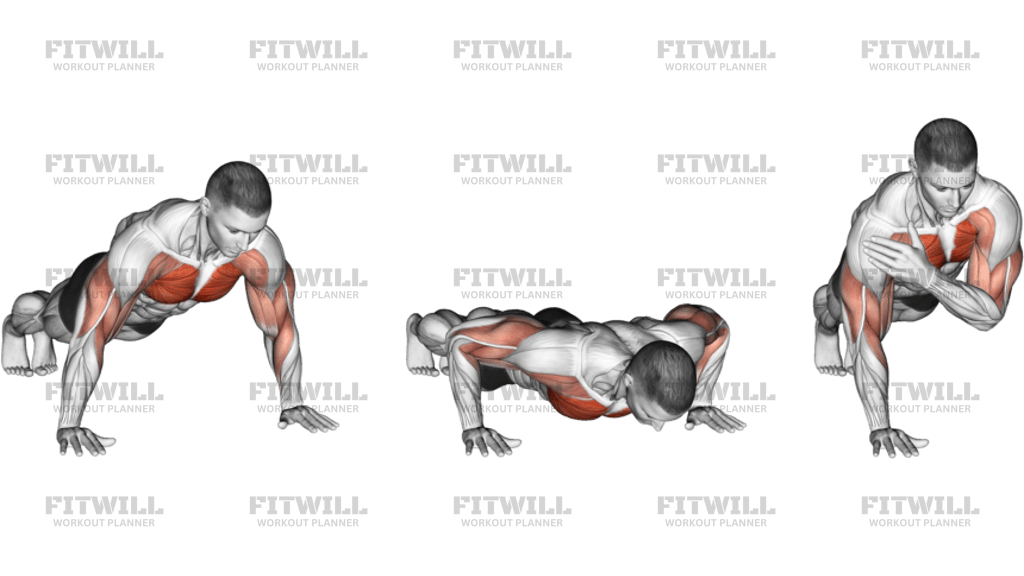
Shoulder Tap Push-Up is a bodyweight push-up variation that combines pressing strength with anti-rotation control. You lower through a standard push-up, press back to a strong high plank, and then lift one hand long enough to tap the opposite shoulder before switching sides. The movement asks your chest, shoulders, triceps, and core to stay organized while the rest of the body resists twisting.
That combination makes Shoulder Tap Push-Up useful when you want more than just pressing volume. The push-up portion trains the pectorals and triceps, while the shoulder tap adds extra work for the anterior deltoids and the trunk, especially the rectus abdominis and the muscles that keep the hips from swinging. If your torso shifts side to side, the set usually gets easier to feel but harder to control, which is why setup matters so much.
Start from a high plank with your hands planted under or slightly wider than your shoulders, fingers spread, feet set wide enough to keep the pelvis steady. A narrower stance makes the tap more challenging, but it also makes compensation easier if your shoulders or core are not ready yet. The best version of the exercise looks smooth: the body lowers as one unit, presses back to plank, then reaches for the tap without losing the line from head to heels.
The tap itself should be brief and deliberate. Shift your weight just enough to free one hand, touch the opposite shoulder, and return the hand to the floor under control before the next rep. If the hips rotate hard, shorten the range, widen the feet, or use an incline so the press stays clean and the tap does not become a balance scramble.
Shoulder Tap Push-Up works well in warm-ups, upper-body circuits, and core-focused sessions because it links pressing strength with trunk stability in one movement. It is a good option for athletes and lifters who need better plank control, but it should still be treated as a strict rep exercise, not a speed drill. Stop the set when the taps start turning into shifting, shrugging, or sagging through the lower back.
[ Workout Log & Planner ]
Put your next workout in Fitwill
Keep your plan and training log ready when you are.


Instructions
- Place your hands on the floor slightly wider than shoulder-width and walk your feet back into a high plank.
- Spread your fingers, stack your shoulders over your wrists, and keep your body in one straight line from head to heels.
- Set your feet wide enough to stay steady, then squeeze your glutes and brace your midsection before the first rep.
- Lower into a push-up by bending your elbows and bringing your chest between your hands.
- Press back up to a firm high plank without letting your hips sag or pike.
- Shift your weight onto one hand and tap the opposite shoulder with the free hand without rocking side to side.
- Return the tapping hand to the floor under your shoulder, re-stabilize the plank, and then repeat on the other side.
- Breathe in as you lower and exhale as you press and tap, keeping the rib cage from flaring.
- Finish the set by placing both knees down or stepping back out of the plank if your torso starts twisting or your lower back loses position.
Tips & Tricks
- A slightly wider foot stance makes the shoulder tap cleaner; narrow your stance only if you can keep the hips level.
- Touch the opposite shoulder briefly rather than leaning hard into the tap, or the set turns into a twist instead of a press.
- If full push-ups break down, use an incline bench or box so the tap stays controlled and the chest still gets a real press.
- Keep your elbows at a modest angle instead of flaring them straight out, which helps the shoulders stay stacked and stable.
- Pause a beat at the top plank before each tap so the rep starts from a quiet torso instead of a wobbling one.
- Do not let your head lead the movement; keep your gaze slightly ahead of your hands so your neck stays neutral.
- If your wrists feel overloaded, try push-up handles or perform the movement on a firm elevated surface.
- Stop the set when the tap turns into a full hip shift, because that is usually the first sign the core has lost control.
Frequently Asked Questions
What muscles does Shoulder Tap Push-Up work?
It mainly trains the chest, triceps, and shoulders, with the core working hard to keep the torso from rotating during each shoulder tap.
Is Shoulder Tap Push-Up beginner friendly?
Yes, if you start with a wide-foot high plank or an incline version. The tap adds instability, so beginners should earn the full floor version before narrowing the stance.
Should I tap the same-side shoulder or the opposite shoulder?
Tap the opposite shoulder with the free hand. That keeps the exercise balanced and makes the core work harder to resist rotation.
Why do my hips twist during Shoulder Tap Push-Up?
Usually the feet are too close together, the set is moving too fast, or the shoulders are not strong enough yet for the tap. Widen your stance and slow the rep down.
Where should my hands be in Shoulder Tap Push-Up?
Start with your hands under or just outside your shoulders, with fingers spread and wrists stacked under the line of force. That gives you a stable base for both the push-up and the tap.
Can I do Shoulder Tap Push-Up from my knees?
Yes. Keep a straight line from head to knees, perform the push-up cleanly, and still tap the opposite shoulder without shifting your pelvis side to side.
What is the biggest mistake to avoid?
Rushing the taps and letting the lower back sag. The rep should look like a controlled push-up with a brief, quiet shoulder tap at the top.
How can I make Shoulder Tap Push-Up harder without adding weight?
Bring your feet closer together, slow the tempo, add a pause at the top plank, or lower the incline until you are ready for the full floor version.