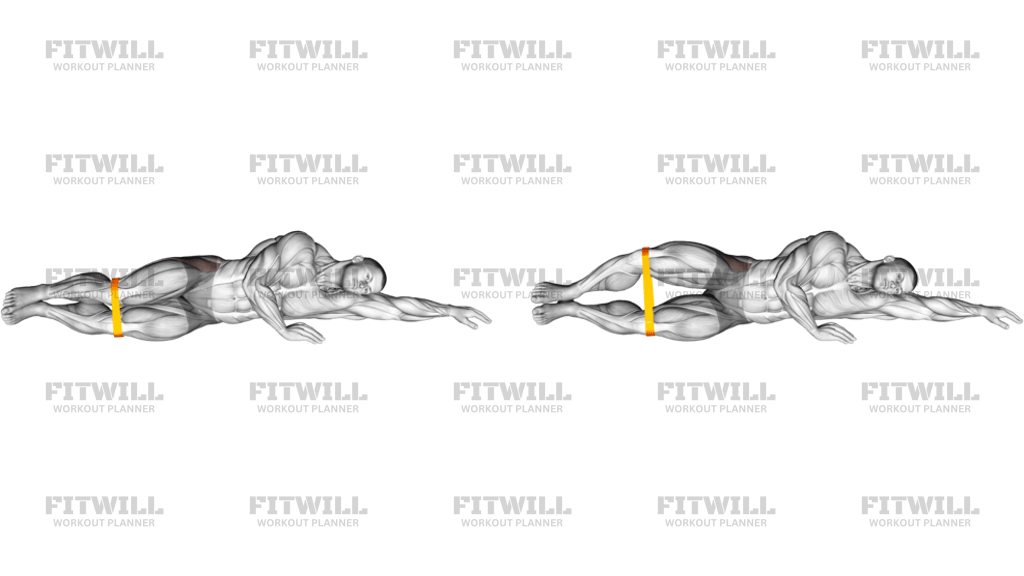
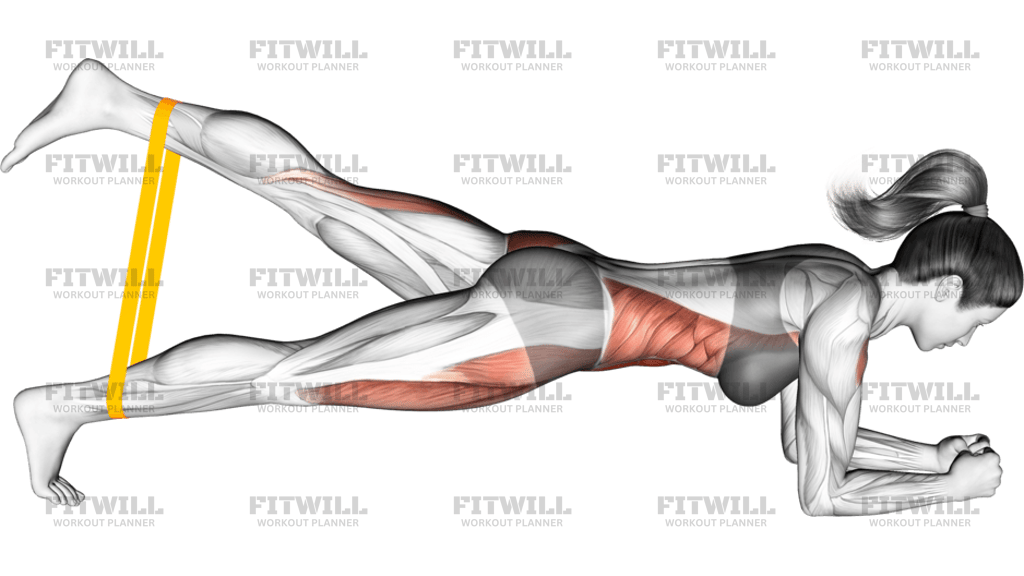
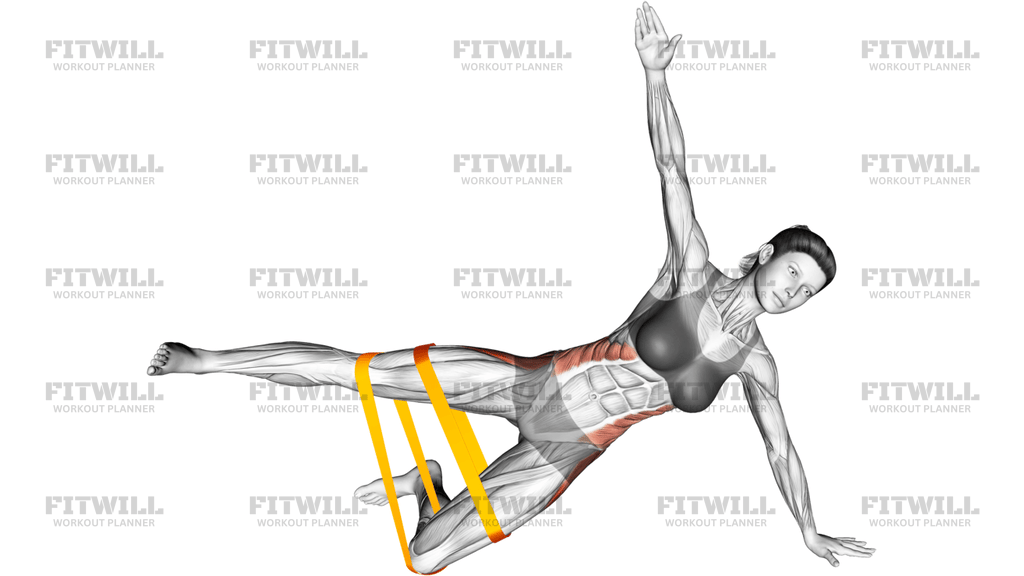
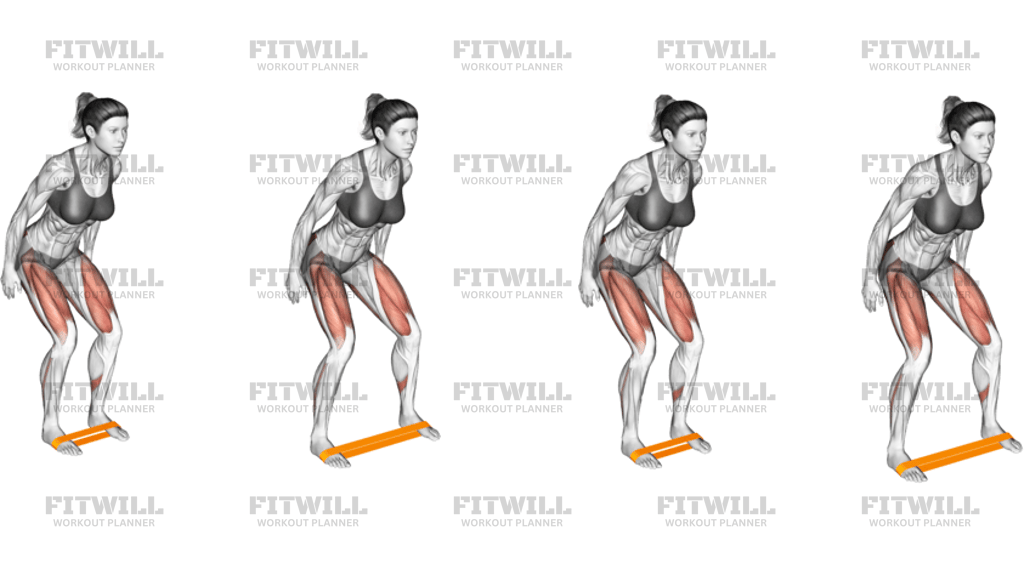
Bar Band Kneeling Single Leg Kick
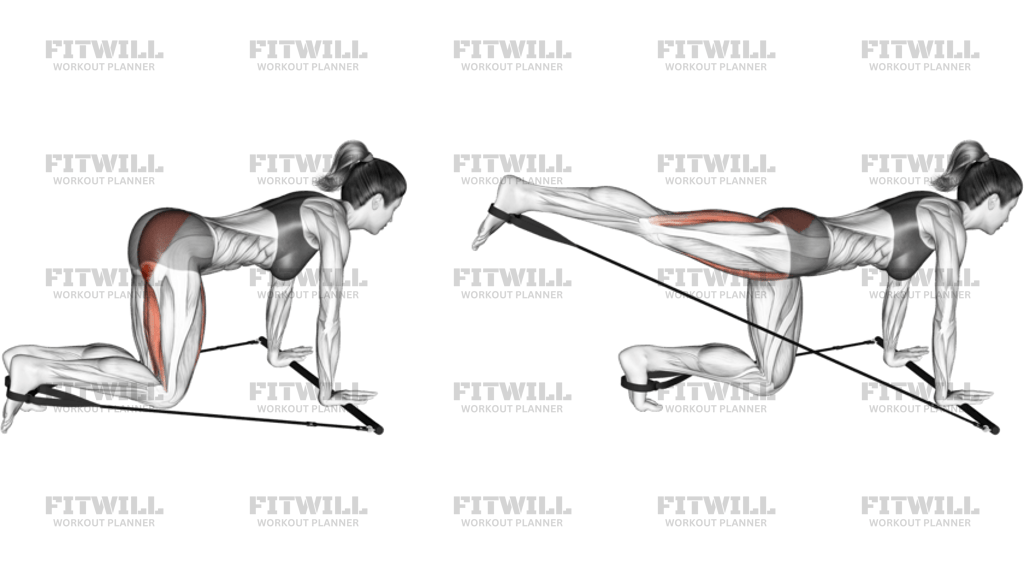
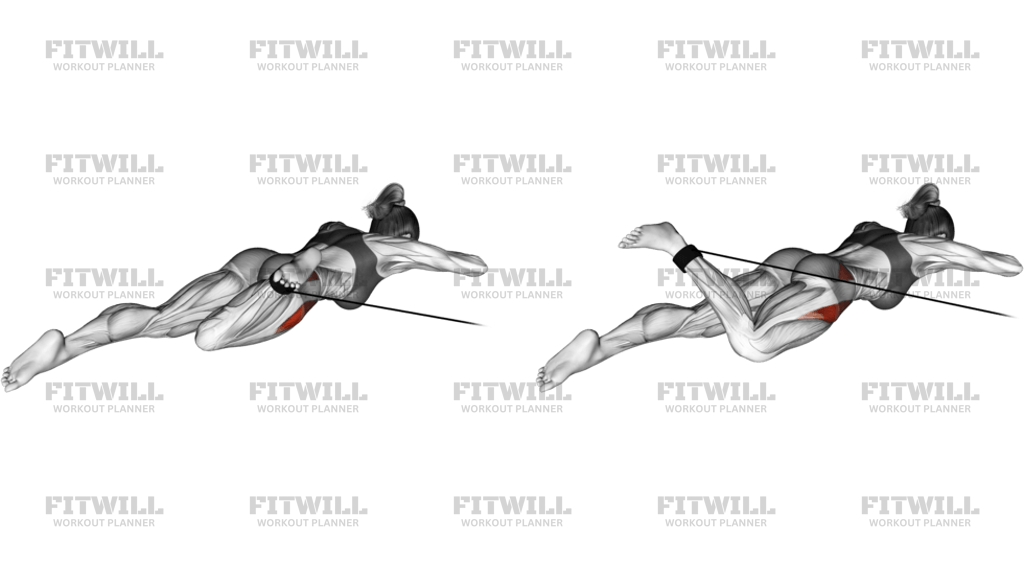
Bar Band Kneeling Single Leg Kick is a band-resisted glute exercise performed on the floor in a hands-and-knees position. The working leg drives back behind the body against the band while the torso stays quiet, so the movement loads hip extension instead of turning into a low-back swing. It is a useful option when you want direct glute work with less spinal loading than many standing or hinged lower-body movements.
The exercise primarily targets the glutes, with the hamstrings helping finish the kick and the core and lower back working to keep the pelvis level. In anatomy terms, the main mover is the Gluteus Maximus, with support from the Biceps Femoris, Rectus Abdominis, and Erector Spinae. That combination makes Bar Band Kneeling Single Leg Kick especially useful for improving single-leg hip extension strength and for teaching the hips to work without excessive lumbar movement.
The setup matters because the band tension and your kneeling position determine where the resistance peaks. Start on hands and knees with the shoulders stacked over the hands and the knees under the hips, then secure the band so it pulls from in front of the body toward the working foot. Keep the pelvis square to the floor, brace lightly through the midsection, and begin with the knee bent so the glute can drive the leg back without the lower back arching to create extra range.
Each repetition should feel like a controlled hip extension, not a swing. Press the foot back and up until the thigh is roughly in line with the torso or slightly higher if you can keep the ribs and pelvis still, then return slowly until the knee is back under the hip. A short pause at peak extension helps you feel the glute finish the rep and prevents the band from snapping the leg back into the start.
Bar Band Kneeling Single Leg Kick works well as accessory work, as part of a glute-focused warmup, or in a lower-body session where you want direct hip-extension volume without barbell loading. It is also a practical choice for lifters who need a simpler unilateral drill before progressing to harder single-leg hinges or thrust patterns. Keep the effort smooth, use a band that lets you stay square, and stop the set if the pelvis starts twisting or the low back takes over.
Fitwill
Log Workouts, Track Progress & Build Strength.
Achieve more with Fitwill: explore over 9600 exercises with images and videos, access built-in and custom workouts, perfect for both gym and home sessions, and see real results.
Start your journey. Download today!




Instructions
- Loop a band around one foot and secure the other end to a low anchor in front of you, then come onto your hands and knees with your shoulders over your wrists and your hips over your knees.
- Plant the supporting knee and both hands firmly on the floor, keep your back flat, and square your hips so they point straight down toward the mat.
- Bend the working knee to about 90 degrees and let the band start with light tension before you move.
- Brace your midsection just enough to keep your ribs from flaring as the leg drives back.
- Press the working heel back and slightly up until the thigh is in line with your torso or just above it.
- Squeeze the glute hard at the top for a brief pause without twisting the pelvis or arching the lower back.
- Lower the knee slowly back under the hip against the pull of the band.
- Keep your neck long and breathe out as you kick back, then inhale as you return to the start.
- Reset the knee under the hip before the next rep and repeat for the planned number of repetitions.
Tips & Tricks
- If your low back is moving more than your hip, shorten the kickback and stop at the point where the pelvis stays quiet.
- A lighter band that lets you keep the knee bent and the ribs stacked is more useful than a heavy band that yanks the torso around.
- Keep the supporting hand pressure even on both palms so you do not shift weight and rotate toward the working side.
- Think about driving the heel back, not lifting the foot higher; the glute should create the motion, not a big lumbar arch.
- Pause for a second at the top to remove momentum and make the glute finish the rep.
- Let the knee travel forward only until the band tension stays smooth; losing control on the way back usually means the band is too strong.
- Use a pad under the knees if the floor makes you shift or lean away from the working side.
- If hamstrings cramp early, reduce the range slightly and keep the shin moving with the thigh instead of trying to straighten the knee.
Frequently Asked Questions
What muscles does Bar Band Kneeling Single Leg Kick work?
It mainly works the glutes, with the hamstrings helping finish the hip extension and the core stabilizing the pelvis.
How do I set up the band for Bar Band Kneeling Single Leg Kick?
Anchor the band low in front of you and loop it to the working foot, then get on hands and knees so the band pulls straight along the line of the kickback.
Should my knee stay bent during Bar Band Kneeling Single Leg Kick?
Yes. Keep the knee bent so the motion stays centered on hip extension and does not turn into a straight-leg swing or a hamstring-dominant lift.
What is the biggest form mistake in Bar Band Kneeling Single Leg Kick?
The biggest mistake is arching the lower back or twisting the hips to get the leg higher. The pelvis should stay square while the glute drives the leg back.
Is Bar Band Kneeling Single Leg Kick good for beginners?
Yes, if the band is light and the range stays small enough to keep the torso stable. It is a good way to learn glute-driven hip extension.
How high should I kick my leg in Bar Band Kneeling Single Leg Kick?
Only as high as you can while keeping your ribs down and your hips level. A smaller, cleaner range is better than chasing height.
What can I use instead of Bar Band Kneeling Single Leg Kick?
A cable kickback, quadruped donkey kick, or single-leg glute bridge can fill a similar glute-focused role if you need a different setup.
Why does my low back feel Bar Band Kneeling Single Leg Kick more than my glutes?
That usually means the kick is too high or the band is too heavy. Shorten the range, keep the abdomen braced, and stop before the pelvis tips forward.