Bar Band Down To Up Twist
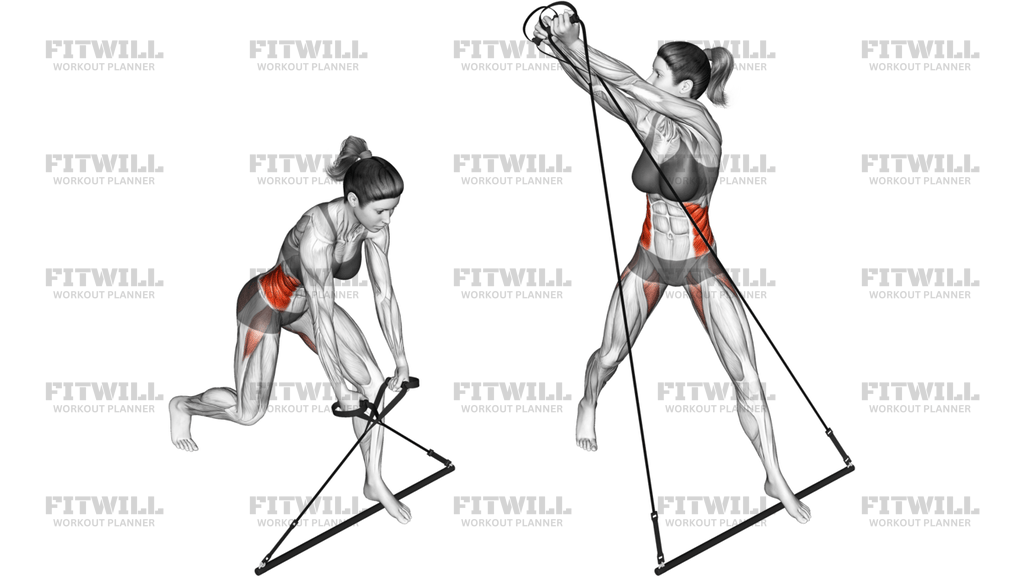
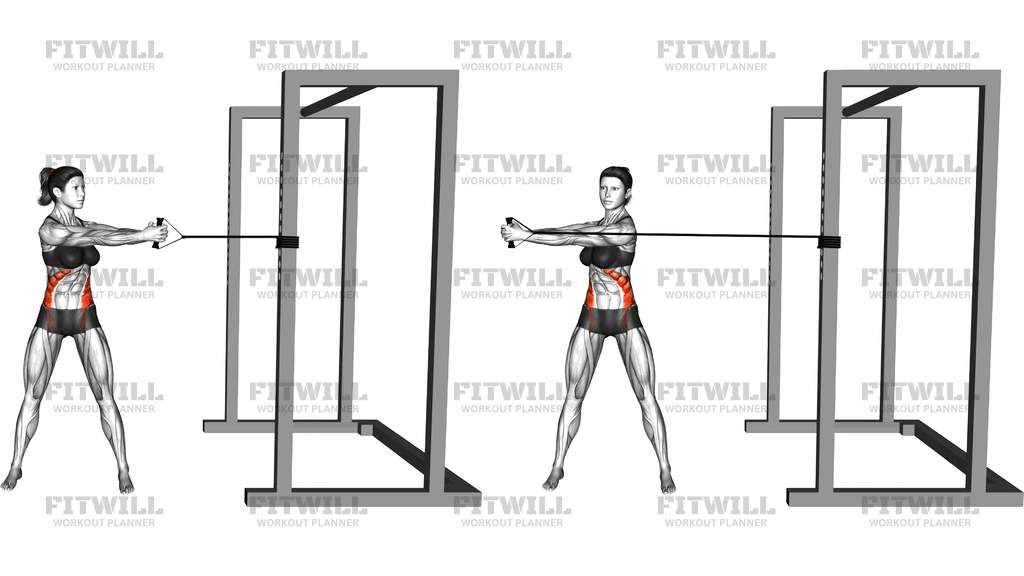
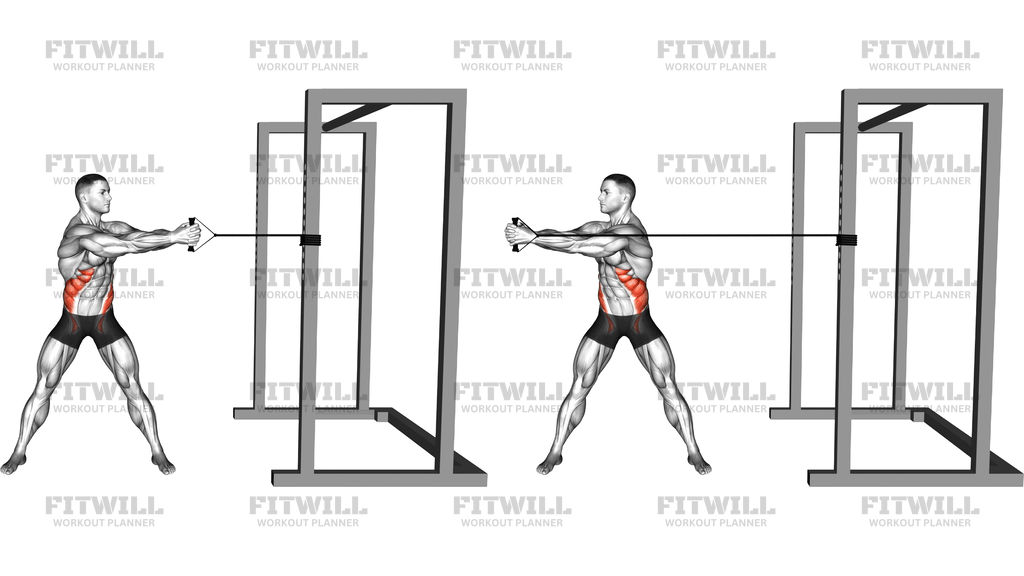
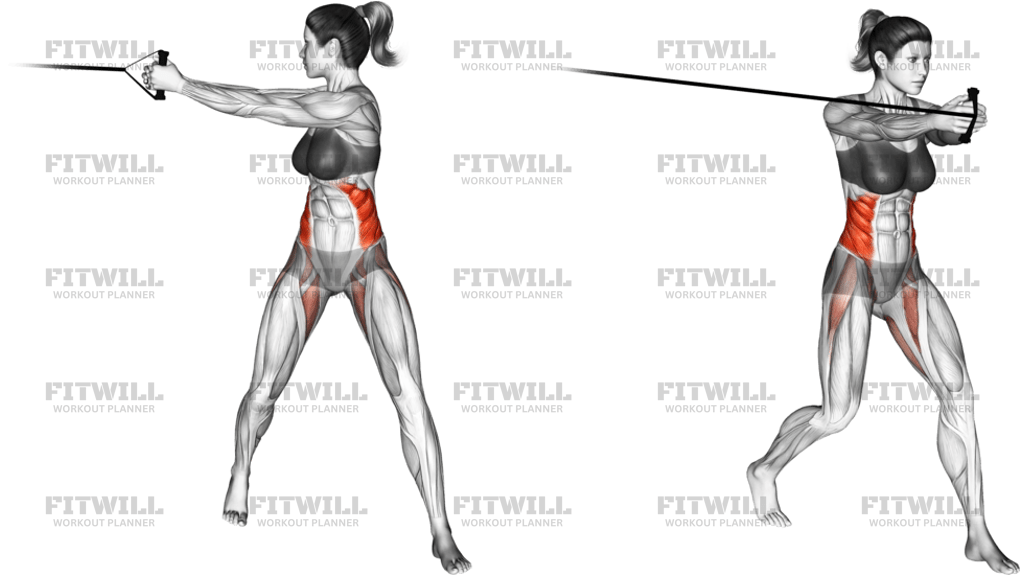
Bar Band Down To Up Twist is a low-to-high diagonal core exercise that trains the waist to resist and create rotation while the band pulls from below. The line of force starts near the front hip and travels up across the body, so the movement is less about swinging the arms and more about controlling the trunk, ribs, and pelvis together.
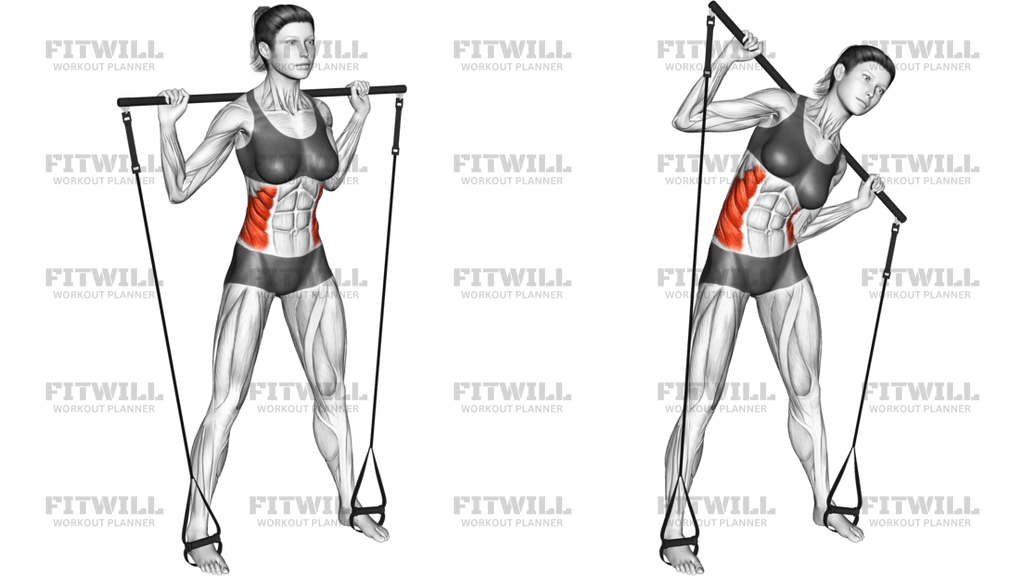
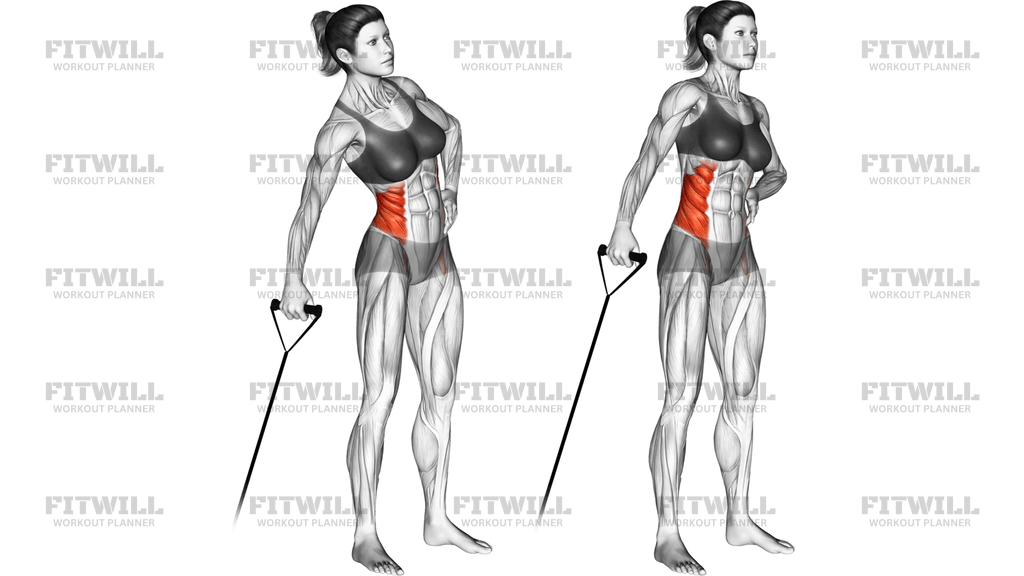
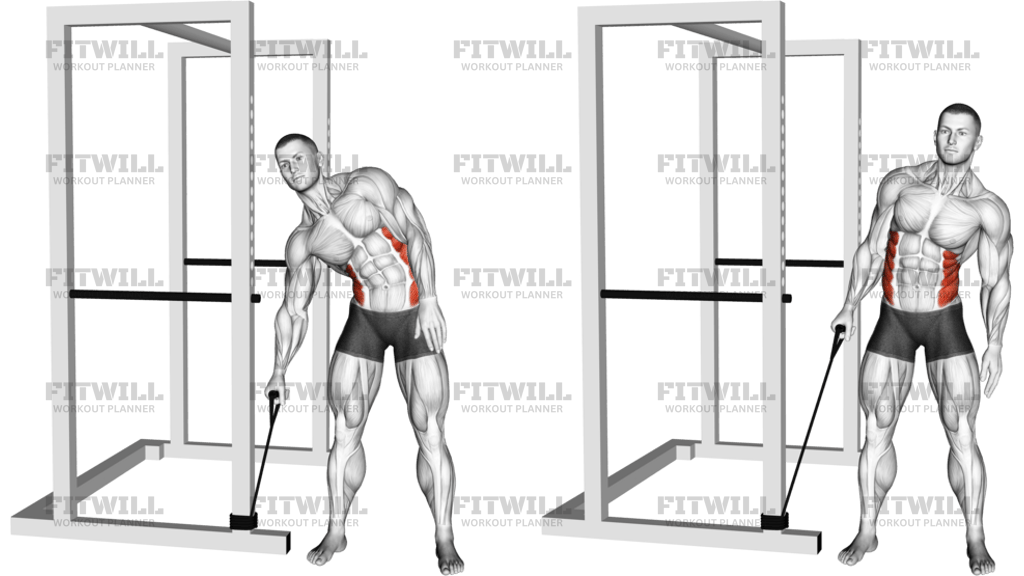
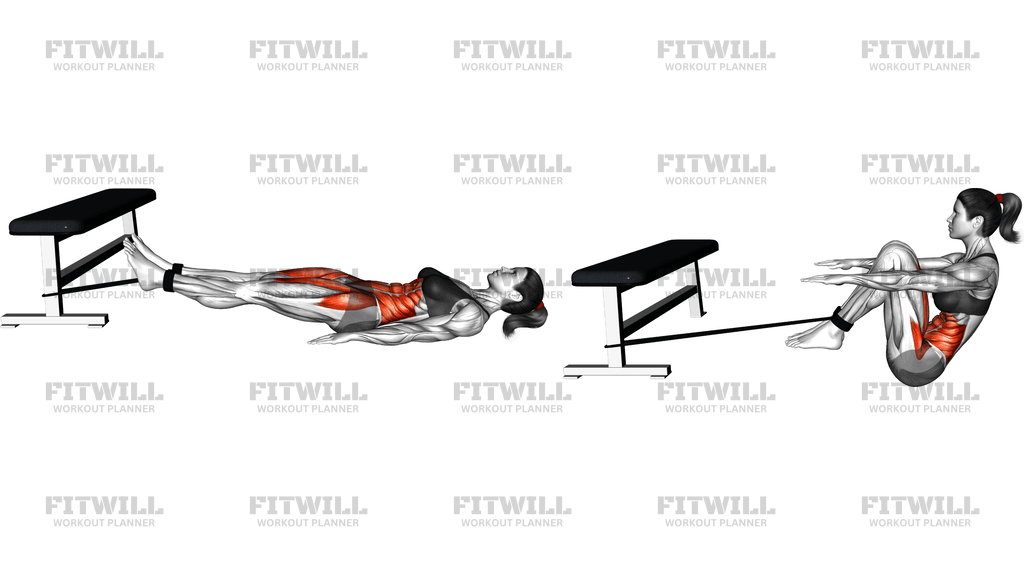
The image shows a half-kneeling start and a taller standing finish, which makes the exercise feel like a controlled chop or twist rather than a straight front raise. That setup matters. A low anchor gives the band a strong diagonal pull, and the staggered base keeps the torso from leaning or spinning early. The obliques do most of the work, with the abs, deep core, and lower back helping you stay stacked as the hands travel upward.
Use a stance that lets you keep your hips steady: half-kneeling for more support, or a split stance if you want a more athletic position. Start with the bar near the low outside hip, then pull and rotate the torso so the bar finishes high and away from the anchor. The path should be smooth and deliberate, with the ribs turning as one unit instead of the shoulders yanking ahead of the pelvis.
At the top, the body should look long, tall, and controlled, not arched backward. The finish is a twist and lift, not a lean. Lower the bar on the same diagonal under tension until you are back near the starting hip, then reset before the next rep. Exhale through the upward drive and inhale as you return so the trunk stays braced without becoming rigid.
This movement is useful when you want rotational core work that still respects control and joint position. It fits well in warm-ups, core circuits, accessory work, and sports preparation for athletes who need strong trunk transfer through the torso. Keep the load light enough to stay precise, because once momentum takes over, the exercise stops training the obliques and starts becoming a whole-body heave.
[ Workout Log & Planner ]
Put your next workout in Fitwill
Keep your plan and training log ready when you are.


Instructions
- Anchor the band low and to one side, then hold the bar with both hands near the low outside hip.
- Start in a half-kneeling or split stance with your chest angled slightly away from the anchor and your spine tall.
- Keep your front foot flat, back knee or rear heel grounded as shown, and square your hips before the first rep.
- Brace your midsection, then pull the bar diagonally up and across your body toward the opposite shoulder.
- Let the torso rotate with the arms, but keep the movement smooth instead of jerking from the hands.
- Finish tall with the bar high, ribs stacked over the pelvis, and no backward lean.
- Lower the bar back down along the same diagonal path until it returns close to the starting hip.
- Reset the trunk and breathe before the next rep, keeping each repetition controlled and repeatable.
Tips & Tricks
- Keep the band anchored low enough that the line of pull stays diagonal; if it is too high, the rep turns into a shoulder raise.
- Think about moving from the rib cage and waist, not just lifting with the arms.
- A half-kneeling setup makes it easier to feel the obliques without drifting through the hips.
- If your torso leans backward at the top, the load is too heavy or the anchor is too close.
- Keep both hands on the bar so the rotation stays even instead of pulling harder with one side.
- The return phase should be slower than the lift so the band keeps tension on the core.
- Let your eyes stay level and your neck relaxed; looking up hard usually adds unwanted extension.
- Stop the set when the bar starts swinging or your front knee and hip begin to twist out of position.
Frequently Asked Questions
What does Bar Band Down to Up Twist work most?
It mainly targets the obliques, with the abs and deeper core muscles helping you control the twist.
Should I do this in half-kneeling or standing?
Half-kneeling is easier for beginners because it limits hip sway. A split-stance standing version is better once you can keep the trunk steady.
Where should the bar start?
Start near the low outside hip, with the band pulling from below and to the side so the rep travels on a clear diagonal.
What is the biggest form mistake?
The most common error is turning it into a body swing by leaning back, shrugging, or yanking the bar with the arms.
Should my hips rotate too?
Some hip movement is normal, but the pelvis should stay much quieter than the ribs and shoulders. The goal is controlled trunk rotation, not a full-body spin.
Can I use this as core warm-up work?
Yes. Light resistance and crisp reps make it a good warm-up or accessory drill before heavier lifting or sport work.
How heavy should the band be?
Use the lightest tension that still challenges you to control the diagonal path without twisting off balance.
What should I feel at the top?
You should feel the obliques and upper trunk working, but the finish should still look stacked and tall, not cranked through the lower back.