Band Assisted Chin-Up
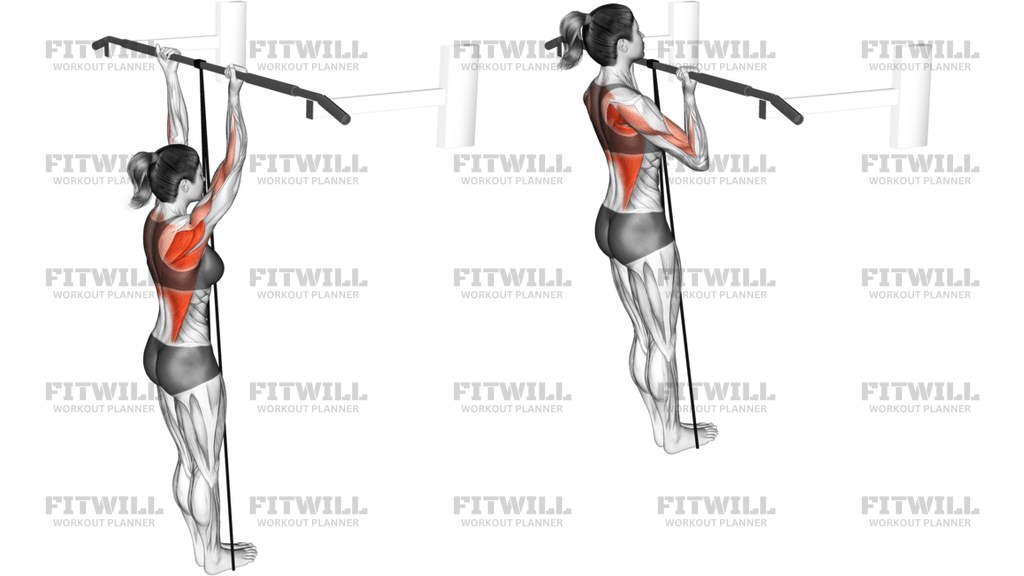
Band Assisted Chin-Up is a vertical pulling exercise that uses a resistance band to reduce bodyweight demand while you practice a full chin-up pattern. The band provides the most help near the bottom, which is usually the hardest part of the lift, so it is useful for building strength, reps, and confidence before moving to an unassisted chin-up.
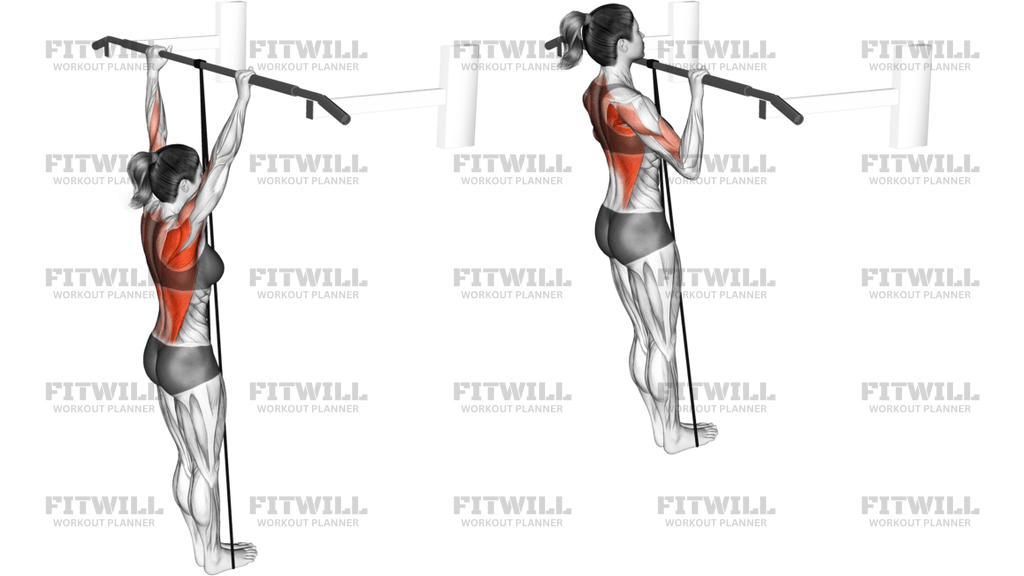
In the image, the band is looped over the pull-up bar and the athlete uses an underhand grip with the hands about shoulder width apart. The body stays long and controlled instead of swinging, with the chest rising toward the bar and the shoulders moving down and back as the pull begins. That setup matters because a stable start makes the pull smoother and keeps the lats, biceps, and upper back doing the work.
This exercise mainly trains the lats and biceps, with the lower and middle traps, rhomboids, forearms, and rear shoulder muscles helping to stabilize the shoulder blades and grip. Because the band changes the loading curve, you can use a slightly higher rep range and still practice a strict chin-up path. It is especially useful for beginners, for volume work after heavy pulling, or for lifters who can do a few bodyweight reps but need assistance to keep sets clean.
Good reps start from a dead hang or near-dead hang with the core braced and the ribs controlled. Pull the elbows down and back, bring the chest toward the bar, and lower under control until the arms are straight again. Avoid kicking, excessive arching, and shrugging toward the ears. A clean band-assisted chin-up should look smooth, repeatable, and honest about the amount of help the band is giving.
Fitwill
Log Workouts, Track Progress & Build Strength.
Achieve more with Fitwill: explore over 9600 exercises with images and videos, access built-in and custom workouts, perfect for both gym and home sessions, and see real results.
Start your journey. Download today!




Instructions
- Loop the band over a secure pull-up bar and make sure the hanging strand is centered before you climb up.
- Grip the bar with an underhand, shoulder-width chin-up grip and step one foot into the band so it supports your body weight.
- Hang with straight arms, relaxed neck, and shoulders set down away from your ears before you start the first rep.
- Brace your core and keep your legs still so the band helps the lift without creating swing.
- Pull your chest up toward the bar by driving your elbows down and back.
- Keep your torso controlled and stop the pull when your chin clears the bar or your upper chest reaches the bar height you can own.
- Pause briefly at the top without craning your neck or kicking your legs.
- Lower yourself in a slow, controlled path until your elbows are straight again and the band is still centered under your foot.
- Reset your hang, re-brace, and repeat for the planned reps with the same range and tempo.
Tips & Tricks
- Pick a band that lets you reach the bar without turning the rep into a jump or swing.
- Keep the grip underhand and about shoulder width; a very wide grip changes the chin-up into a different pull.
- Start each rep from a quiet hang instead of bouncing out of the bottom.
- Think about pulling the elbows toward your ribs rather than trying to yank the chin over the bar.
- If your shoulders creep toward your ears, reduce the band assistance or shorten the set.
- Keep the ribs from flaring hard at the top; the finish should come from shoulder extension and elbow flexion, not from over-arching the low back.
- Lower under control for at least as long as the pull takes so the band does not snap you back down.
- Use the band tension to train cleaner range, not to hide a sloppy half-rep.
- If your feet drift out of the band, stop and reset before the next rep.
Frequently Asked Questions
What muscle does Band Assisted Chin-Up target most?
The lats are the main target, with the biceps and upper back helping throughout the pull.
Can beginners perform this exercise?
Yes. It is one of the best ways for beginners to practice a chin-up pattern before doing full bodyweight reps.
Where should the band sit during the rep?
The band should stay looped over the bar and under one foot or both feet so it gives a steady assist without slipping.
How high should I pull?
Pull until your chin clears the bar or your upper chest reaches the top position you can control without swinging.
What is the biggest mistake on this exercise?
The most common problem is using leg kick or body swing instead of keeping the pull strict and vertical.
Should my elbows flare out?
No. Let them travel down and back so the pull stays in a chin-up path rather than turning into a high row.
Is this different from a pull-up?
Yes. This version uses an underhand chin-up grip, which usually shifts more work to the biceps and makes the top position easier to control.
How do I progress this movement?
Use a lighter band, slow the lowering phase, or add reps only when every rep starts from a dead hang and finishes without momentum.